
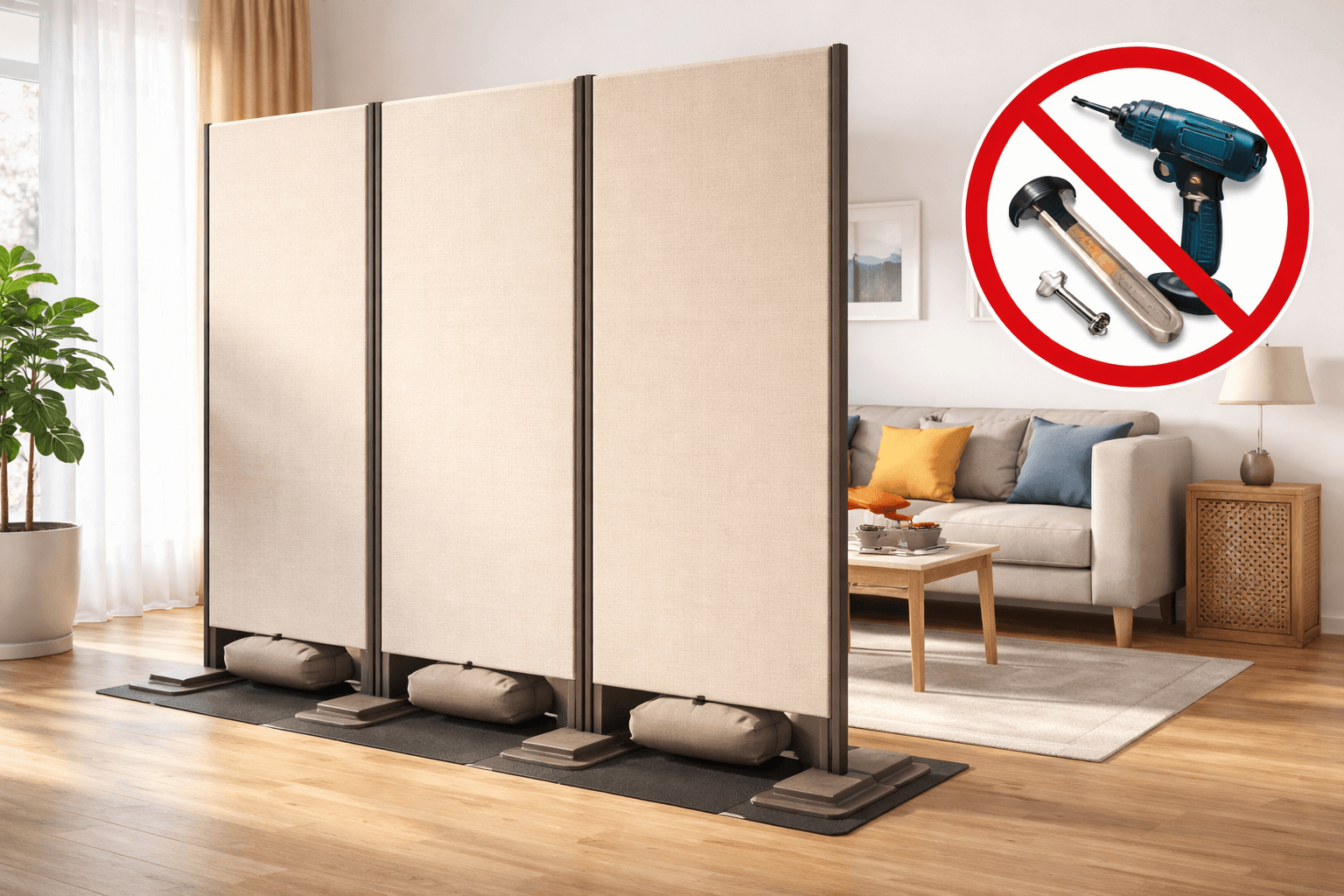
Living in a rental apartment often means dealing with limitations—especially when it comes to modifying walls, ceilings, or floors. Drilling holes is usually not allowed, and even small alterations can lead to extra costs or conflicts with landlords. This is where weighted-base room dividers without drilling become an increasingly popular solution.
These dividers offer a practical way to separate spaces, improve privacy, and organize rooms without making permanent changes. Whether you need a quiet home office, a defined sleeping area, or a visual separation in a studio apartment, weighted-base dividers provide flexibility without commitment.
If you’re renting and looking for a smart, damage-free way to divide your space, this guide will show you exactly when to use weighted-base room dividers, how they work, and—most importantly—how to stabilize them properly so they remain safe, functional, and reliable over time.
What Are Weighted-Base Room Dividers
Weighted-base room dividers are freestanding partitions designed to stand upright using weight instead of wall or ceiling attachments. Unlike traditional room dividers that require drilling, these models rely on heavy bases, metal frames, or integrated counterweights to maintain stability.
They come in various materials, including fabric panels, wood slats, acrylic sheets, and metal frames. The key feature is their self-supporting structure, which allows renters to rearrange or remove them at any time without leaving marks behind.
Because no drilling is involved, they are especially suited for apartments, temporary living spaces, and short-term layouts.
Why Renters Prefer No-Drill Solutions
For renters, avoiding drilling is not just a preference—it’s often a requirement. Lease agreements commonly prohibit permanent alterations, and even minor damage can affect security deposits.
Weighted-base room dividers solve several renter-specific problems:
- No wall or ceiling damage
- Easy installation without tools
- Portability when moving
- Flexibility to change layouts
This makes them ideal for people who want functional separation without long-term consequences.
When Weighted-Base Room Dividers Are the Best Option
Weighted-base room dividers work best in specific situations:
- Studio apartments needing visual separation
- Home offices inside bedrooms or living rooms
- Shared apartments where privacy is needed
- Temporary layouts (guests, seasonal needs)
They are particularly effective when the divider is placed against a wall or corner, which naturally improves stability without drilling.
Situations Where They Are Not Recommended
Despite their advantages, weighted-base dividers are not perfect for every scenario.
Avoid using them when:
- There are pets or small children who may push them
- The floor is uneven or slippery
- The divider must act as a soundproof wall
- The space experiences constant movement or vibration
Understanding these limitations helps prevent accidents and frustration.
Types of Weighted-Base Room Dividers
There are several types available, each with different stability characteristics:
- Fabric panel dividers – Lightweight but require strong bases
- Wood or MDF panels – Heavier and more stable
- Metal frame dividers – Often modular and adjustable
- Acrylic or polycarbonate panels – Modern look, moderate weight
Choosing the right type directly affects how much stabilization is required.
How Weight Distribution Works
Stability depends not only on how heavy the divider is, but where the weight is located. A wide, low base distributes weight more effectively and lowers the center of gravity.
Key principles include:
- Wider bases = better balance
- Heavier bottoms = less tipping risk
- Even panel spacing = reduced sway
Understanding this helps you choose safer models and improve existing setups.
Common Stability Problems
Many users face instability due to:
- Narrow bases
- Lightweight materials
- Tall panels without reinforcement
- Smooth flooring (tile, laminate)
These issues can usually be corrected with simple, renter-safe solutions.
How to Stabilize Weighted-Base Room Dividers Properly
Here are practical, no-drill stabilization methods:
1. Use Anti-Slip Pads
Rubber or silicone pads placed under the base dramatically reduce movement on smooth floors.
2. Add Discreet Base Weight
Sandbags, gym weights, or decorative planters placed near the base increase stability without altering the divider.
3. Position Against Walls or Corners
Even light contact with a wall improves balance while remaining drill-free.
4. Choose Wider Panel Layouts
Straight-line layouts tip more easily than slightly angled configurations.
5. Use Floor-Level Tension Supports (Optional)
Some systems use removable tension poles that apply downward pressure without drilling.
Safety Tips for Apartments
For renters, safety and lease compliance go hand in hand:
- Avoid adhesives that leave residue
- Never block emergency exits
- Keep dividers away from heaters or stoves
- Test stability before daily use
A stable divider protects both people and property.
Maintenance and Long-Term Use
To keep your divider stable over time:
- Check base screws monthly
- Replace worn anti-slip pads
- Rebalance weight if panels shift
- Clean bases to prevent sliding dust buildup
Regular maintenance ensures long-term safety.
Cost vs. Permanent Alternatives
Weighted-base room dividers are often cheaper than permanent walls and far more flexible. While they may not offer full soundproofing, their cost-efficiency, portability, and renter-friendliness make them a practical investment.
For most renters, they strike the ideal balance between function and freedom.
Final Practical Recommendations
Weighted-base room dividers without drilling are best used when flexibility, safety, and lease compliance matter most. By choosing the right type, understanding weight distribution, and applying simple stabilization techniques, renters can confidently divide spaces without permanent changes.
They are not just temporary fixes—they are smart, adaptable solutions for modern rental living.
Frequently Asked Questions (FAQ)
1. Are weighted-base room dividers safe for apartments?
Yes, when properly stabilized and placed on level flooring.
2. Can they damage floors?
Not if anti-slip pads or protective mats are used.
3. Do they work on carpet?
Yes, carpet often improves grip and stability.
4. Are they easy to move when relocating?
Absolutely. Most models are designed for portability.
5. Can they fully replace a wall?
They replace visual separation, not structural or acoustic walls.