
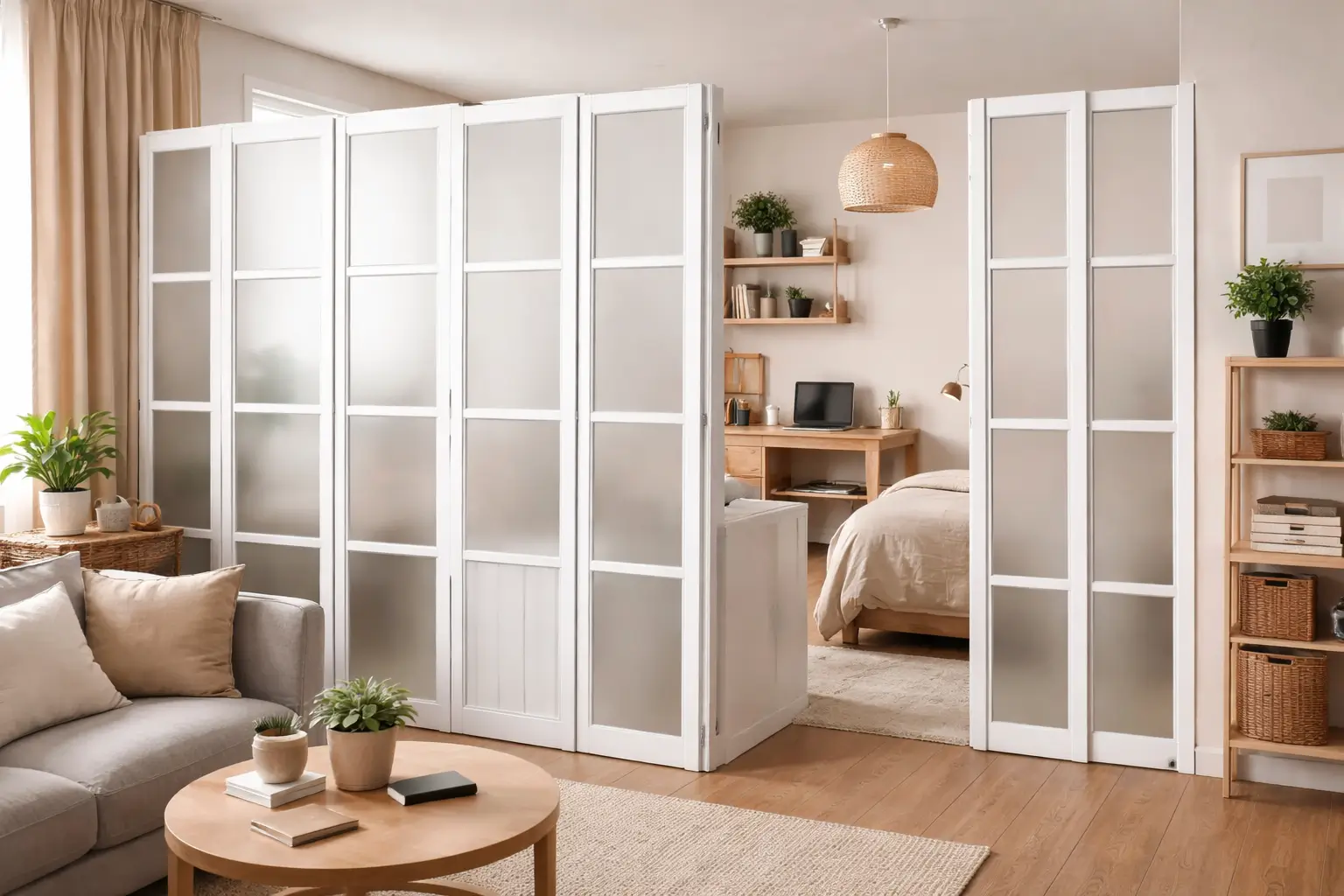
Living in a small apartment in the United States often means sacrificing separation for affordability. Studio layouts, open floor plans, and compact one-bedroom units may look modern, but they rarely provide privacy or functional zoning. When your bedroom, workspace, dining area, and living room all exist in the same space, everyday life can quickly feel cluttered and chaotic.
Renters face a unique challenge: you can’t build permanent walls, and you probably don’t want to invest thousands of dollars in renovations for a place you don’t own. That’s why PVC room dividers are gaining popularity. They promise flexibility, affordability, and easy installation — but the real question remains:
Can they truly handle everyday use?
Let’s break this down honestly and practically.
What Are PVC Room Dividers and How Do They Work?
PVC (Polyvinyl Chloride) room dividers are lightweight partition systems made from durable plastic polymer panels. They’re designed to create visual and physical separation without permanent structural changes.
They typically come in four main formats:
- Folding accordion-style panels
- Ceiling-mounted sliding track systems
- Freestanding panel dividers
- Decorative hanging panels
The appeal is clear:
- They’re lighter than wood
- They don’t rust like metal
- They resist moisture better than drywall
- They cost significantly less than glass systems
But material properties matter. PVC is flexible and impact-resistant, yet it is not structural. That means it works well for separation — not for load-bearing functions.
Understanding that difference is crucial before deciding if it’s right for your space.
Can PVC Room Dividers Handle Everyday Use? The Honest Answer
Yes — but only if you choose the right type and use them correctly.
PVC can withstand daily opening and closing, light contact, and normal indoor movement. However, durability depends on several factors:
- Panel thickness
- Hinge quality
- Installation method
- Traffic level in the area
- Exposure to heat or direct sunlight
A thin decorative divider used in a high-traffic studio apartment may show wear quickly. A reinforced sliding PVC system properly installed can last for years.
Let’s examine where they perform well — and where they don’t.
Durability in Daily Apartment Life
In a rental environment, dividers are often used to:
- Separate a bedroom from a living area
- Create a home office corner
- Divide shared roommate spaces
- Hide storage or utility areas
In these scenarios, the divider will likely be touched, moved, or brushed against daily.
High-quality PVC dividers can:
- Resist minor impacts
- Maintain panel shape
- Avoid splintering
- Withstand repeated folding
Lower-quality models may:
- Bend at hinge joints
- Crack under stress
- Show visible surface scratches
- Shift out of alignment
The key takeaway: durability is directly tied to construction quality.
Where PVC Performs Extremely Well
PVC has certain advantages that make it surprisingly reliable for renters.
Moisture Resistance
Unlike wood, PVC does not:
- Absorb humidity
- Swell over time
- Rot or develop mold
- Warp due to seasonal changes
This makes it ideal for:
- Apartments in humid climates
- Units near kitchens
- Studio spaces with limited ventilation
Easy Maintenance
PVC surfaces are smooth and easy to clean. Most maintenance requires:
- Mild soap
- Water
- Soft cloth
There is no need for sealing, staining, or refinishing.
Where PVC Has Clear Limitations
To make a smart decision, you need to understand the trade-offs.
Limited Soundproofing
PVC is not designed to block sound. It creates visual separation, not acoustic isolation.
If you’re trying to:
- Reduce roommate noise
- Block television sound
- Create a silent workspace
PVC alone will not solve the issue.
Structural Weakness
PVC dividers cannot:
- Hold mounted shelves
- Support televisions
- Function as permanent walls
They are partitions — not construction materials.
Step-by-Step: How to Choose a PVC Room Divider That Will Last
If you want a divider that handles everyday use, follow this detailed evaluation process.
Measure Your Space Precisely
Before shopping, measure:
- Ceiling height
- Floor width
- Available clearance space
- Door swing paths
Precision prevents installation stress and long-term misalignment.
Choose the Right Type for Your Use
Different setups suit different needs:
- Sliding track systems: Best for frequent daily opening
- Accordion folding panels: Good for flexible layouts
- Freestanding dividers: Ideal for temporary zoning
If you’ll move it daily, avoid ultra-thin decorative panels.
Check Panel Thickness
Thickness directly affects durability.
Look for:
- Minimum 6mm thickness
- Reinforced panel cores
- Solid hinge attachments
Avoid extremely lightweight models marketed purely for aesthetics.
Inspect the Track or Base System
For sliding systems, the track determines longevity.
Choose:
- Aluminum or reinforced track rails
- Smooth-glide rollers
- Anti-derailment design
Poor tracks cause friction and premature damage.
Evaluate Stability Features
Freestanding models should include:
- Weighted bases
- Anti-slip feet
- Wide support frames
Instability is one of the most common complaints.
Read Long-Term Reviews
Focus on reviews mentioning:
- 6+ months of use
- Daily handling
- Apartment environments
Short-term reviews don’t reveal durability patterns.
Proper Installation Matters More Than You Think
Even a high-quality divider can fail if installed poorly.
Follow these installation best practices:
- Ensure ceiling anchors are aligned
- Avoid overtightening screws
- Confirm track levelness
- Test sliding motion before final tightening
Misalignment causes stress at hinge points, reducing lifespan significantly.
Real Pros of PVC Room Dividers for Renters
Let’s summarize the practical advantages:
- Affordable compared to permanent walls
- Lease-friendly and removable
- Lightweight and portable
- Resistant to moisture
- Easy to clean
- Flexible for layout changes
For renters who move frequently, portability alone is a major benefit.
Real Cons You Should Consider
Transparency is important.
PVC room dividers:
- Do not block sound effectively
- May look less premium than glass or wood
- Can discolor under direct UV exposure
- Are not environmentally ideal materials
- Depend heavily on installation quality
They solve space division — not all apartment problems.
PVC vs Other Materials: A Practical Comparison
When compared to alternatives:
Wood
- More durable
- Heavier
- More expensive
- Sensitive to humidity
Glass
- Modern aesthetic
- Expensive installation
- Less flexible for renters
Drywall
- Excellent sound blocking
- Permanent construction
- Not renter-friendly
PVC wins in flexibility and cost — not in luxury or acoustics.
Maintenance Tips to Extend Lifespan
If you want your divider to last 5–10 years, follow this routine:
- Clean monthly to remove dust buildup
- Tighten hardware every 3–6 months
- Avoid hanging items from panels
- Keep away from direct high heat
- Lubricate sliding tracks if needed
Simple preventative care prevents long-term issues.
Are PVC Room Dividers Worth It for Everyday Apartment Use?
For renters in the United States looking for:
- Visual privacy
- Space organization
- Budget-friendly solutions
- Non-permanent modifications
PVC room dividers can absolutely handle everyday use — when selected carefully.
However, they are not a replacement for real construction. They are functional tools designed for flexibility.
If you expect luxury aesthetics and full soundproofing, you may feel underwhelmed.
If you prioritize practicality, affordability, and adaptability, they can be a smart investment.
Final Verdict
PVC room dividers are not miracle solutions — but they are highly practical ones for renters dealing with small spaces.
They provide flexibility without lease violations. They separate space without construction. They allow layout changes without professional installation.
Their performance depends entirely on the quality you choose and how you install them.
For everyday apartment life, they can handle the job — as long as you understand their limits.
Frequently Asked Questions
1. How long do PVC room dividers typically last?
High-quality models can last between 5 and 10 years with proper care.
2. Do PVC dividers reduce noise between rooms?
They provide minimal sound reduction but are not soundproof.
3. Are they safe for rental apartments?
Yes, especially removable systems that do not damage walls or ceilings.
4. Can PVC dividers be reused after moving?
Most systems are portable and can be reinstalled in a new apartment.
5. Do they require professional installation?
Many systems are DIY-friendly, though ceiling-mounted tracks may require extra precision.