
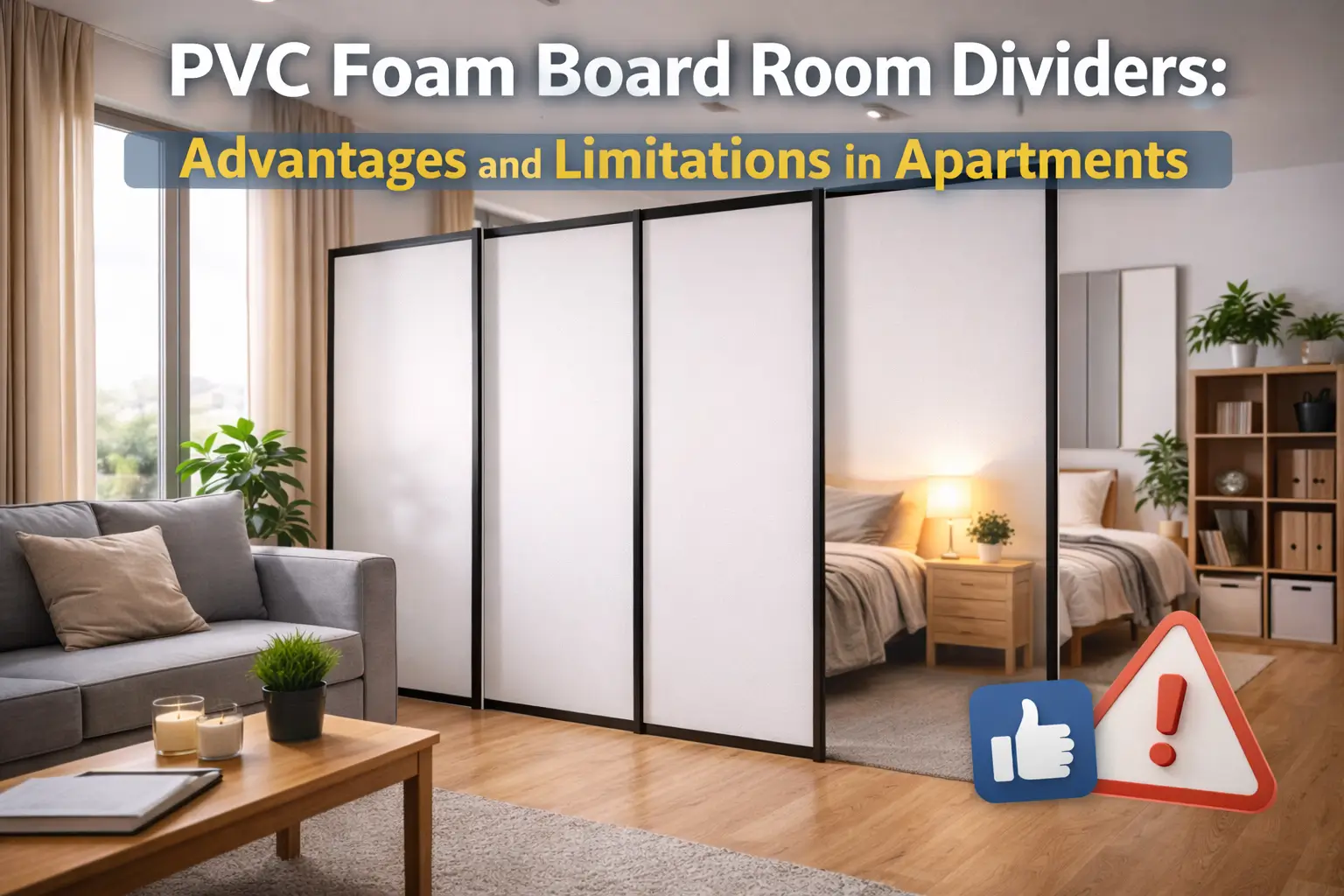
Apartment living often requires creative space solutions. Whether you’re trying to create a bedroom corner in a studio or separate a work-from-home area, adding a room divider can significantly improve functionality. However, renters in the United States typically face strict lease restrictions that prevent permanent construction or structural modifications.
PVC foam board room dividers have become a popular alternative because they are lightweight, affordable, and easy to install without major alterations. But like any material, they come with both strengths and weaknesses.
In this detailed instructional guide, you will learn the full advantages and limitations of PVC foam board dividers in apartments, along with practical installation guidance and decision-making tips. By understanding both sides clearly, you can determine whether this material is the right fit for your rental space.
Understanding PVC Foam Board
PVC foam board is a rigid, lightweight plastic sheet made from polyvinyl chloride. It contains a foamed core that reduces density while maintaining structural rigidity.
Key material properties include:
- Lightweight construction
- Moisture resistance
- Smooth surface finish
- Easy cutting and shaping
- Moderate rigidity
Unlike solid PVC panels, foam boards are less dense, which makes them easier to handle — a major advantage in apartment settings where transport and maneuverability matter.
Why Renters Consider PVC Foam Board Dividers
Renters often seek solutions that:
- Do not require drilling into structural beams
- Avoid permanent framing
- Are affordable
- Can be removed easily when moving out
PVC foam board meets these criteria because it can be mounted on freestanding frames or tension systems. It offers a clean, modern look while staying within most lease agreements.
Additionally, its lightweight nature reduces the risk of damage to floors or walls.
Advantages of PVC Foam Board Room Dividers
1. Lightweight and Easy to Handle
One of the biggest advantages is weight. Even large panels can be lifted and positioned by one person. This makes installation and removal significantly easier compared to wood or glass dividers.
2. Budget-Friendly Option
PVC foam board is typically more affordable than polycarbonate or tempered glass.
Estimated U.S. pricing:
- ½ inch sheet (4×8 ft): $60–$120
- Hardware and frame materials: $50–$150
This makes it attractive for renters on a budget.
3. Moisture Resistance
PVC does not absorb moisture like MDF or plywood. This makes it suitable for humid climates or apartments with limited ventilation.
4. Easy Customization
You can:
- Paint it
- Cut decorative patterns
- Add adhesive finishes
- Combine it with lightweight frames
Its smooth surface allows for aesthetic flexibility.
Limitations of PVC Foam Board Dividers
While practical, PVC foam board has clear limitations.
1. Limited Structural Strength
It is rigid but not load-bearing. Large unsupported spans may flex or bow over time.
2. Lower Impact Resistance
Compared to polycarbonate, PVC foam board is more prone to denting or cracking under strong force.
3. Limited Sound Insulation
PVC foam board provides minimal acoustic separation. It creates visual privacy but does not significantly block sound.
4. Heat Sensitivity
Extreme heat exposure may cause warping. Avoid placing near heating vents or strong sunlight.
Step-by-Step Installation Guide (Renter-Safe Method)
Below is a detailed freestanding installation process.
Step 1: Measure the Area
Measure:
- Ceiling height
- Desired divider width
- Baseboard clearance
Subtract ½ inch from height to ensure maneuverability.
Step 2: Choose Proper Thickness
Recommended thickness for dividers:
- ½ inch for stability
- ¼ inch only for smaller panels
Avoid thinner sheets for tall dividers.
Step 3: Build or Purchase a Lightweight Frame
Options include:
- Aluminum frames
- Pine wood frames
- Metal modular kits
Ensure frame includes:
- Vertical supports
- Top and bottom braces
- Base stabilization supports
Step 4: Attach PVC Panel to Frame
Secure panel using:
- Screws with washers
- Adhesive brackets
- Frame channels
Do not overtighten screws to prevent cracking.
Step 5: Add Base Support
Stability is essential.
Options:
- Perpendicular wooden feet
- Weighted metal base plates
- Rubber floor pads
Test for wobbling before daily use.
Cost Breakdown in the U.S.
| Component | Estimated Cost |
|---|---|
| PVC Foam Board | $60–$120 |
| Frame Materials | $70–$150 |
| Hardware | $30–$60 |
| Total Average | $160–$330 |
Prices vary by size and quality.
Design Considerations for Apartments
To prevent visual heaviness:
- Choose light colors (white or light gray)
- Keep panel thickness minimal
- Avoid floor-to-ceiling solid panels in dark rooms
- Maintain clear walking pathways
PVC is opaque, so consider partial-height designs to maintain openness.
Safety and Stability Tips
- Use non-slip pads under base
- Avoid placing near entry doors
- Keep clear from heating units
- Do not lean heavy furniture against it
PVC is lightweight, which means balance is critical.
PVC vs. Other Materials
| Material | Weight | Cost | Durability | Light Transmission |
|---|---|---|---|---|
| PVC Foam Board | Low | Affordable | Moderate | Opaque |
| Polycarbonate | Low | Moderate | High | Translucent |
| Wood Panels | Heavy | Moderate | High | Opaque |
| Drywall | Very Heavy | Expensive | Permanent | Opaque |
PVC excels in affordability and portability but lacks transparency and acoustic performance.
When PVC Foam Board Is the Right Choice
Choose PVC foam board if:
- You want an affordable divider
- You need easy installation
- You prefer opaque privacy
- You plan temporary usage
When to Avoid PVC Foam Board
Avoid it if:
- You need strong soundproofing
- You want a high-end glass aesthetic
- The divider will experience heavy impact
In those cases, consider polycarbonate or modular glass systems.
Conclusion
PVC foam board room dividers offer renters in U.S. apartments a lightweight, affordable, and removable solution for creating visual separation. While they provide excellent portability and moisture resistance, they have limitations in strength, sound insulation, and heat tolerance. By understanding both advantages and constraints, you can make a practical and informed decision that aligns with your lease agreement, budget, and functional needs.
Frequently Asked Questions
1. Can PVC foam board dividers damage walls?
Not if installed as freestanding units.
2. Are they safe around pets?
Yes, but ensure proper base stabilization.
3. Can PVC foam board be painted?
Yes, with appropriate plastic-compatible paint.
4. Do they block sound effectively?
No, they provide visual privacy but minimal sound insulation.
5. Are they easy to remove when moving?
Yes, especially freestanding designs.