
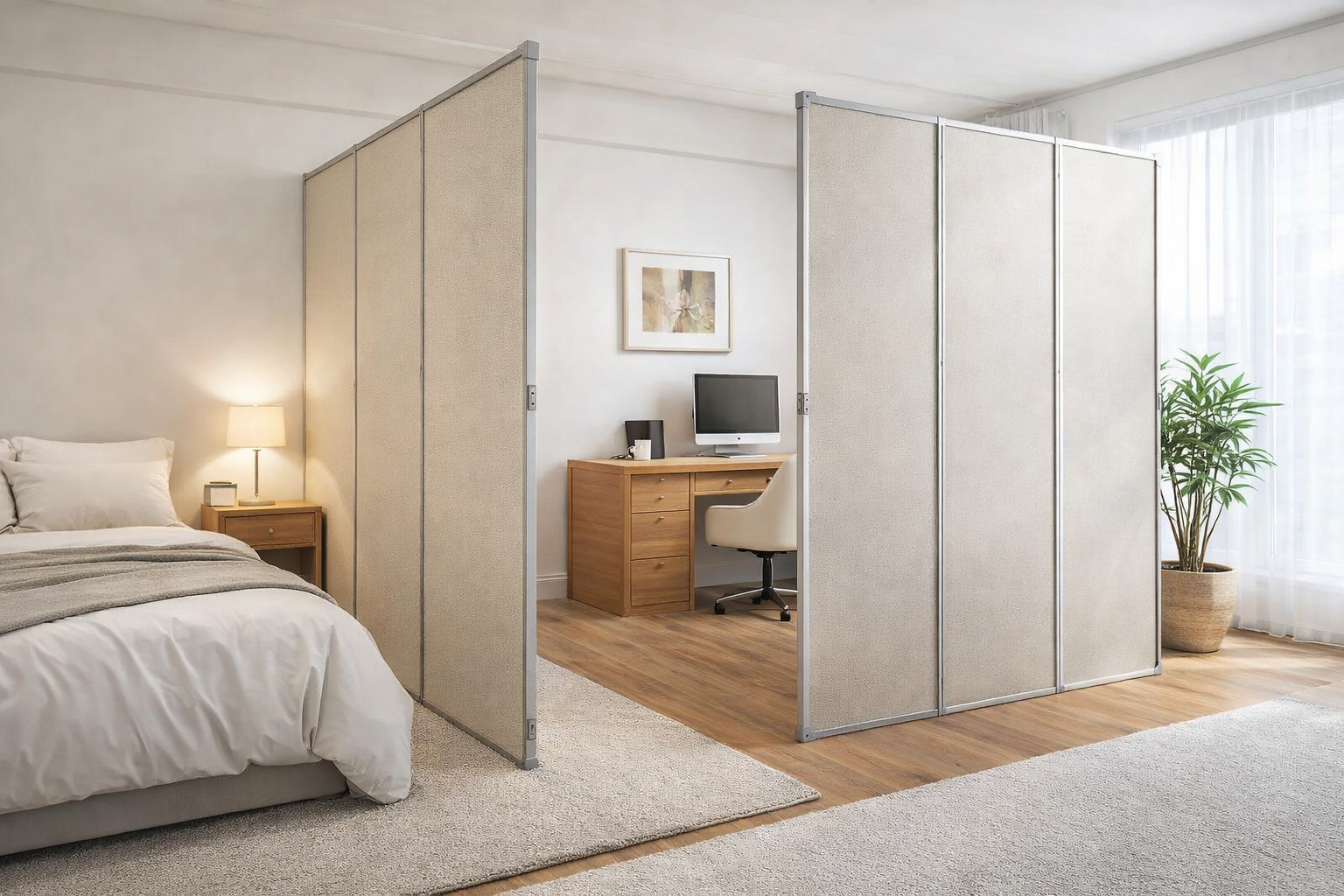
Living in a rental apartment often means accepting limitations that homeowners do not face. Lease agreements frequently prohibit permanent changes such as building walls, drilling into surfaces, or installing fixed structures. However, modern living demands flexibility. Many renters need separate areas for sleeping, working, relaxing, or storage, especially in studio apartments or compact floor plans. This creates a clear need for solutions that improve space functionality without violating rental rules.
Modular snap-together panel dividers have emerged as one of the most practical and renter-friendly solutions available today. These systems allow tenants to create functional zones inside their apartments without tools, structural modifications, or professional installation. Because they are modular, they can be customized, expanded, moved, or removed at any time, making them ideal for temporary living arrangements.
This guide explains everything renters need to know about modular snap-together panel dividers. You will learn how they work, their benefits, how to choose the right system, and exactly how to install and use them effectively. By understanding these systems, you can transform your rental apartment into a more comfortable, organized, and efficient living space.
What Are Modular Snap-Together Panel Dividers
Modular snap-together panel dividers are partition systems made from individual panels that connect using built-in interlocking mechanisms. Unlike permanent walls, these panels do not require screws, nails, or drilling. They are designed to stand independently or with minimal support.
Each system typically includes several key components:
- Individual panels made from materials like wood, plastic, fabric, or composite materials
- Built-in connectors such as clips, hinges, or interlocking edges
- Stabilizing bases or feet
- Optional extensions or corner connectors
The defining feature is the snap-together mechanism. This allows users to assemble and disassemble panels quickly, without specialized tools or technical experience.
Because they are modular, users can:
- Add more panels to increase coverage
- Remove panels to reduce size
- Change the shape of the divider
- Reconfigure the layout based on changing needs
This flexibility makes modular dividers especially valuable in rental environments.
Why Modular Panel Dividers Are Ideal for Rental Apartments
Rental apartments present unique challenges that require temporary and reversible solutions.
Common rental limitations include:
- Restrictions on drilling holes in walls
- Prohibitions against building permanent partitions
- Limited space in studio apartments
- Multi-purpose rooms serving several functions
Modular panel dividers solve these problems because they:
- Do not damage walls, floors, or ceilings
- Require no permanent installation
- Can be removed completely when moving out
- Allow renters to customize their layout freely
This makes them compliant with most lease agreements.
Key Benefits of Modular Snap-Together Panel Dividers
Understanding the benefits helps renters make informed decisions.
1. No Permanent Installation Required
One of the most important advantages is that installation does not involve altering the apartment structure.
This means:
- No drilling
- No screws
- No wall anchors
- No structural modifications
This protects the security deposit and avoids lease violations.
2. Easy Assembly and Disassembly
Most modular systems are designed for quick installation.
Benefits include:
- No professional installation required
- No special tools needed
- Simple connection mechanisms
- Fast setup time
Many systems can be installed in less than 30 minutes.
3. Flexible and Adjustable Layout
Renters often need adaptable spaces.
Modular systems allow you to:
- Create temporary rooms
- Separate sleeping and living areas
- Design private workspaces
- Change configurations anytime
This flexibility supports changing lifestyles.
4. Portable and Relocation-Friendly
When moving to a new apartment, modular dividers can be easily transported.
Advantages include:
- Lightweight design
- Easy disassembly
- Compact storage
- Reusability in new spaces
This makes them a long-term investment.
5. Improved Space Organization
Dividers help create structured environments.
Examples include:
- Separating work and relaxation areas
- Creating privacy zones
- Organizing open layouts
This improves comfort and productivity.
Types of Modular Snap-Together Panel Dividers
Different materials offer different advantages.
Fabric Panels
Fabric panels are lightweight and affordable.
Advantages:
- Easy to move
- Good for temporary setups
- Some sound absorption
Best for:
- Home offices
- Bedroom privacy
Wood Panels
Wood panels provide durability and aesthetic appeal.
Advantages:
- Strong and stable
- Attractive appearance
- Long lifespan
Best for:
- Permanent-style layouts
- Decorative purposes
Plastic or PVC Panels
Plastic panels are lightweight and moisture-resistant.
Advantages:
- Easy to clean
- Durable
- Affordable
Best for:
- Kitchens
- Humid environments
Composite Panels
Composite materials combine durability and light weight.
Advantages:
- Balanced strength
- Modern design
- Long-term reliability
Best for:
- Modern apartments
- Professional environments
Step-by-Step Guide to Installing Modular Snap-Together Panel Dividers
Installing modular panels is straightforward. Follow this step-by-step process for best results.
Step 1: Measure Your Space
Accurate measurements are essential.
Measure:
- Width of the area
- Height clearance
- Floor space available
This ensures proper fit.
Step 2: Choose the Right Panel Quantity
Based on measurements, determine how many panels you need.
Consider:
- Desired coverage area
- Panel width
- Layout shape
This prevents gaps or overcrowding.
Step 3: Prepare the Installation Area
Clear the space before installation.
Remove:
- Furniture
- Obstacles
- Loose objects
This makes installation easier.
Step 4: Connect the First Two Panels
Start with two panels.
Align connectors and:
- Snap panels together
- Ensure proper alignment
- Confirm secure connection
This creates the base structure.
Step 5: Add Additional Panels
Continue connecting panels one at a time.
Make sure:
- Connections are secure
- Panels remain aligned
- Structure remains stable
Work gradually.
Step 6: Position the Divider
Place the assembled divider in the desired location.
Adjust:
- Angle
- Placement
- Alignment
Ensure proper positioning.
Step 7: Stabilize the Divider
Use stabilizing feet if included.
Check:
- Balance
- Stability
- Even floor contact
This prevents tipping.
Best Places to Use Modular Panel Dividers
These dividers work well in many apartment areas.
Studio Apartments
Create separate sleeping areas.
Living Rooms
Divide entertainment and workspace zones.
Bedrooms
Create dressing areas or storage zones.
Home Offices
Separate work and personal spaces.
How to Choose the Right Modular Divider
Choosing the right divider depends on several factors.
Consider Material
Select based on durability and weight.
Consider Size
Match divider dimensions to available space.
Consider Stability
Choose systems with strong connectors.
Consider Design
Select a style that matches your apartment.
Maintenance and Care Tips
Proper care ensures long lifespan.
Cleaning
Clean panels regularly using:
- Soft cloth
- Mild cleaners
Avoid harsh chemicals.
Inspection
Check connectors periodically.
Look for:
- Loose parts
- Wear
- Damage
Replace damaged components.
Storage
If not in use, store panels safely.
Keep in:
- Dry environment
- Clean area
Avoid moisture exposure.
Cost and Budget Considerations
Prices vary depending on several factors.
Basic systems cost:
- $50 to $200
Mid-range systems cost:
- $200 to $500
Premium systems cost:
- $500 to $800
Factors affecting price include:
- Material
- Quality
- Size
- Brand
Investing in quality improves durability.
Common Mistakes to Avoid
Avoid these errors.
Choosing Wrong Size
Measure accurately before purchase.
Ignoring Stability
Ensure proper support.
Buying Low-Quality Systems
Cheap connectors fail faster.
Poor Placement
Position divider carefully.
Conclusion
Modular snap-together panel dividers provide an effective and renter-friendly solution for improving apartment functionality without permanent modifications. They offer flexibility, portability, and ease of installation, making them ideal for rental environments. These systems allow renters to create private areas, organize space, and adapt layouts to meet their changing needs.
By selecting the right materials, measuring carefully, and installing correctly, renters can significantly improve comfort and usability in their apartments. Modular dividers are a practical investment that enhances living spaces while respecting rental restrictions.
Frequently Asked Questions
Are modular snap-together dividers renter-friendly?
Yes. They require no permanent installation and comply with most rental agreements.
Can modular dividers fall over?
Properly installed systems with stabilizing bases are very stable.
How long does installation take?
Most systems can be installed within 15 to 30 minutes.
Can I move modular dividers easily?
Yes. They are designed for easy relocation.
Are modular panel dividers reusable?
Yes. They can be reused in different apartments.