
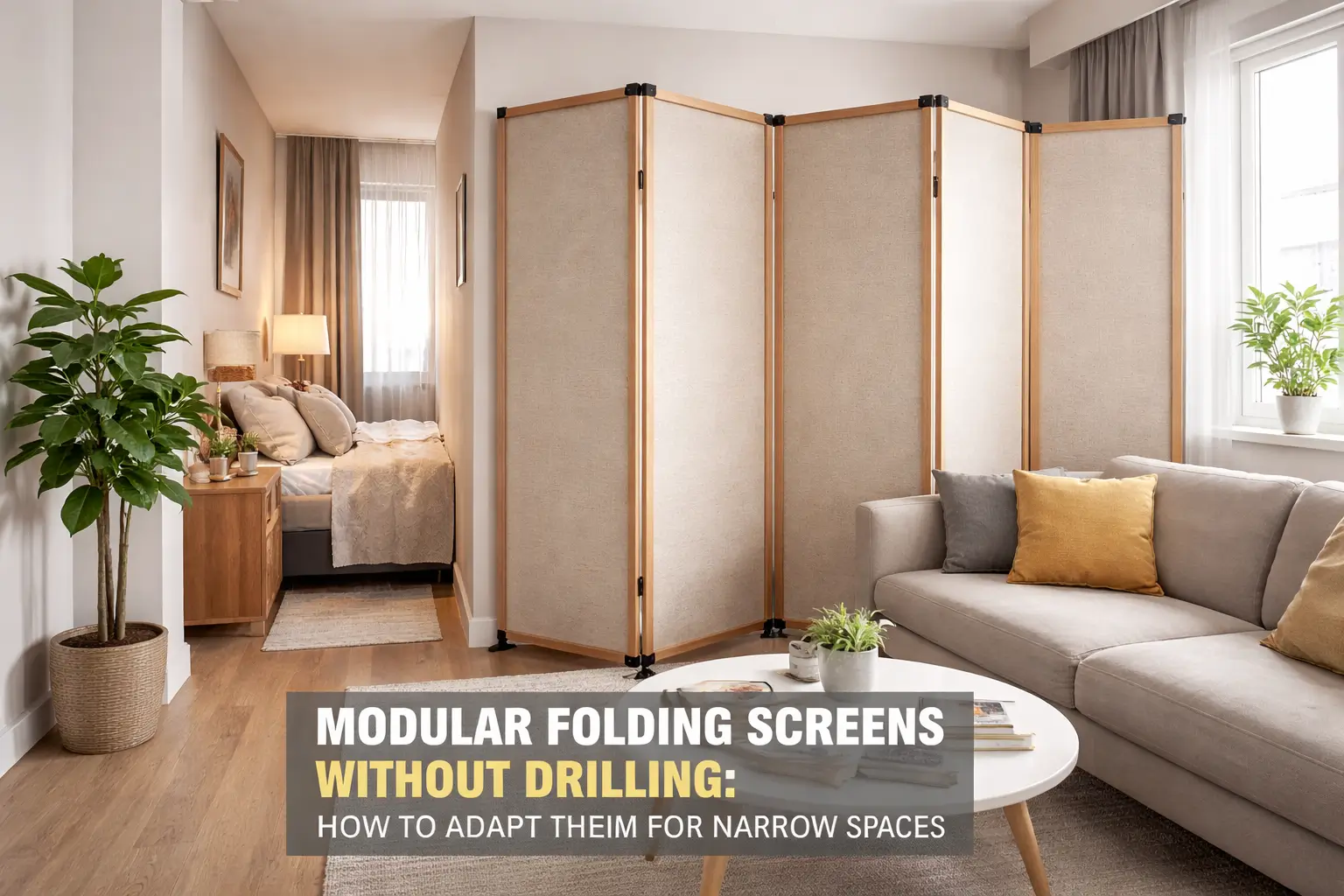
Living in a rental apartment often means working within strict limitations, especially when space is narrow and permanent modifications are not allowed. Tenants frequently need to divide areas for privacy, work, or organization, but drilling walls or installing fixed partitions is rarely an option. Modular folding screens without drilling offer a practical alternative that respects lease agreements while improving functionality.
These screens are designed to be flexible, movable, and adaptable. Unlike traditional dividers, modular folding screens can be adjusted to fit tight layouts, corners, and unconventional floor plans commonly found in rental apartments. Their ability to fold, expand, or reposition makes them especially valuable in narrow spaces.
If you are trying to make better use of limited square footage without damaging walls, understanding how to adapt modular folding screens correctly can transform how your apartment feels and functions. The sections below walk through this process step by step, helping you apply these solutions with confidence.
What Are Modular Folding Screens?
Modular folding screens are freestanding or semi-supported room dividers made up of connected panels. Each panel can pivot, fold, or be rearranged, allowing the screen to change shape depending on the space.
The modular aspect means panels can often be added or removed, making the screen customizable. Folding hinges allow the divider to bend into angles rather than forming a straight line, which is particularly useful in narrow or irregular layouts.
Because they do not rely on wall mounting or drilling, these screens are ideal for renters who need flexibility without permanent changes.
Why No-Drill Solutions Matter in Rental Apartments
Most rental agreements restrict drilling, anchoring, or altering walls. Even small holes can result in repair charges or deposit deductions. No-drill solutions eliminate this risk entirely.
Folding screens protect walls, floors, and ceilings while still offering spatial separation. They also provide flexibility, allowing tenants to adapt layouts as needs change, such as transitioning from a living area to a home office.
For renters, the ability to install and remove a solution without leaving traces is a significant advantage.
Understanding Narrow Spaces in Apartments
Narrow spaces present specific challenges. Limited width can restrict movement, reduce natural light, and make rooms feel crowded when poorly divided.
Common narrow areas include studio apartments, hallways converted into workspaces, bedrooms with limited clearance, and galley-style layouts. In these spaces, traditional straight dividers often fail because they block pathways or overwhelm the room.
Adapting a divider to the flow of the space is essential for maintaining comfort and usability.
Types of Modular Folding Screens
Modular folding screens come in a variety of materials and designs.
Fabric panels soften sound and light, making them suitable for bedrooms or shared living areas. Wooden or MDF panels provide more visual separation and structure. Metal or composite frames offer durability and modern aesthetics.
Some screens combine solid panels with translucent inserts, balancing privacy and light. Choosing the right type depends on both spatial constraints and functional goals.
How Modular Design Benefits Narrow Spaces
The key advantage of modular folding screens is adaptability. Panels can be angled to follow walls, wrap around furniture, or create zigzag layouts that reduce visual bulk.
In narrow spaces, angling a screen slightly rather than placing it straight across preserves walkways and improves circulation. Modular designs allow partial division instead of complete separation, which helps maintain openness.
This flexibility makes modular screens far more effective than rigid dividers in tight layouts.
Measuring Narrow Areas Correctly
Accurate measurement is essential before choosing or adapting a folding screen.
Measure the width of the area where the screen will be placed, accounting for door swings, furniture clearance, and walking paths. Height matters as well, especially if privacy is the main goal.
Leaving sufficient clearance prevents the space from feeling cramped and ensures the screen can fold and move as intended.
Step-by-Step: Adapting Modular Folding Screens for Narrow Spaces
Start by assembling the screen according to manufacturer instructions. Remove unnecessary panels if the screen is wider than needed.
Position the screen at an angle rather than straight across the space. This reduces visual obstruction and improves flow. Adjust panel angles until the divider feels balanced and stable.
If needed, use furniture placement—such as sofas or desks—to help visually anchor the screen without attaching it to walls.
Stability Without Drilling
Stability is a common concern for renters. Modular folding screens rely on weight distribution and panel angles for support.
Wider bases, heavier panels, and zigzag positioning increase stability. Some models include optional weighted feet or non-slip pads that enhance grip on floors.
Avoid placing screens on uneven surfaces, as this can compromise balance and safety.
Common Mistakes to Avoid
One common mistake is choosing a screen that is too wide or too tall for the space. Oversized dividers overwhelm narrow areas.
Another issue is placing screens too close to walkways, which restricts movement. Always prioritize circulation and accessibility.
Failing to adjust panel angles properly can also reduce stability and visual harmony.
Aesthetic Integration in Small Layouts
Visual cohesion matters in narrow spaces. Light-colored panels reflect light and make rooms feel larger. Neutral tones blend easily with existing décor.
Screens with open or translucent elements maintain brightness while still defining zones. Matching the screen style to furniture helps the divider feel intentional rather than temporary.
Thoughtful design choices prevent the space from feeling segmented or cluttered.
Best Use Cases in Rental Apartments
In studio apartments, folding screens separate sleeping and living areas without permanent walls. In narrow bedrooms, they create dressing areas or workspace separation.
Hallways can be partially divided to define entry zones. Home offices benefit from visual separation that improves focus without closing off the room.
These use cases highlight the versatility of modular folding screens in rental environments.
Maintenance and Reconfiguration
Most folding screens require minimal maintenance. Regular dusting and occasional tightening of hinges keep them functioning smoothly.
Because they are modular, screens can be reconfigured as needs change. Panels can be rearranged or removed when relocating or redecorating.
This adaptability adds long-term value for renters.
Cost and Value Considerations
Prices vary based on materials, size, and design. Budget options offer basic functionality, while premium screens provide better durability and aesthetics.
For renters, investing in a reusable, adaptable divider often provides better value than temporary fixes or furniture replacements.
Cost should be weighed against flexibility, longevity, and ease of use.
Safety and Rental Compliance
While folding screens are non-permanent, they must still be used responsibly. Ensure they do not block exits, vents, or natural pathways.
Review lease agreements for any restrictions related to room modifications. Proper placement ensures compliance and safety.
Stability should always be tested to prevent tipping, especially in households with pets or children.
Conclusion
Modular folding screens without drilling offer renters an effective way to adapt narrow spaces without compromising lease agreements or damaging walls. By understanding layout challenges, measuring carefully, and positioning screens strategically, tenants can create functional divisions that enhance comfort and usability. With thoughtful adaptation, these screens become a flexible solution tailored to the realities of rental living.
Frequently Asked Questions
1. Can modular folding screens work in very narrow spaces?
Yes, when angled and sized correctly, they adapt well to tight layouts.
2. Do folding screens damage floors or walls?
Most models are freestanding and designed to avoid surface damage.
3. Are modular screens easy to move?
Yes, they are designed for repositioning and reconfiguration.
4. How tall should a screen be for privacy?
Screens between 5 and 6 feet tall usually provide sufficient privacy.
5. Can folding screens be reused in a new apartment?
Yes, their modular design makes them highly reusable.