
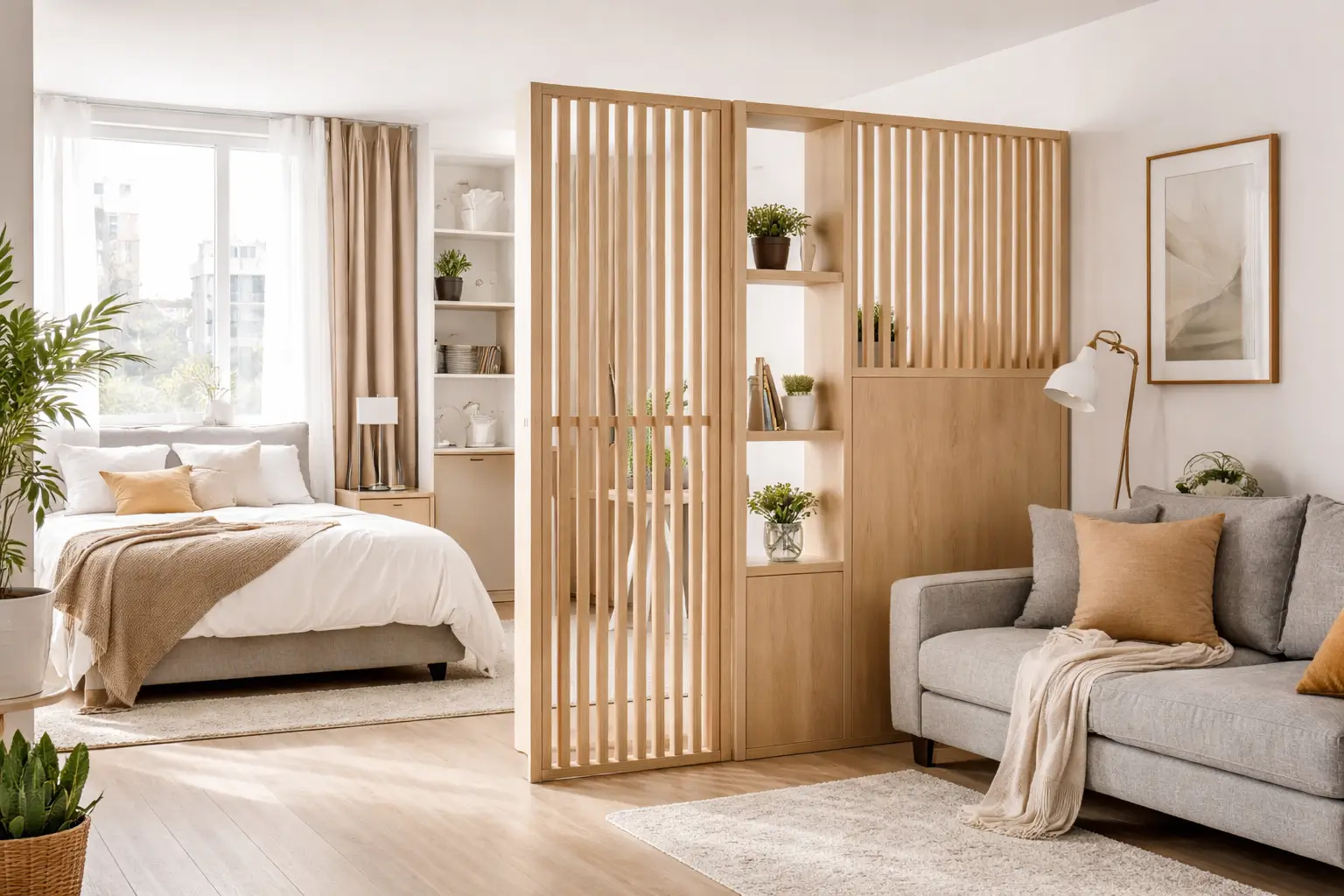
Living in a studio or small rental apartment often means making strategic decisions about space. When walls cannot be moved and permanent construction is not allowed, renters must look for adaptable solutions that balance privacy, function, and aesthetics. One option that frequently enters the conversation is lightweight MDF room dividers.
Medium-density fiberboard (MDF) has long been used in furniture and interior design. However, lightweight MDF panels are increasingly being considered for temporary room separation. The question is not simply whether they work — but when they truly make sense for renters.
If you’re trying to define a sleeping area, create a home office corner, or add privacy without violating your lease, understanding the strengths and limitations of lightweight MDF room dividers will help you make a confident and informed decision.
Understanding Lightweight MDF
Medium-Density Fiberboard (MDF) is an engineered wood product made from wood fibers combined with resin and compressed under high pressure. Lightweight MDF differs from standard MDF by using lower-density cores, making panels easier to handle and transport.
Key characteristics:
- Smooth, paint-ready surface
- Uniform density (no grain direction like plywood)
- Affordable compared to solid wood
- Easier to cut and shape
- Available in thinner profiles for lightweight applications
For renters, the appeal lies in manageability. Heavy construction materials are impractical in apartments. Lightweight MDF reduces installation strain while maintaining rigidity.
Why Renters Need Temporary Space Solutions
Studio apartments typically combine kitchen, bedroom, and living space in one open layout. While this maximizes square footage, it reduces functional separation.
Common renter challenges include:
- Lack of privacy for sleeping areas
- Visual clutter from multipurpose spaces
- No dedicated home office
- Shared living situations requiring division
Because leases often prohibit drilling into structural walls or building permanent partitions, temporary or semi-temporary solutions become essential.
When Lightweight MDF Room Dividers Make Sense
Not every rental situation calls for MDF panels. However, there are clear scenarios where they are a logical solution.
Studio Apartments
In open-plan studios, lightweight MDF dividers help define zones without sacrificing openness. A partial-height MDF panel can visually separate a bed from the living area while maintaining airflow and light.
Shared Rentals
When roommates share a living room or converted dining area, MDF panels can provide structured privacy compared to curtains, which offer minimal sound insulation.
Home Office Setups
Remote work demands boundaries. A solid MDF divider provides better visual and acoustic separation than fabric screens, helping create a psychologically distinct workspace.
Aesthetic Zoning
MDF can be painted, cut into slat designs, or customized with geometric patterns. For renters concerned about appearance, this versatility makes it superior to basic folding screens.
When Lightweight MDF Dividers Don’t Make Sense
Despite their advantages, lightweight MDF dividers are not ideal in all situations.
They may not be appropriate when:
- The apartment has high humidity (MDF can swell if not moisture-resistant).
- Complete soundproofing is required (MDF reduces noise but does not isolate it).
- The lease strictly prohibits modifications beyond freestanding furniture.
- Frequent relocation is expected (repeated assembly/disassembly can weaken panels).
Understanding limitations is as important as understanding benefits.
Pros and Cons of Lightweight MDF Room Dividers
Advantages
- Cost-effective compared to built-in walls
- Customizable surface finish
- Stronger than fabric or PVC alternatives
- Creates clear visual separation
- Professional appearance
Disadvantages
- Susceptible to water damage
- Heavier than curtain systems
- Requires careful stabilization to prevent tipping
- Not fully soundproof
A professional decision weighs both sides.
Comparison with Other Room Divider Materials
| Material | Stability | Cost | Appearance | Rental-Friendly |
|---|---|---|---|---|
| Lightweight MDF | High | Moderate | Customizable | Yes (freestanding) |
| Plywood | High | Higher | Natural grain | Yes |
| Curtains | Low | Low | Soft aesthetic | Very |
| Folding Screens | Medium | Moderate | Decorative | Yes |
| PVC Panels | Medium | Low | Modern | Yes |
MDF offers a balance between durability and affordability.
Installation Considerations for Renters
To remain lease-compliant:
- Choose freestanding base-supported panels
- Avoid ceiling anchoring unless permitted
- Use rubber feet to protect flooring
- Consider modular systems that require no drilling
Safety is paramount in small apartments.
Cost Considerations & Budget Planning
Lightweight MDF panels typically range:
- $25–$60 per sheet (DIY material cost)
- $150–$400 for pre-built freestanding systems
DIY saves money but requires tools and time.
Design & Style Options
Because MDF has a smooth surface, it adapts to multiple finishes:
- Matte paint
- Textured overlays
- Slatted modern partitions
- Cut-out decorative panels
This flexibility makes it suitable for minimalist, contemporary, or transitional interiors.
Safety & Durability Factors
Proper stabilization prevents tipping hazards. In small apartments, traffic flow is tight, so panels must be securely supported.
Fire ratings vary; renters should verify local building guidelines.
Landlord & Lease Considerations
Before installation:
- Review lease clauses
- Document pre-installation conditions
- Ensure reversibility
- Communicate transparently if necessary
Professional responsibility protects security deposits.
Final Decision Framework
Lightweight MDF room dividers make sense when:
✔ You need visual separation
✔ You cannot build permanent walls
✔ You want a customizable finish
✔ You can stabilize the structure safely
✔ Moisture is not a major issue
They may not be suitable when full sound isolation or moisture resistance is required.
Conclusion
Lightweight MDF room dividers for rental apartments represent a strategic middle ground between permanence and flexibility. They provide structure, aesthetic adaptability, and stronger separation than fabric-based alternatives — without violating most lease agreements when installed properly.
For renters in studio or small apartments, the key question is not whether MDF works, but whether it aligns with your spatial goals, lease limitations, and long-term plans. When chosen thoughtfully, it can transform an open layout into a more functional and psychologically comfortable living environment.
Frequently Asked Questions
1. Are lightweight MDF room dividers renter-friendly?
Yes, if they are freestanding and do not require permanent installation.
2. Do MDF dividers provide soundproofing?
They reduce sound transfer but do not offer full acoustic isolation.
3. Can lightweight MDF be painted?
Yes, its smooth surface makes it ideal for painting and customization.
4. Is MDF safe in humid apartments?
Standard MDF is vulnerable to moisture; moisture-resistant MDF is preferable.
5. Are MDF dividers better than curtains?
They provide stronger visual separation and structural definition compared to curtains.