
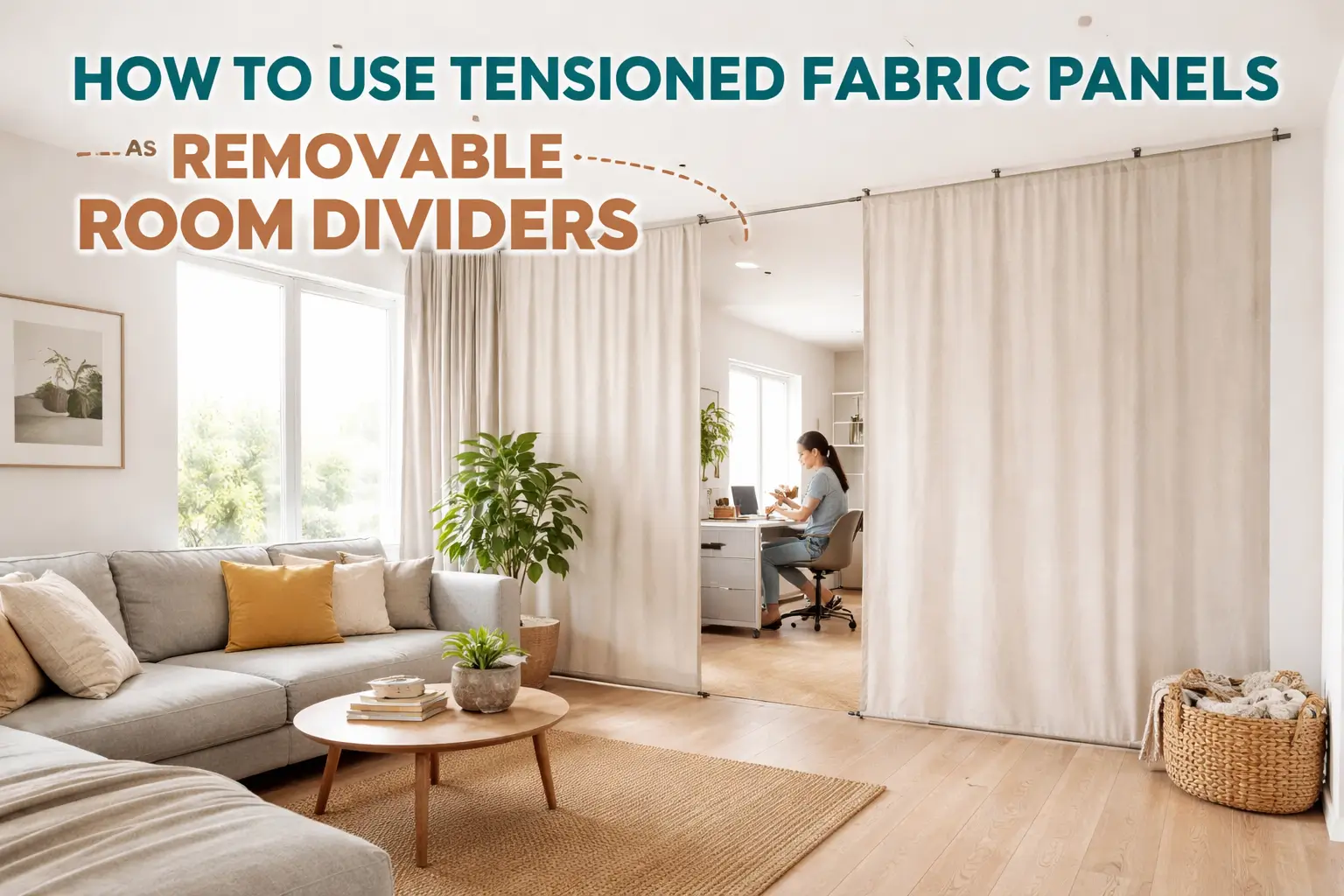
Dividing a room without building permanent walls is one of the biggest challenges renters face. Most lease agreements prohibit drilling, construction, or structural modifications, which limits traditional solutions. However, modern interior design offers flexible alternatives that allow you to reorganize your space without violating rental terms.
Tensioned fabric panels are one of the most practical and versatile solutions available. They use tension-based systems such as adjustable rods or frames to stretch fabric tightly between two surfaces. This creates a clean, stable divider that can separate areas for sleeping, working, or relaxing. Unlike permanent walls, these panels can be installed, adjusted, and removed easily.
This guide will teach you everything you need to know, including how tensioned fabric panels work, what materials to choose, how to install them step by step, and how to optimize them for privacy, comfort, and visual appeal.
What Are Tensioned Fabric Panels and How Do They Work
Tensioned fabric panels are fabric sheets stretched tightly using mechanical tension rather than permanent fixtures. The tension is created using rods, frames, or track systems that hold the fabric firmly in place.
This tension performs several important functions:
- Prevents sagging or wrinkles
- Keeps the divider stable
- Maintains a professional appearance
- Allows easy removal and repositioning
Unlike curtains, which hang loosely, tensioned fabric panels stay flat and structured. This makes them more effective as room dividers because they create clearer visual separation.
These panels rely on pressure-based systems such as:
- Vertical tension rods (floor to ceiling)
- Horizontal tension rods (wall to wall)
- Freestanding frames
- Track-mounted sliding systems
Each option offers different levels of flexibility and stability depending on your needs.
Benefits of Using Tensioned Fabric Panels as Removable Room Dividers
Tensioned fabric panels provide multiple advantages, especially for renters who need non-permanent solutions.
No permanent damage
Most systems use pressure instead of screws or nails. This protects:
- Ceilings
- Floors
- Walls
This ensures compliance with rental agreements.
Easy installation
Installation typically takes less than one hour and requires minimal tools.
Affordable solution
Compared to building walls or installing glass partitions, tensioned fabric panels are significantly cheaper.
Typical cost range:
- Budget DIY solution: $40 to $100
- Mid-range system: $100 to $250
- Premium system: $250 to $400
Portability
You can remove and reuse the panels when moving to a new apartment.
Flexibility
You can easily adjust or reposition the divider if your needs change.
Types of Tensioned Fabric Panel Systems
Understanding the available systems helps you choose the best one.
Vertical tension rod systems
These rods extend between the floor and ceiling using adjustable pressure.
Best for:
- Studio apartments
- Creating temporary bedrooms
- Separating office spaces
Advantages:
- No drilling required
- Easy installation
- Strong vertical support
Horizontal tension rod systems
These rods extend between two walls.
Best used for:
- Narrow openings
- Closet areas
- Small partitions
Advantages:
- Simple setup
- Affordable
- Ideal for small spaces
Freestanding frame systems
These use lightweight frames to hold fabric panels.
Advantages:
- No reliance on walls or ceiling
- Fully portable
- Excellent stability
Best for:
- Frequent rearrangement
- Flexible room layouts
Track-mounted sliding systems
These systems allow fabric panels to slide along ceiling tracks.
Advantages:
- Smooth operation
- Adjustable coverage
- Modern appearance
Best for:
- Larger rooms
- Flexible space division
Materials You Need for Installation
Choosing the right materials ensures durability and performance.
Essential materials
You will need:
- Tension rods or frame system
- Fabric panel
- Measuring tape
- Level tool
Optional but helpful:
- Fabric clips
- Velcro strips
- Curtain rings
- Connectors
Choosing the right fabric
Fabric selection affects privacy, durability, and appearance.
Best fabric options include:
Blackout fabric
Benefits:
- Maximum privacy
- Blocks light
- Ideal for bedrooms
Polyester fabric
Benefits:
- Durable
- Wrinkle-resistant
- Easy maintenance
Cotton fabric
Benefits:
- Natural appearance
- Breathable
- Affordable
Sheer fabric
Benefits:
- Allows light flow
- Maintains openness
Step-by-Step Guide to Installing Tensioned Fabric Panels
Follow this detailed process for successful installation.
Step 1: Measure your space accurately
Accurate measurement ensures proper fit and stability.
Measure:
- Floor-to-ceiling height
- Width of the divider area
Measure at multiple points to ensure accuracy.
Add 2–4 inches extra to ensure proper tension.
Step 2: Choose the right tension system
Select a system based on your space:
- Vertical rods for full-height dividers
- Horizontal rods for narrow areas
- Frames for portable solutions
Make sure the rod or frame fits your measurements.
Step 3: Prepare the fabric panel
Prepare fabric by:
- Cutting to correct size
- Sewing sleeves if needed
- Attaching clips or hooks
Ensure edges are straight and clean.
Step 4: Install the tension rod or frame
Position the rod between surfaces.
Then:
- Extend the rod slowly
- Apply tension until secure
- Ensure the rod is straight
Use a level tool to confirm alignment.
Step 5: Attach the fabric
Secure fabric using:
- Clips
- Hooks
- Velcro
- Sewn sleeves
Ensure even tension across the entire panel.
Smooth out wrinkles.
Step 6: Test stability
Check installation by gently pulling.
Ensure:
- No slipping
- No sagging
- Proper tension
Make adjustments if needed.
Design Tips for Better Results
Proper design improves functionality and appearance.
Choose appropriate colors
Color affects how the space feels.
Use:
- Light colors to maintain openness
- Dark colors for privacy
Neutral colors work well in most spaces.
Select appropriate fabric thickness
Thicker fabric provides:
- Better privacy
- Better sound absorption
Lighter fabric provides:
- Better light flow
- More open feel
Consider layering
Layering offers flexibility.
Benefits include:
- Adjustable privacy
- Improved appearance
- Better sound control
Best Places to Use Tensioned Fabric Room Dividers
These panels work well in many environments.
Studio apartments
Separate:
- Sleeping area
- Living area
Home offices
Create dedicated workspaces.
Improve focus and productivity.
Shared rooms
Provide privacy for roommates.
Living rooms
Create functional zones.
Common Mistakes to Avoid
Avoid these errors for best results.
Incorrect measurements
Leads to instability.
Always measure carefully.
Using weak tension rods
Leads to collapse.
Choose high-quality rods.
Choosing unsuitable fabric
Too thin reduces privacy.
Too heavy may strain rods.
Improper installation
Leads to instability.
Always ensure proper alignment.
Maintenance and Care Tips
Proper care increases lifespan.
Cleaning tips
- Vacuum regularly
- Wash periodically
- Follow fabric care instructions
Storage tips
If removing panels:
- Fold carefully
- Store in dry location
Cost Breakdown and Budget Planning
Typical cost ranges include:
DIY solution:
- Rod: $20 to $50
- Fabric: $20 to $80
Total: $40 to $130
Pre-made systems:
- $100 to $400
DIY options provide excellent value.
Advanced Ideas and Creative Uses
You can expand functionality using advanced ideas.
Sliding panel systems
Allow adjustable separation.
Decorative panels
Use patterns for visual enhancement.
Acoustic improvement
Use thicker fabric to reduce noise.
Conclusion
Tensioned fabric panels are one of the most practical and renter-friendly solutions for dividing rooms without permanent construction. They provide flexibility, affordability, and ease of installation while protecting the property from damage. Their ability to create privacy, define spaces, and improve organization makes them ideal for modern living environments.
By selecting the right materials, measuring accurately, and following proper installation techniques, you can create a functional and visually appealing room divider that meets your needs. With minimal investment and effort, tensioned fabric panels can significantly improve comfort, usability, and flexibility in any rental space.
Frequently Asked Questions
1. Are tensioned fabric panels safe to use in rental apartments?
Yes. They do not require permanent modifications.
2. How long do tensioned fabric panels last?
With proper care, they can last many years.
3. Can I install them without tools?
Yes. Most systems require minimal tools.
4. Do they provide sound insulation?
They provide partial sound reduction.
5. Can they be moved easily?
Yes. They are designed for portability and reuse.