
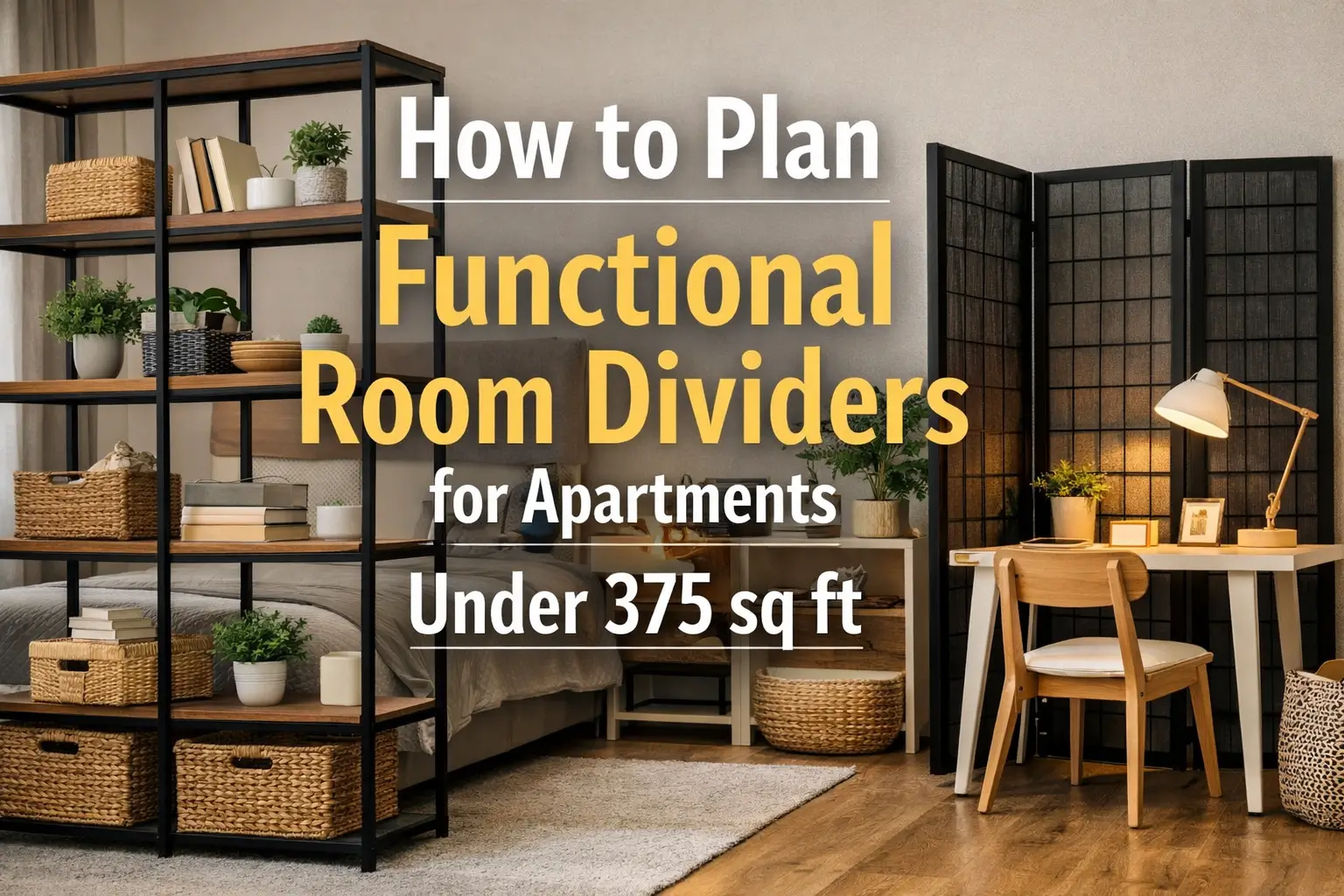
Living in an apartment under 375 sq ft requires careful planning to ensure the space remains functional, organized, and comfortable. Without clear separation between areas like sleeping, working, and relaxing, the entire apartment can feel cluttered and inefficient. This lack of structure can negatively impact your productivity, sleep quality, and overall comfort.
Functional room dividers offer a practical solution, especially for renters who cannot make permanent changes. The right divider can help define zones, improve organization, and create privacy without requiring construction or violating lease agreements. More importantly, well-planned dividers make your apartment feel larger and more intentional.
If you want to transform your small apartment into a space that feels structured, efficient, and comfortable without renovations, understanding how to plan and place room dividers correctly is essential. The strategies below will help you make the most of every square foot available.
Why Room Dividers Are Essential in Apartments Under 375 sq ft
In microapartments, every square foot serves multiple purposes. Without separation, your bed may sit next to your workspace, your dining table may overlap with your living area, and your storage may spread across the entire room. This creates visual clutter and reduces functionality.
Room dividers help solve these problems by creating clear zones inside a single room.
Key benefits include:
- Improved organization and structure
- Increased privacy, especially for sleeping areas
- Better mental separation between work and relaxation
- Reduced visual clutter
- More efficient use of available space
For example, separating your sleeping area from your workspace helps your brain associate each zone with a specific activity. This improves both productivity and rest quality.
Room dividers also help renters customize their space without permanent installation, making them ideal for leased apartments.
Step 1: Identify and Define Your Functional Zones
Before choosing any divider, you need to understand how your apartment functions daily. This step is critical because placing a divider without a clear purpose can make your space feel smaller instead of more organized.
Start by identifying your essential zones. Most apartments under 375 sq ft include:
- Sleeping zone
- Living or relaxation zone
- Workspace or desk area
- Dining area
- Storage area
Not every apartment needs all five zones, but most require at least three.
How to identify your priority zones
Ask yourself these questions:
- Where do you sleep?
- Where do you work or use your computer?
- Where do you relax during the day?
- Where do you eat?
- Where do you store clothing and personal items?
Once identified, rank these zones in order of importance. For most people, separating the sleeping area provides the biggest improvement.
Example of a simple zone layout
A typical microapartment layout might include:
- Bed near the wall or window
- Desk near natural light
- Sofa facing inward
- Storage along vertical wall space
Your divider will act as a boundary between two of these zones.
Step 2: Choose the Best Type of Renter-Friendly Room Divider
Not all dividers work well in small apartments. The best options are flexible, lightweight, and non-permanent.
Option 1: Freestanding shelving units
Freestanding shelves are one of the most effective solutions because they combine separation with storage.
Benefits include:
- No installation required
- Provides vertical storage
- Allows light to pass through
- Easy to reposition
- Maximizes vertical space
Open shelving works best because it maintains visual openness.
Ideal placement examples:
- Between bed and living area
- Between workspace and sleeping area
Option 2: Curtains with tension rods
Curtains are one of the most affordable and flexible divider solutions.
Advantages include:
- No drilling required
- Easy installation
- Low cost
- Fully removable
- Adjustable privacy
Tension rods allow you to install curtains without damaging walls or ceilings.
Curtains work especially well for separating sleeping areas.
Option 3: Folding screens
Folding screens provide instant separation and maximum flexibility.
Benefits include:
- No installation required
- Portable and movable
- Lightweight
- Available in various styles
They are ideal for renters who frequently rearrange their space.
Option 4: Using furniture as dividers
Furniture can serve as natural room dividers without adding extra objects.
Common examples include:
- Bookcases
- Sofas
- Wardrobes
- Console tables
This approach is highly efficient because each item serves multiple purposes.
For example, placing a bookshelf behind your bed separates your sleeping and living areas while providing storage.
Option 5: Clothing racks and open wardrobes
Clothing racks work well as dividers in small apartments.
Benefits include:
- Adds clothing storage
- No installation required
- Easy to move
- Maintains open visual flow
This solution works particularly well in studio apartments without closets.
Step 3: Measure Your Apartment Correctly
Accurate measurements prevent layout problems and ensure your divider fits properly.
Key measurements to take:
- Floor width
- Ceiling height
- Divider width
- Walking clearance
Always leave at least 24–30 inches of walking space. This prevents your apartment from feeling cramped.
How to measure step by step
- Measure the total width of your apartment
- Identify where your divider will go
- Measure available width in that location
- Confirm walking clearance
- Compare measurements with divider dimensions
Never guess measurements. Even small mistakes can affect usability.
Step 4: Preserve Natural Light and Visual Flow
Natural light plays a major role in how large your apartment feels.
Blocking light makes your apartment feel smaller and more confined.
Choose dividers that allow light to pass through, such as:
- Open shelving
- Sheer curtains
- Slatted panels
- Partial-height dividers
Avoid solid, opaque dividers unless absolutely necessary.
Best placement strategy for light preservation
Place dividers perpendicular to windows rather than directly blocking them.
This maintains brightness throughout the apartment.
Step 5: Maximize Storage with Multi-Functional Dividers
In small apartments, every item should serve more than one function.
The best dividers also provide storage.
Examples include:
- Bookcases
- Storage shelves
- Wardrobes
- Cabinet units
Benefits include:
- Reduced clutter
- Improved organization
- Better use of vertical space
Storage dividers are especially useful in apartments with limited closets.
Step 6: Choose Strategic Placement
Placement determines how effective your divider will be.
Best placement locations include:
- Between bed and living area
- Between workspace and sleeping zone
- Near entry areas
- Between dining and relaxation areas
Avoid placing dividers in the center of your apartment unless necessary.
Instead, align them with existing furniture or walls.
Step 7: Maintain Flexibility and Adaptability
Your needs may change over time, so flexibility is essential.
Choose dividers that are:
- Easy to move
- Lightweight
- Non-permanent
- Adjustable
This allows you to modify your layout when necessary.
Common Mistakes to Avoid
Avoiding mistakes is critical for maintaining functionality.
Common mistakes include:
- Using oversized dividers
- Blocking natural light
- Choosing permanent solutions
- Overcrowding the space
- Ignoring walking clearance
Always prioritize openness and functionality.
Budget-Friendly Divider Solutions
You don’t need expensive furniture to create effective separation.
Affordable options include:
- Curtains and tension rods
- Second-hand shelving units
- Clothing racks
- Folding screens
- DIY shelving
Many affordable solutions work just as well as expensive ones.
Final Checklist Before Installing Your Divider
Before installing your divider, confirm the following:
- You identified your functional zones
- Your divider fits your measurements
- Walking clearance is maintained
- Natural light is preserved
- Divider is renter-friendly
- Divider provides storage if possible
This ensures optimal results.
Conclusion
Planning functional room dividers for apartments under 375 sq ft is one of the most effective ways to improve organization, comfort, and usability. The key is choosing renter-friendly solutions that define zones without blocking light or reducing flexibility. By identifying your functional zones, selecting the right divider type, measuring carefully, and placing dividers strategically, you can transform your apartment into a structured and efficient living environment. Even the smallest apartment can feel organized and comfortable when every element is planned intentionally.
Frequently Asked Questions (FAQ)
1. What is the best overall room divider for apartments under 375 sq ft?
Freestanding open shelving units are the best overall option because they provide separation, storage, and maintain visual openness.
2. Are curtains good room dividers for small apartments?
Yes. Curtains are affordable, flexible, renter-friendly, and easy to install without damaging walls.
3. Will room dividers make my apartment feel smaller?
No. When used correctly, room dividers make apartments feel more organized and visually structured, which improves the perception of space.
4. What is the most renter-friendly room divider?
Curtains with tension rods and freestanding shelves are the most renter-friendly options because they require no permanent installation.
5. How much walking space should I leave around a divider?
You should leave at least 24–30 inches of walking clearance to maintain comfortable movement.