
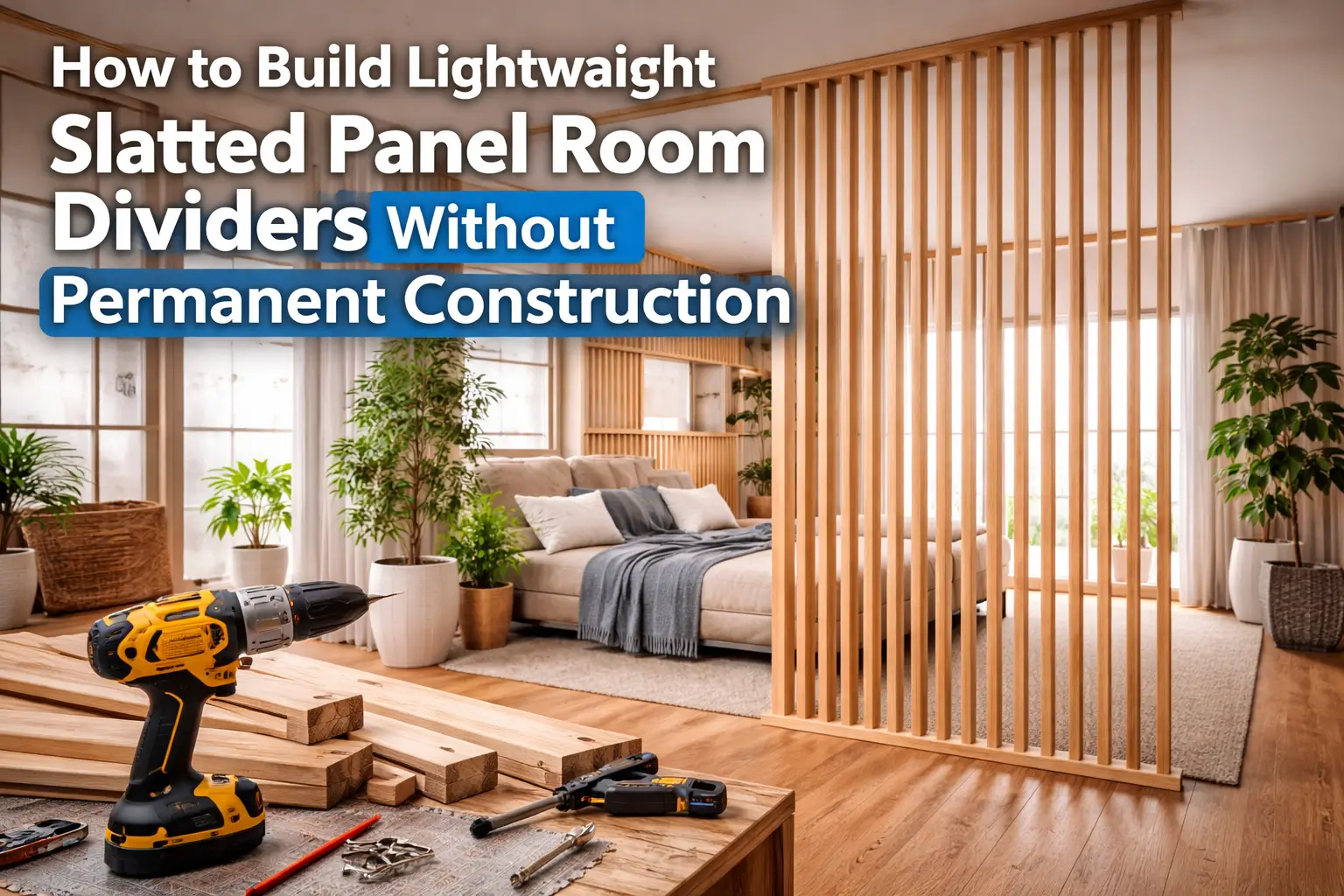
Living in a rental apartment often means working within strict boundaries. You may want to create privacy, define spaces, or add style to a studio layout—but drilling into walls or making structural changes is usually not allowed. That’s where lightweight slatted panel room dividers become a practical solution.
These dividers offer a balance between functionality and flexibility. They create separation without blocking light and airflow, and most importantly, they can be installed without permanent construction. For renters in the United States, avoiding lease violations is just as important as improving comfort.
In this comprehensive instructional guide, you’ll learn exactly how to plan, build, and install a lightweight slatted panel divider safely and efficiently. By understanding each step clearly, you’ll gain the confidence to transform your space while keeping your rental agreement intact.
Why Renters Need Non-Permanent Room Dividers
Many U.S. rental agreements prohibit structural modifications. This typically includes drilling into ceilings, anchoring heavy objects to walls, or altering framing elements. Violating these terms can result in penalties or loss of your security deposit.
Studio apartments and open-concept layouts are increasingly common, especially in cities like New York, Los Angeles, and Chicago. While these layouts maximize square footage, they often lack privacy.
A non-permanent slatted divider allows renters to:
- Create a bedroom area in a studio
- Separate a home office space
- Add visual structure to open layouts
- Maintain airflow and natural light
What Are Lightweight Slatted Panel Room Dividers?
A slatted panel divider is a structure made of evenly spaced vertical or horizontal wooden slats attached to a lightweight frame. Unlike solid walls, slats allow partial visibility and light transmission.
The “lightweight” aspect means:
- The structure is easy to move
- It does not require anchoring to structural beams
- It can be freestanding or tension-mounted
These dividers are popular in modern interior design because they provide separation without heaviness.
Benefits of Slatted Panels in Rental Spaces
1. Light Transmission
Solid dividers block light. Slatted panels maintain brightness.
2. Airflow
Ventilation remains uninterrupted.
3. Visual Appeal
They add architectural interest without permanent remodeling.
4. Reversibility
You can remove them when moving out.
Planning Before You Build
Before purchasing materials, take accurate measurements:
- Floor-to-ceiling height
- Desired divider width
- Clearance for baseboards
Check your lease agreement carefully. If unsure, choose a freestanding option rather than a tension-mounted system.
Sketch your design. Decide:
- Vertical or horizontal slats
- Spacing (1–2 inches is common)
- Painted or natural finish
Materials You’ll Need
For a standard 6 ft x 8 ft divider:
- 1×2 or 1×3 pine boards (lightweight and affordable)
- Wood screws
- Wood glue
- Sandpaper (120 and 220 grit)
- Paint or stain (optional)
- Furniture pads (to protect flooring)
In the U.S., pine boards typically range from $2–$5 per piece depending on length.
Tools Required
You don’t need professional tools. Basic DIY equipment includes:
- Measuring tape
- Level
- Drill
- Saw (hand saw or circular saw)
- Screwdriver
- Clamps
If you don’t own a saw, many hardware stores like Home Depot or Lowe’s offer cutting services.
Step-by-Step Building Process
Step 1: Cut the Frame Pieces
Create a rectangular frame using 1×3 boards.
Step 2: Assemble the Frame
Secure corners with screws and wood glue. Ensure square alignment using a level.
Step 3: Prepare the Slats
Sand all slats to remove splinters.
Step 4: Attach Slats Evenly
Mark spacing with a pencil before securing each slat.
Step 5: Sand and Finish
Apply paint or stain evenly. Allow proper drying time.
Non-Permanent Installation Methods
Freestanding Base
Add perpendicular feet supports at the bottom for stability.
Tension Rod System
Use heavy-duty adjustable tension rods between floor and ceiling.
Weighted Base Panels
Attach the divider to a low-profile base for balance.
Stability and Safety Tips
- Keep weight evenly distributed
- Use furniture pads to prevent scratches
- Avoid excessive height without reinforcement
- Test stability before daily use
Safety is especially important in apartments with pets or children.
Estimated Cost Breakdown (U.S.)
| Item | Estimated Cost |
|---|---|
| Lumber | $80–$150 |
| Hardware | $20–$40 |
| Paint/Stain | $25–$50 |
| Tools (if needed) | Varies |
Total average: $150–$250.
Customization Ideas
- Paint slats matte black for modern style
- Use natural oak stain for Scandinavian look
- Adjust slat spacing for more privacy
- Add LED strip lighting for ambiance
Common Mistakes to Avoid
- Incorrect measurements
- Uneven slat spacing
- Overloading tension mounts
- Ignoring ceiling height variations
Maintenance and Easy Removal
To remove:
- Unscrew base supports
- Loosen tension rods
- Patch minor marks if necessary
Store panels flat to prevent warping.
Conclusion
Building a lightweight slatted panel room divider without permanent construction is a practical and renter-friendly way to redefine your living space. With careful planning, the right materials, and clear step-by-step execution, you can create privacy and structure without violating your lease. This approach offers flexibility, affordability, and style—proving that smart design doesn’t require permanent construction.
Frequently Asked Questions
1. Can I build this without any power tools?
Yes, but it will require more manual effort.
2. Will this damage my ceiling?
Not if you use proper padding with tension systems.
3. Is pine strong enough?
Yes, for lightweight dividers under 8 feet.
4. Can I disassemble and reuse it?
Absolutely, especially with screw assembly.
5. Is landlord approval necessary?
If fully freestanding, typically no—but always verify your lease.