
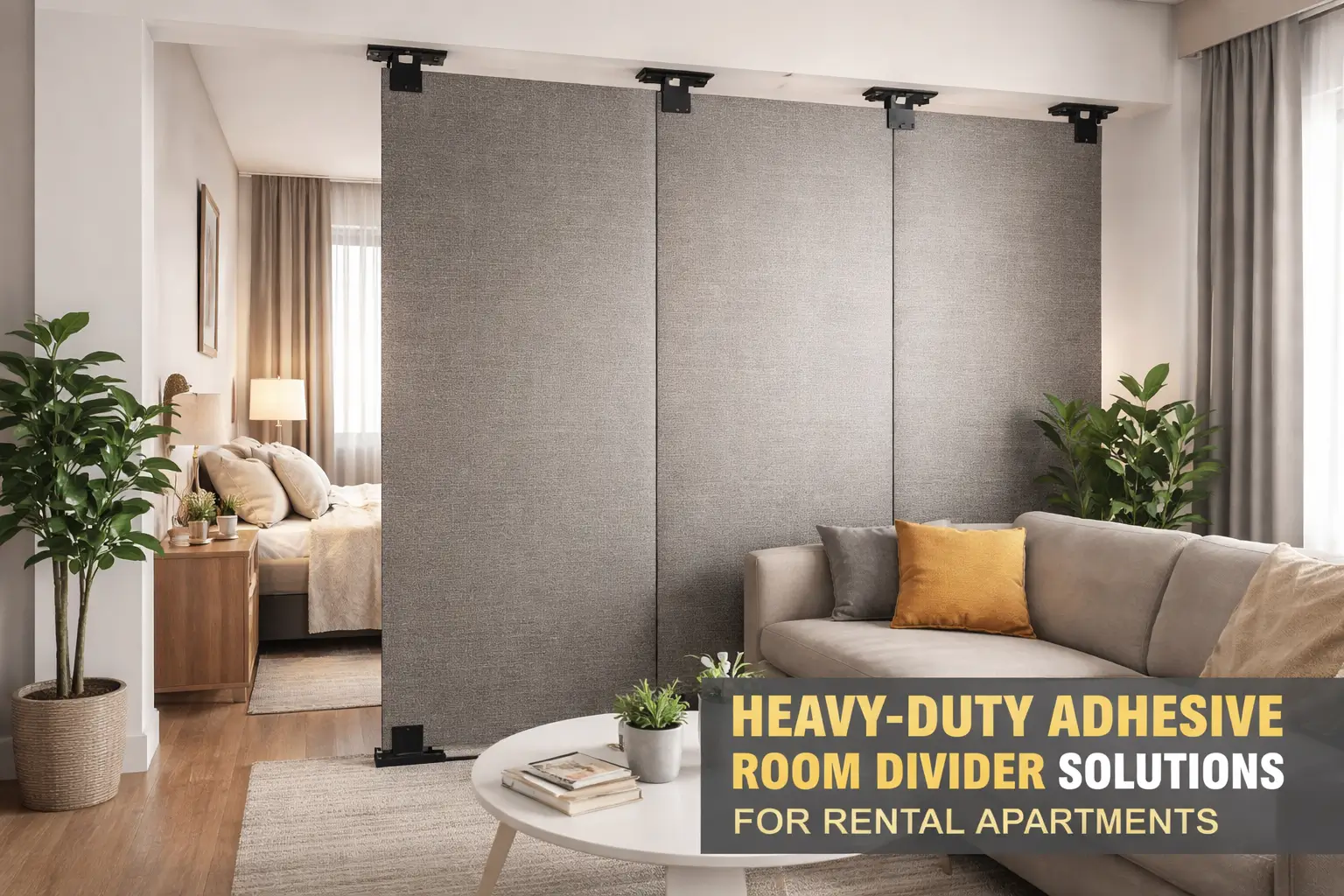
Living in a rental apartment often comes with limitations, especially when it comes to modifying the space. Many tenants want to create privacy, separate functional areas, or improve organization without drilling holes or making permanent changes. Heavy-duty adhesive room divider solutions offer a practical alternative that respects rental agreements while enhancing everyday living.
These solutions are designed to provide strong support and stability using advanced adhesive technologies. Unlike lightweight temporary dividers, heavy-duty adhesive systems can handle larger panels, thicker materials, and repeated use, making them suitable for long-term rental living.
If you are searching for a way to divide your apartment without risking wall damage or losing your security deposit, understanding how these solutions work—and how to use them correctly—can make a meaningful difference. The sections below explain everything you need to know before choosing and installing one.
What Are Heavy-Duty Adhesive Room Dividers?
Heavy-duty adhesive room dividers are non-permanent partition systems that rely on high-strength adhesives instead of screws, nails, or drilling. They are designed to create visual or functional separation within a room while remaining removable.
These dividers often consist of panels, tracks, or frames that attach directly to walls, ceilings, or floors using industrial-grade adhesive strips or pads. Unlike standard adhesive hooks or lightweight partitions, these systems are engineered to support more weight and maintain stability over time.
The key distinction lies in load capacity and reliability. Heavy-duty adhesive dividers are built for renters who need dependable separation without compromising the structural integrity of the apartment.
Why Adhesive Solutions Are Ideal for Rental Apartments
Rental agreements frequently prohibit permanent alterations. Drilling holes, mounting brackets, or installing fixed walls can lead to penalties or repair costs. Adhesive room dividers avoid these issues entirely.
Because they do not penetrate surfaces, adhesive solutions preserve walls, ceilings, and floors. This makes them especially suitable for apartments with strict lease conditions or older buildings where repairs are costly.
Additionally, adhesive dividers offer flexibility. They can be repositioned or removed when your needs change, allowing renters to adapt their space without committing to a single layout.
Types of Heavy-Duty Adhesive Room Dividers
Several divider styles are compatible with heavy-duty adhesive installation, each serving different needs.
Panel dividers use solid or semi-rigid panels to block visibility and sound. These are ideal for bedrooms or shared living spaces.
Curtain-based systems rely on adhesive-mounted tracks that hold thick fabric curtains. They offer flexibility and softness while maintaining privacy.
Modular dividers consist of interlocking panels that can be expanded or reduced. Adhesive mounting allows these systems to grow with your space.
Hybrid systems combine panels and curtains, providing both visual separation and adjustable openness.
Adhesive Technologies Used
Not all adhesives are created equal. Heavy-duty room divider solutions rely on specialized technologies designed for strength and removability.
Industrial-grade double-sided tapes are commonly used, offering high shear strength and long-term adhesion. Removable adhesive pads are engineered to release cleanly when pulled correctly.
Some systems use pressure-sensitive adhesives that bond more securely over time while remaining removable with controlled force. Understanding the adhesive type helps ensure proper installation and safe removal.
Weight Limits and Load Capacity
One of the most important considerations is load capacity. Each adhesive system has a maximum weight rating that must be respected.
Heavy-duty adhesive dividers typically support anywhere from 10 to 30 pounds per mounting point, depending on the surface and adhesive used. Distributing weight evenly across multiple attachment points increases stability.
Ignoring weight limits can result in failure, surface damage, or safety hazards. Always verify manufacturer specifications before installation.
Surface Compatibility
Adhesive performance depends heavily on surface type.
Smooth, non-porous surfaces such as painted drywall, glass, metal, and sealed wood provide the best adhesion. Textured walls, brick, or unsealed surfaces may reduce effectiveness.
Before installation, surfaces should be cleaned thoroughly to remove dust, grease, or residue. Proper surface preparation significantly improves adhesive strength.
Installation Process Step by Step
Installing a heavy-duty adhesive room divider requires precision and patience.
First, measure the area carefully and mark alignment points using removable painter’s tape. Next, clean the surfaces with isopropyl alcohol and allow them to dry completely.
Apply adhesive strips according to instructions, pressing firmly for the recommended duration. Allow curing time before attaching panels or curtains. Rushing this step can weaken adhesion.
Common Installation Mistakes to Avoid
A frequent mistake is skipping surface preparation. Adhesives bond poorly to dirty or damp surfaces.
Another issue is exceeding weight limits or installing on incompatible surfaces. Always confirm that your wall type supports adhesive mounting.
Finally, failing to allow proper curing time reduces long-term stability and increases the risk of detachment.
Removal Without Damage
One of the main advantages of adhesive dividers is clean removal. Most systems include pull-tab adhesives designed to stretch-release.
Removal should be done slowly and at a shallow angle. Applying heat with a hair dryer can soften adhesives, making removal easier.
Never force or pry components off the wall, as this can damage paint or drywall.
Design and Aesthetic Considerations
Adhesive dividers are not just functional; they also influence the look and feel of your space.
Transparent or translucent panels maintain light flow, while opaque materials enhance privacy. Fabric curtains soften acoustics and add warmth.
Choosing colors and textures that match your existing décor helps the divider blend naturally into the apartment.
Use Cases in Rental Apartments
In studio apartments, adhesive dividers can separate sleeping and living areas. In shared apartments, they create personal zones without permanent walls.
Home offices benefit from visual separation that improves focus. Bedrooms can gain privacy without structural changes.
These solutions adapt well to changing needs, making them practical for renters.
Maintenance and Longevity
Most adhesive room dividers require minimal maintenance. Regular dusting and gentle cleaning keep them looking new.
If repositioning is needed, replacing adhesive strips ensures continued strength. Proper care extends the lifespan of both the divider and the mounting surfaces.
Cost Considerations
Prices vary depending on materials, size, and adhesive quality. Budget options offer basic functionality, while premium systems provide better durability and aesthetics.
Investing in higher-quality adhesive solutions often results in better performance and fewer issues over time.
Safety and Building Regulations
While adhesive dividers are non-permanent, renters should still review lease agreements. Some buildings have rules regarding room modifications or fire safety.
Ensuring that dividers do not block exits or ventilation is essential for compliance and safety.
Conclusion
Heavy-duty adhesive room divider solutions offer renters a reliable way to customize their living space without permanent alterations. By understanding adhesive technologies, weight limits, and proper installation techniques, tenants can create functional, attractive divisions that respect rental agreements. With careful planning and informed choices, adhesive dividers become a practical extension of modern rental living.
Frequently Asked Questions
1. Can heavy-duty adhesive room dividers support solid panels?
Yes, as long as weight limits and surface compatibility are respected.
2. Will adhesive dividers damage painted walls?
When removed correctly, most systems leave no residue or damage.
3. How long do adhesive room dividers last?
With proper installation, they can last several years.
4. Are adhesive dividers reusable?
Most systems are reusable with replacement adhesive strips.
5. Can these dividers be installed on ceilings?
Some systems support ceiling installation, but surface strength must be verified.