
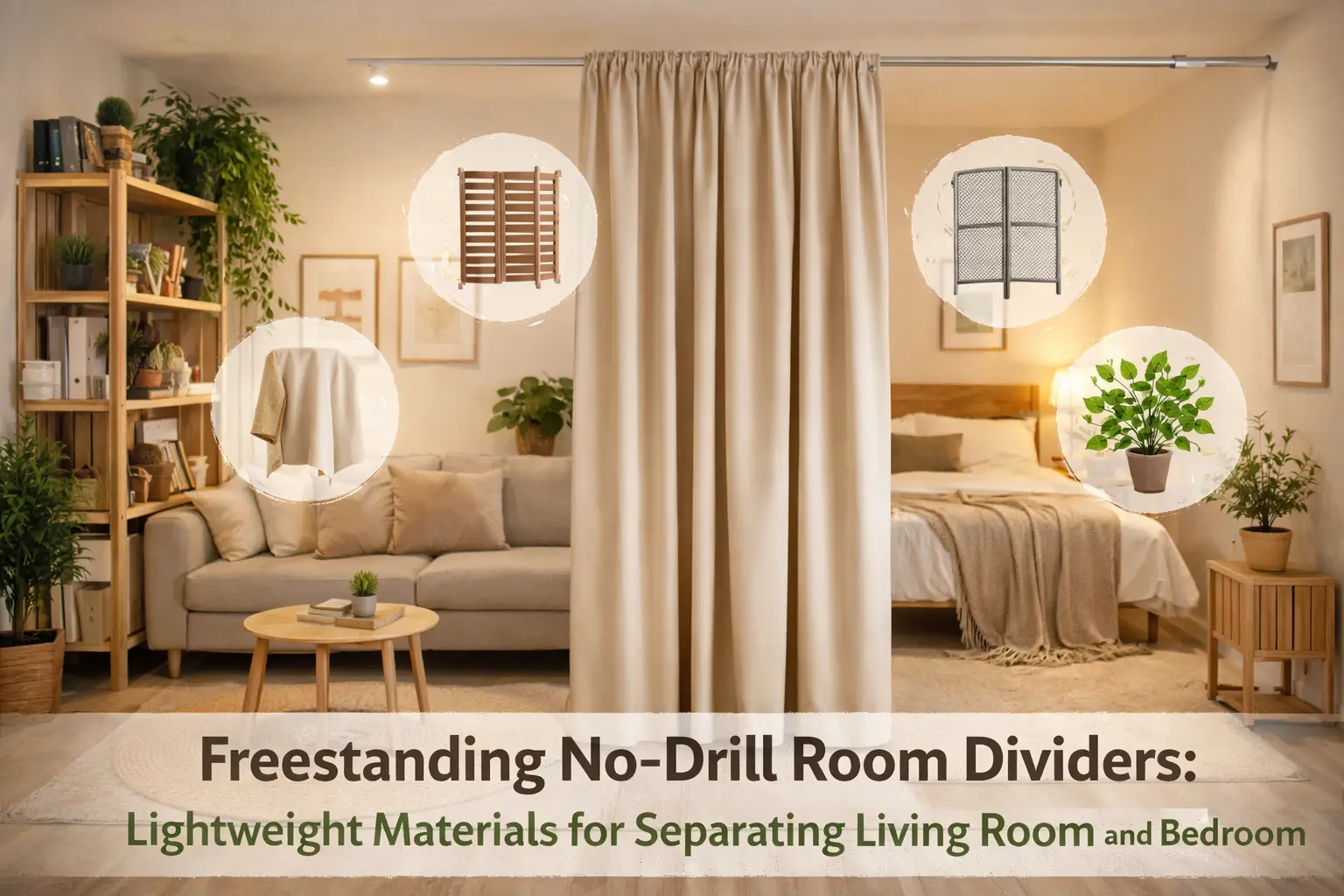
Living in a rental apartment often requires balancing personal comfort with property limitations. When walls cannot be drilled or permanently altered, creating defined spaces between the living room and bedroom can feel challenging, especially in smaller layouts.
Freestanding no-drill room dividers offer a practical way to organize space without violating lease agreements. Designed to sit securely on the floor, these solutions rely on structure, weight distribution, and smart materials rather than permanent installation.
If you are looking for clear, practical guidance on how lightweight freestanding dividers work, which materials perform best, and how to choose the right option for your rental apartment, this guide will walk you through each step with clarity and real-world considerations that make everyday living easier.
Understanding Freestanding No-Drill Room Dividers
Freestanding no-drill room dividers are self-supporting structures designed to separate areas within a room without attaching to walls, ceilings, or floors. Unlike fixed partitions, they rely on their own frame, base, or weighted support to remain stable.
These dividers are especially suitable for rental apartments because they do not cause structural damage. They can be moved, adjusted, or removed entirely, making them adaptable to changing needs or future moves.
In most cases, freestanding dividers are modular or foldable, allowing renters to experiment with layout changes without committing to a permanent design decision.
Why Lightweight Materials Matter in Small Apartments
Lightweight materials are essential in small rental apartments for both practical and safety reasons. Heavy dividers can be difficult to move, pose stability risks, and overwhelm limited floor space.
Using lighter materials allows for easier repositioning and reduces the risk of floor damage. It also makes installation straightforward, often requiring no tools at all.
From a design perspective, lightweight dividers tend to feel less visually dense. This helps maintain an open, breathable atmosphere, which is critical in compact living environments.
Rental Apartment Rules and Constraints
Most rental agreements restrict permanent modifications such as drilling holes, installing anchors, or mounting tracks. Even minor alterations can result in repair charges or security deposit deductions.
Freestanding dividers avoid these issues entirely. Since they rest on the floor and do not attach to the property, they are generally considered personal furniture rather than structural changes.
Understanding these constraints helps renters choose solutions that align with lease terms while still improving privacy and functionality.
Key Criteria for Choosing the Right Divider
Before selecting a divider, measure the available space carefully. Consider ceiling height, walking paths, and furniture placement to ensure the divider does not disrupt movement.
Light flow is another critical factor. Solid panels may block natural light, while open or semi-transparent designs help maintain brightness.
Stability should never be overlooked. Even lightweight dividers must have a solid base or frame to prevent tipping, especially in homes with pets or children.
Fabric-Based Freestanding Dividers
Fabric dividers are among the lightest and most flexible options available. They typically consist of textile panels stretched over frames or suspended from freestanding stands.
These dividers work well for visual separation and privacy, especially between sleeping and living areas. They are easy to fold, store, and replace, making them highly adaptable.
However, fabric dividers provide minimal sound insulation. Their primary function is zoning rather than acoustic separation.
Folding Screens and Panel Dividers
Folding screens are classic freestanding dividers that require no installation. Made from materials like fabric, lightweight wood, or composite panels, they can be adjusted to fit different layouts.
Their biggest advantage is portability. Folding screens can be moved or collapsed in seconds, offering instant flexibility.
They are best suited for visual separation and decorative enhancement rather than long-term structural division.
Lightweight Wood Dividers
Wood-based dividers made from bamboo, MDF, or slatted wood provide a balance between structure and lightness. Open slat designs allow airflow and light to pass through while still defining space.
These dividers often blend well with modern and minimalist interiors. Their natural texture adds warmth without overwhelming the room.
Because they are freestanding, they can be repositioned easily and do not require permanent installation.
Metal Frame Dividers
Metal frame dividers use thin steel or aluminum structures combined with fabric, mesh, or open panels. They are durable yet relatively lightweight.
This type of divider is ideal for modern or industrial-style apartments. The slim frames reduce visual bulk while still providing clear separation.
Proper base support is important to ensure stability, particularly in high-traffic areas.
Furniture-Integrated Dividers
Some freestanding dividers double as functional furniture, such as open shelving units or low storage consoles. These pieces separate space while adding practical storage.
Open-back shelving works particularly well because it allows light to pass through. It also avoids the boxed-in feeling that solid walls can create.
This option is efficient for renters who want to maximize both storage and spatial organization without adding extra items.
Plant-Based Freestanding Dividers
Plants can serve as natural room dividers when arranged on stands, shelves, or vertical frames. They offer soft separation while enhancing indoor aesthetics.
This approach works best in well-lit apartments and creates a more relaxed, organic atmosphere.
While plant dividers do not offer full privacy, they are effective for gentle zoning and visual balance.
Acoustic Considerations
Most lightweight freestanding dividers are not designed for soundproofing. They may slightly reduce noise but should not be relied upon for complete acoustic isolation.
If sound control is important, fabric panels with thicker materials can help absorb some noise. However, expectations should remain realistic.
For renters, the primary benefit of these dividers is visual separation rather than noise reduction.
Common Mistakes Renters Should Avoid
Choosing dividers that are too tall or wide can make a small apartment feel cramped. Scale should always match the room size.
Another mistake is neglecting stability. Lightweight does not mean unstable, and proper base support is essential.
Finally, avoid solutions that mimic permanent walls too closely, as they may create removal challenges later.
Setup, Maintenance, and Removal Tips
Place dividers on level flooring to ensure stability. Periodically check joints and frames for wear.
Cleaning lightweight dividers is usually simple, requiring only dusting or fabric care depending on the material.
When it’s time to move out, freestanding dividers can be removed instantly, leaving the apartment exactly as it was.
Conclusion
Freestanding no-drill room dividers made from lightweight materials provide a practical, renter-friendly way to separate living room and bedroom spaces. By understanding materials, layout considerations, and common limitations, renters can create functional zones without permanent changes. With thoughtful selection and placement, these dividers help transform small rental apartments into organized, comfortable living environments that adapt easily to everyday needs.
Frequently Asked Questions
1. Are freestanding no-drill dividers allowed in all rental apartments?
Yes, because they are considered movable furniture and do not alter the property.
2. What is the lightest material for a room divider?
Fabric panels and folding screens are generally the lightest options.
3. Can freestanding dividers be used in studio apartments?
Yes, they are especially effective in studios for separating sleeping and living areas.
4. Do lightweight dividers damage floors?
Most do not, especially when they have padded or flat bases.
5. How tall should a divider be for privacy?
A height between 5 and 6 feet usually provides visual privacy without blocking light completely.