
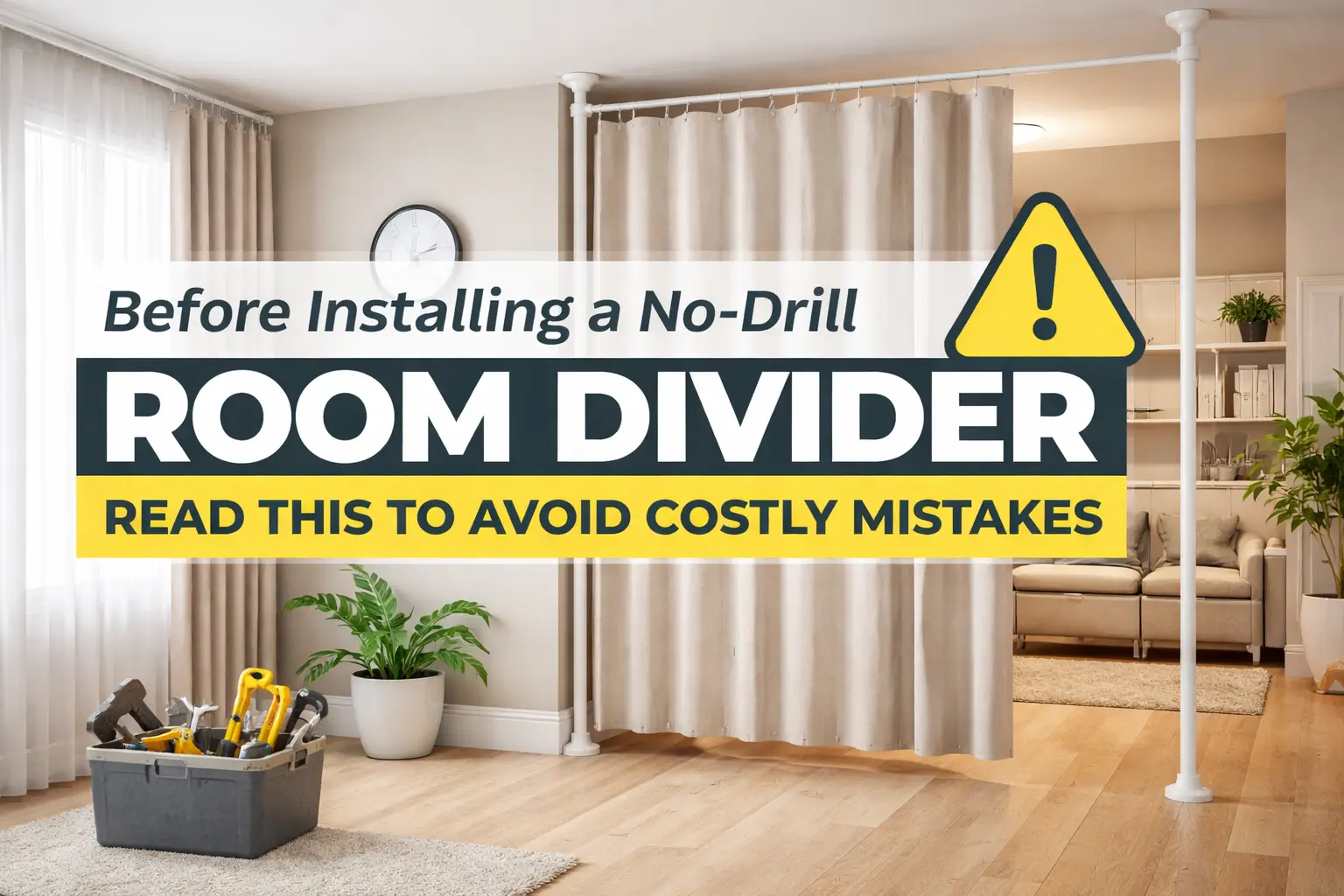
If you’re renting in the United States, you already know the rule: don’t damage the walls. Even small holes can turn into security deposit deductions. That’s exactly why no-drill room dividers have become such a popular solution.
They promise flexibility. They promise privacy. And most importantly, they promise zero damage.
For renters living in studio apartments, shared housing, or working from home, dividing a room can dramatically improve daily comfort. A visual barrier can create a bedroom feel in a studio. A curtain divider can turn a living area into a workspace. A freestanding panel can give roommates more privacy without construction.
But here’s the reality most listings don’t emphasize: “no-drill” does not automatically mean “risk-free.”
Understanding the hidden risks before installation can save you hundreds of dollars and unnecessary stress at move-out.
Mistake #1: Believing No-Drill Means No Surface Damage
Many no-drill systems use tension pressure between the floor and ceiling. While you’re not drilling holes, you are applying force.
Over time, that force can cause:
- Compression marks on drywall ceilings
- Cracks in textured or popcorn ceilings
- Indentation in laminate or softwood flooring
- Slight ceiling paint discoloration
- Subtle shifting that creates friction damage
This is especially common in older apartment buildings where drywall may not be as structurally reinforced as newer builds.
Step-by-Step: How to Prevent Pressure Damage
- Measure the exact ceiling height — do not estimate. Even a half-inch miscalculation increases tension.
- Read the manufacturer’s maximum pressure recommendations.
- Install protective pads between the tension poles and ceiling/floor.
- Tighten gradually, checking alignment every few turns.
- Stop when secure — not when immovable.
If you find yourself forcing the rod into place, you’re likely applying too much pressure.
Mistake #2: Ignoring Your Ceiling Type
Not all ceilings are compatible with tension-mounted systems.
Common ceiling types in U.S. rentals include:
- Standard drywall (8-foot ceilings)
- Popcorn-textured ceilings
- Drop ceilings with tiles
- Concrete ceilings (common in modern apartments)
- Vaulted or angled ceilings
High-Risk Ceilings
- Drop ceilings: Tension rods can lift or crack tiles.
- Popcorn ceilings: Pressure leaves visible circular marks.
- Vaulted ceilings: Most tension systems won’t sit evenly.
What You Should Do First
Before purchasing any divider:
- Identify your ceiling material.
- Confirm the ceiling height in inches.
- Check if the surface feels solid or hollow.
- Avoid tension systems entirely if you have drop ceilings.
If your ceiling is not flat and solid drywall or concrete, consider a freestanding option instead.
Mistake #3: Choosing the Wrong Type of Divider for Your Goal
Not all dividers serve the same purpose. Many renters choose based on price or aesthetics instead of function.
There are three main types:
1. Tension-Mounted Curtain Systems
Best for:
- Visual privacy
- Lightweight separation
- Temporary setups
Not ideal for:
- Sound reduction
- High-traffic areas
2. Freestanding Panel Dividers
Best for:
- Semi-permanent separation
- Stronger visual barrier
- Home office areas
Risks:
- Tipping if not weighted properly
3. Folding Screens
Best for:
- Decorative purposes
- Easy mobility
- Short-term use
Limitations:
- Lower stability
- Minimal sound buffering
Step-by-Step: How to Choose Correctly
Ask yourself:
- Do I need sound reduction or just visual privacy?
- Is this temporary or long-term?
- Are there pets or children in the home?
- Is the floor carpeted, hardwood, or laminate?
- Will this block airflow or natural light?
If stability is your priority, choose a weighted freestanding unit.
If flexibility matters more, a curtain system may work better.
Mistake #4: Overlooking Stability and Safety
A divider that tips over can cause:
- Floor scratches
- Broken decor
- Injury to pets or children
- Lease violations due to damage
Freestanding dividers often look sturdy online but may be lightweight in person.
How to Evaluate Stability Before Buying
- Check product weight specifications.
- Look for wide support feet.
- Read reviews mentioning “tipping.”
- Avoid narrow-base designs.
- Add anti-slip pads under feet.
If you live in a high-traffic space or small apartment, prioritize a low center-of-gravity design.
Mistake #5: Violating Lease Terms or Fire Safety Rules
Even without drilling, you can still violate your lease.
Common lease clauses prohibit:
- Blocking emergency exits
- Covering HVAC vents
- Interfering with sprinkler systems
- Obstructing windows
Blocking airflow can also create humidity buildup or heating/cooling inefficiency.
Step-by-Step: Lease Safety Check
- Review your lease agreement.
- Identify any modification clauses.
- Ensure the divider does not block:
- Windows
- Doors
- Air vents
- Smoke detectors
- If unsure, email your landlord with a photo of the proposed setup.
A quick confirmation can prevent costly misunderstandings later.
How to Install a No-Drill Room Divider the Right Way
Here is a renter-safe installation process.
Step 1: Inspect the Area
- Clean the floor and ceiling surfaces.
- Check for cracks or weak drywall spots.
- Measure twice.
Step 2: Prepare Protective Materials
- Felt pads
- Rubber anti-slip grips
- Soft cloth barriers if needed
Step 3: Install Slowly
- Align vertically using a level if possible.
- Apply gradual tension.
- Test stability gently — do not shake aggressively.
Step 4: Monitor During the First Week
- Check for ceiling marks.
- Confirm no shifting occurred.
- Adjust tension slightly if needed.
Regular inspection prevents small issues from becoming visible damage.
How to Protect Your Security Deposit
Your deposit deserves strategy, not luck.
Before installation:
- Take photos of the original condition.
- Document ceiling and floor surfaces.
- Keep product packaging and instructions.
During use:
- Inspect monthly.
- Watch for compression marks.
- Check for floor dents.
Before move-out:
- Remove tension slowly.
- Clean the area thoroughly.
- Use mild surface repair methods if necessary.
- Compare with your move-in photos.
If damage appears minimal but visible, address it before the final inspection.
Smart Alternatives If You’re Still Unsure
If tension systems make you nervous, consider:
- Freestanding bookshelves as visual barriers
- Modular cube storage units
- Weighted sliding panel systems
- Decorative fabric panels suspended from existing hooks
- Large indoor plants to create visual division
Sometimes distributing weight across the floor is safer than compressing ceiling surfaces.
Final Pre-Installation Checklist for Renters
Before installing your no-drill room divider, confirm:
- Ceiling type is compatible
- Height is measured accurately
- Protective pads are in place
- Lease restrictions are reviewed
- Stability has been tested
- Airflow and exits remain unobstructed
If you can confidently check each box, your installation risk drops significantly.
Conclusion: Smart Preparation Prevents Expensive Surprises
No-drill room dividers can absolutely improve your rental living experience. They allow flexibility, privacy, and better space utilization without permanent renovation.
However, the difference between a smart renter upgrade and a costly mistake lies in preparation. Understanding pressure limits, ceiling compatibility, safety risks, and lease boundaries puts you in control.
When you approach installation with awareness and caution, you protect more than just your walls — you protect your peace of mind and your security deposit.
Frequently Asked Questions
1. Can tension rods really crack ceilings?
Yes, especially if overtightened or used on weaker drywall.
2. Are no-drill dividers truly safe for apartments?
They can be safe if installed correctly and matched to the right ceiling type.
3. What is the safest option for renters?
Weighted freestanding dividers with protective floor pads are often the safest.
4. How do I remove a tension divider without damage?
Release tension gradually and support the rod while lowering it.
5. Should I tell my landlord before installing one?
It’s not always required, but it’s smart to confirm if your lease language is strict.