
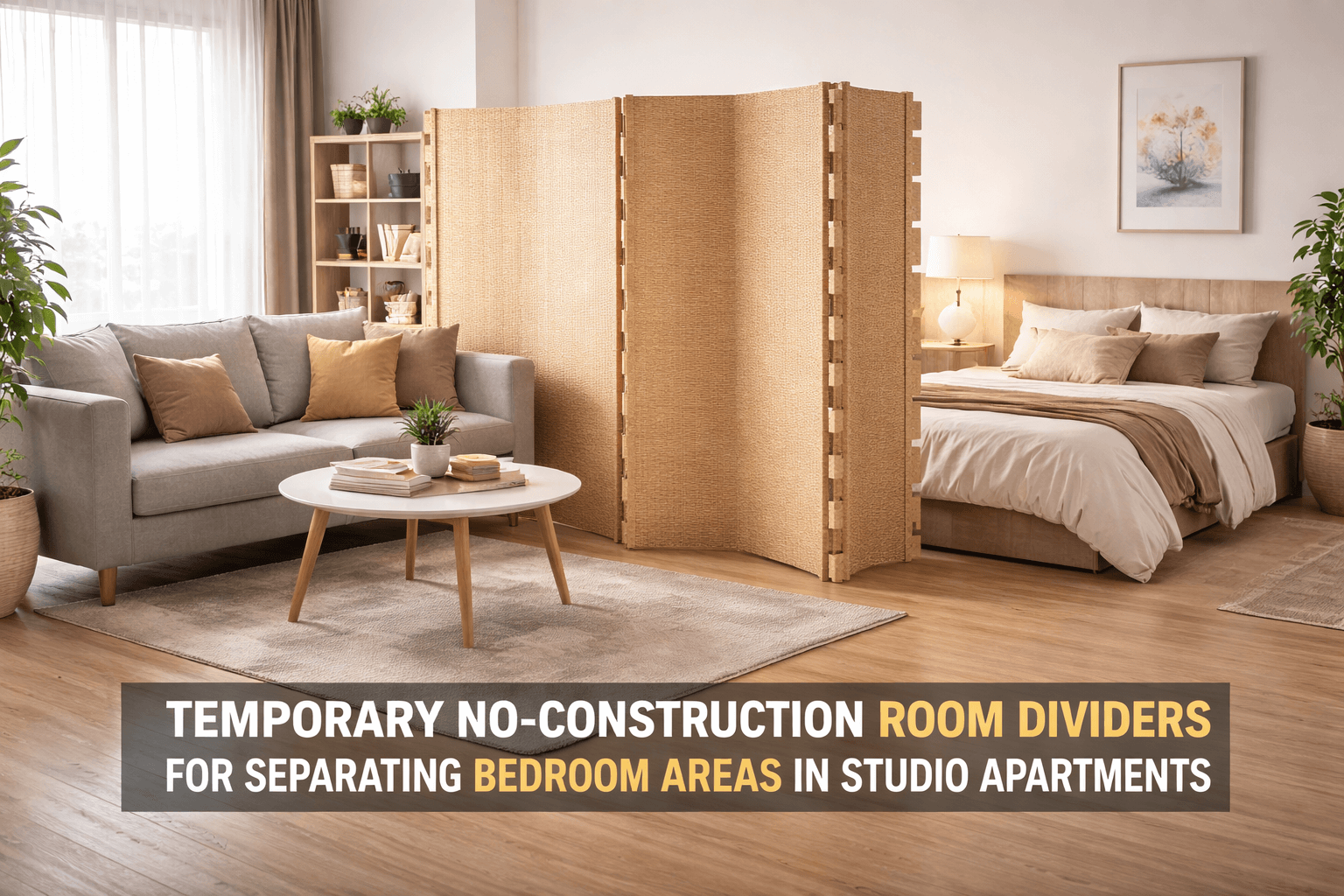
Studio apartments offer simplicity and efficiency, but they also present a common challenge: creating separation between sleeping and living areas. Without walls or distinct rooms, privacy can feel limited, especially for renters who work from home or share their space with others. Construction is rarely an option, leaving tenants searching for flexible alternatives.
Temporary no-construction room dividers are designed specifically for these situations. They allow studio dwellers to define a bedroom area without drilling, building, or altering the apartment. These solutions respect rental agreements while improving comfort and organization.
If you want your studio apartment to feel more structured without permanent changes, understanding how to use temporary room dividers effectively can make a noticeable difference. The guide below explains how to choose, place, and adapt these solutions step by step.
What Are Temporary No-Construction Room Dividers?
Temporary no-construction room dividers are freestanding or surface-safe solutions used to separate areas within a single room. They do not require drilling, wall anchors, or permanent installation.
These dividers rely on design features such as folding panels, tension systems, weight distribution, or furniture-based separation. Because they are removable, they are ideal for rental properties and studio apartments.
Their main purpose is to create visual and functional boundaries while preserving flexibility and protecting walls, floors, and ceilings.
Why Bedroom Separation Matters in Studio Apartments
Separating the bedroom area in a studio apartment improves both comfort and daily routine. A defined sleeping zone helps create mental boundaries between rest and activity.
Without separation, beds are often visible from entryways or living areas, which can feel intrusive. Temporary dividers provide privacy without sacrificing openness.
This separation also improves organization, making it easier to maintain a clean and intentional layout in a limited space.
Rental Rules and No-Construction Solutions
Most rental agreements prohibit construction, drilling, or structural modifications. Even small alterations can result in penalties or deposit deductions.
No-construction room dividers eliminate these concerns. They sit on floors, use tension, or rely on their own weight rather than attaching to surfaces.
This makes them a renter-friendly solution that can be installed, adjusted, and removed without leaving marks or damage.
Types of Temporary Room Dividers for Studios
Several divider types work well in studio apartments.
Folding screens are among the most popular. They are freestanding, easy to move, and adaptable to different layouts.
Curtain systems use ceiling-mounted tension rods or freestanding frames to separate spaces with fabric.
Open shelving units act as partial dividers while adding storage.
Panel dividers provide stronger visual separation and can be positioned at angles.
Each option offers different levels of privacy, light control, and flexibility.
Choosing the Right Divider for Bedroom Areas
When separating a bedroom area, privacy is usually the main concern. Solid or opaque dividers block visibility more effectively.
Light flow is also important. Translucent panels or open shelving allow daylight to reach the sleeping area.
Airflow should not be restricted. Dividers that leave space above or between panels help maintain ventilation and comfort.
Measuring a Studio Apartment Correctly
Accurate measurements are essential before selecting a divider. Measure the width of the area where the divider will stand and the height needed for privacy.
Consider walking paths, door swings, and furniture placement. The divider should not block access or make the studio feel cramped.
Planning measurements in advance prevents overcrowding and improves usability.
Step-by-Step: Separating a Bedroom Area Without Construction
Start by identifying the ideal boundary between sleeping and living areas. This is often just past the bed, not directly beside it.
Place the divider at a slight angle rather than straight across the room. Angled placement improves stability and visual flow.
Adjust the divider position until it creates privacy while preserving movement and light. Small adjustments make a significant difference in studios.
Stability Without Drilling or Anchors
Temporary dividers stay stable through weight and positioning. Wider bases and folding configurations increase balance.
Non-slip pads help prevent movement on smooth floors. Some dividers include weighted bases for additional security.
Avoid placing dividers in high-traffic paths where they may be bumped frequently.
Common Mistakes to Avoid
One common mistake is choosing a divider that is too tall or too bulky. Oversized dividers overwhelm small studios.
Another issue is blocking natural light or ventilation. Complete visual separation is not always necessary.
Placing dividers too close to beds can also reduce comfort and circulation.
Design Tips for Studio Apartments
Light colors make studios feel larger. Neutral tones blend easily with existing décor.
Matching the divider style to furniture creates a cohesive look. Avoid styles that feel temporary or mismatched.
Using dividers as design features rather than afterthoughts improves the overall aesthetic.
Best Layout Examples for Studios
In rectangular studios, placing a divider perpendicular to the longest wall works well.
Corner bed layouts benefit from partial dividers that shield the sleeping area without closing it off.
Studios with windows near the bed should use dividers that allow light to pass through.
Maintenance and Flexibility
Temporary room dividers require minimal maintenance. Dusting and occasional repositioning are usually sufficient.
Their flexibility allows renters to change layouts as needs evolve. This is especially useful for long-term studio living.
Dividers can also move with you to a new apartment, increasing their value.
Cost Considerations
Prices vary widely depending on materials and design. Basic folding screens are affordable, while custom systems cost more.
For renters, investing in a reusable divider often saves money compared to frequent furniture changes.
Budget-friendly options still provide effective separation when chosen carefully.
Safety and Compliance
Ensure dividers do not block emergency exits, windows, or ventilation.
Avoid unstable configurations, especially in households with pets or children.
Responsible placement keeps the studio safe and compliant with building rules.
Conclusion
Temporary no-construction room dividers offer an effective way to separate bedroom areas in studio apartments without violating rental agreements. By choosing the right type, measuring carefully, and positioning dividers strategically, renters can create privacy, comfort, and structure in a single-room layout. These flexible solutions adapt to changing needs while preserving the integrity of rental spaces.
Frequently Asked Questions
1. Can temporary dividers fully replace walls in studios?
They provide visual separation but remain flexible and non-permanent.
2. Are no-construction dividers safe for rental properties?
Yes, they are designed to avoid surface damage.
3. Do dividers reduce light in studio apartments?
Some do, but translucent or open designs preserve brightness.
4. Can dividers be moved easily?
Yes, most are designed for frequent repositioning.
5. Are these dividers reusable in future apartments?
Yes, reusability is one of their main advantages.