
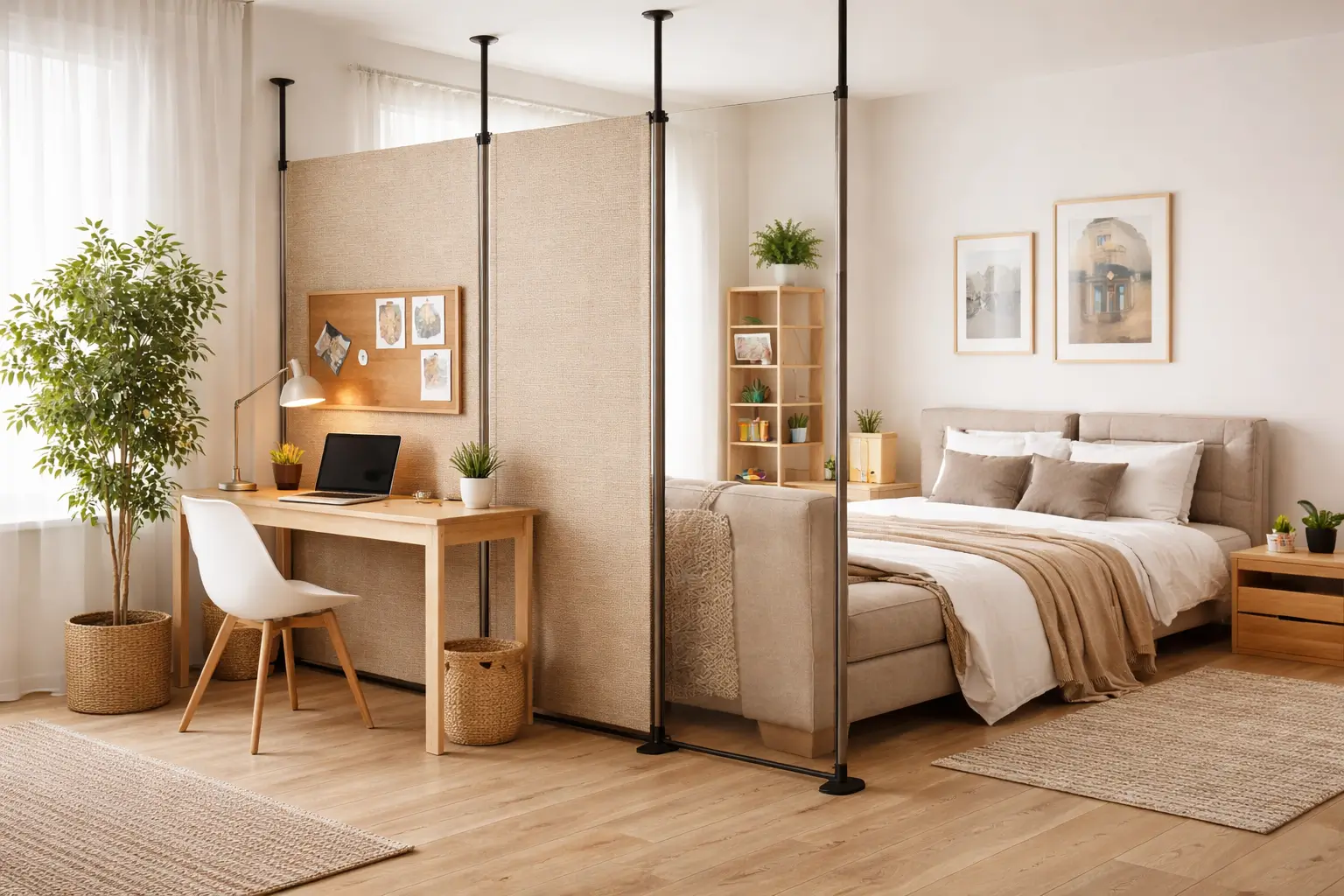
Living in a studio apartment offers simplicity, affordability, and efficiency, but it also presents a unique challenge when work and personal life must share the same space. As remote work becomes more common in the United States, many studio dwellers struggle to create a dedicated home office without compromising comfort or violating rental agreements.
Traditional solutions like building walls or installing permanent partitions are often not allowed in rental properties. Drilling holes, damaging walls, or making structural changes can lead to penalties or lost security deposits. This is where removable, no-drill divider panels offer a practical alternative.
These panels provide a flexible way to visually and functionally separate a workspace from the rest of a studio apartment. If you want to work with more focus, maintain privacy, and still preserve your living space, understanding how these dividers work can completely change how you use your apartment. Keep reading to discover how to create a functional home office—without permanent changes.
What Are Removable No-Drill Divider Panels?
Removable no-drill divider panels are temporary partition systems designed to separate areas within a room without requiring screws, nails, or permanent fixtures. They rely on pressure, weight, modular connections, or freestanding structures to stay in place.
Unlike permanent walls, these panels can be installed and removed without leaving marks. This makes them ideal for renters, especially those living in studio apartments where flexibility is essential.
They are commonly used to define workspaces, sleeping areas, or dressing zones while maintaining airflow and natural light depending on the design chosen.
Why Studio Apartments Need Flexible Home Office Solutions
Studio apartments combine living, sleeping, and working areas into a single open space. While efficient, this layout can blur boundaries between professional and personal life.
Without a clear division, distractions increase and productivity often decreases. A dedicated workspace helps signal the brain that it is time to focus, even in a small environment.
Removable divider panels offer a way to create that boundary while respecting space limitations and rental rules.
Key Benefits of No-Drill Divider Panels
One of the biggest advantages is non-damaging installation. You can maintain your security deposit and comply with lease agreements.
They also provide flexibility, allowing you to rearrange your apartment as your needs change. If you move, the panels move with you.
Additionally, these dividers help improve work-life balance, reduce visual clutter, and enhance privacy during work calls or focused tasks.
Types of Removable Divider Panels
Fabric Panels
Lightweight and affordable, fabric panels soften sound and add warmth to the space. They are ideal for minimal setups.
Wood or MDF Panels
These offer a more solid and professional look. They are heavier but provide better visual separation.
Folding Screens
Easy to reposition and store, folding screens are a popular choice for studios with limited space.
Tension-Based Panels
Installed using floor-to-ceiling pressure rods, these are sturdy and highly adjustable.
Modular Panel Systems
Customizable systems that allow you to add or remove panels based on your needs.
How No-Drill Panels Work Without Damaging Walls
Most systems use one of three methods: pressure, weight, or freestanding support.
Pressure-based dividers use tension rods that expand between the floor and ceiling. Freestanding panels rely on stable bases, while modular systems connect pieces together for balance.
All methods avoid drilling, adhesives, or permanent fixtures.
Choosing the Right Divider Panel for Your Studio
Start by measuring your available space and ceiling height. Consider how much privacy you need and whether natural light should pass through.
Think about noise reduction, ease of movement, and whether the divider should be temporary or semi-permanent.
Also consider storage needs—some panels can double as shelving or pinboards.
Design and Aesthetic Considerations
Divider panels should complement your existing décor. Light colors make small spaces feel larger, while darker panels create stronger separation.
Materials like wood add warmth, while metal or fabric offer a modern feel. Visual consistency helps the divider feel intentional rather than intrusive.
Step-by-Step Setup for a Home Office Using Divider Panels
- Identify the quietest area of your studio
- Position your desk near natural light if possible
- Install the divider panel to block visual distractions
- Ensure adequate airflow and lighting
- Adjust placement for comfort and accessibility
This setup creates a psychological boundary that supports productivity.
Common Mistakes to Avoid
Avoid choosing panels that are too bulky for your space. Oversized dividers can make a studio feel cramped.
Do not ignore lighting needs—blocking windows completely can reduce comfort and focus.
Also, avoid unstable panels that may tip over with frequent movement.
Maintenance and Long-Term Use
Most divider panels require minimal maintenance. Regular dusting and occasional tightening of tension mechanisms are usually sufficient.
Because they are removable, you can reposition them to adapt to changing needs over time.
Cost Considerations and Budget Planning
Prices vary depending on materials and size. Basic fabric dividers may cost under $100, while modular systems can reach several hundred dollars.
When budgeting, consider durability and reusability rather than just upfront cost.
Sustainability and Reusability
Removable panels are often more sustainable than permanent renovations. They reduce waste and can be reused across multiple apartments.
Some manufacturers offer panels made from recycled or eco-friendly materials.
When Divider Panels Are Not Enough
In very small studios, even slim panels may feel restrictive. In these cases, alternatives like rugs, lighting changes, or furniture placement can help define zones.
Divider panels work best when combined with thoughtful layout planning.
Conclusion
Creating a home office in a studio apartment does not require permanent changes or costly renovations. Removable no-drill divider panels offer a practical, flexible, and renter-friendly solution for separating work and living spaces.
By choosing the right type, size, and design, you can improve focus, privacy, and overall comfort—without sacrificing the openness of your studio. With thoughtful planning, even the smallest apartment can support a productive and balanced work-from-home lifestyle.
Frequently Asked Questions
1. Are no-drill divider panels safe for rental apartments?
Yes, they are designed specifically to avoid wall damage and comply with rental agreements.
2. Do divider panels reduce noise?
Some materials, especially fabric and padded panels, can help reduce sound but will not fully soundproof a space.
3. Can I move the panels easily?
Most removable panels are lightweight or modular, making repositioning simple.
4. Will divider panels block natural light?
This depends on the design. Many panels allow partial light transmission or can be positioned strategically.
5. Are no-drill divider panels suitable for long-term use?
Yes, with proper care, they can be used for years and moved to new apartments when needed.