
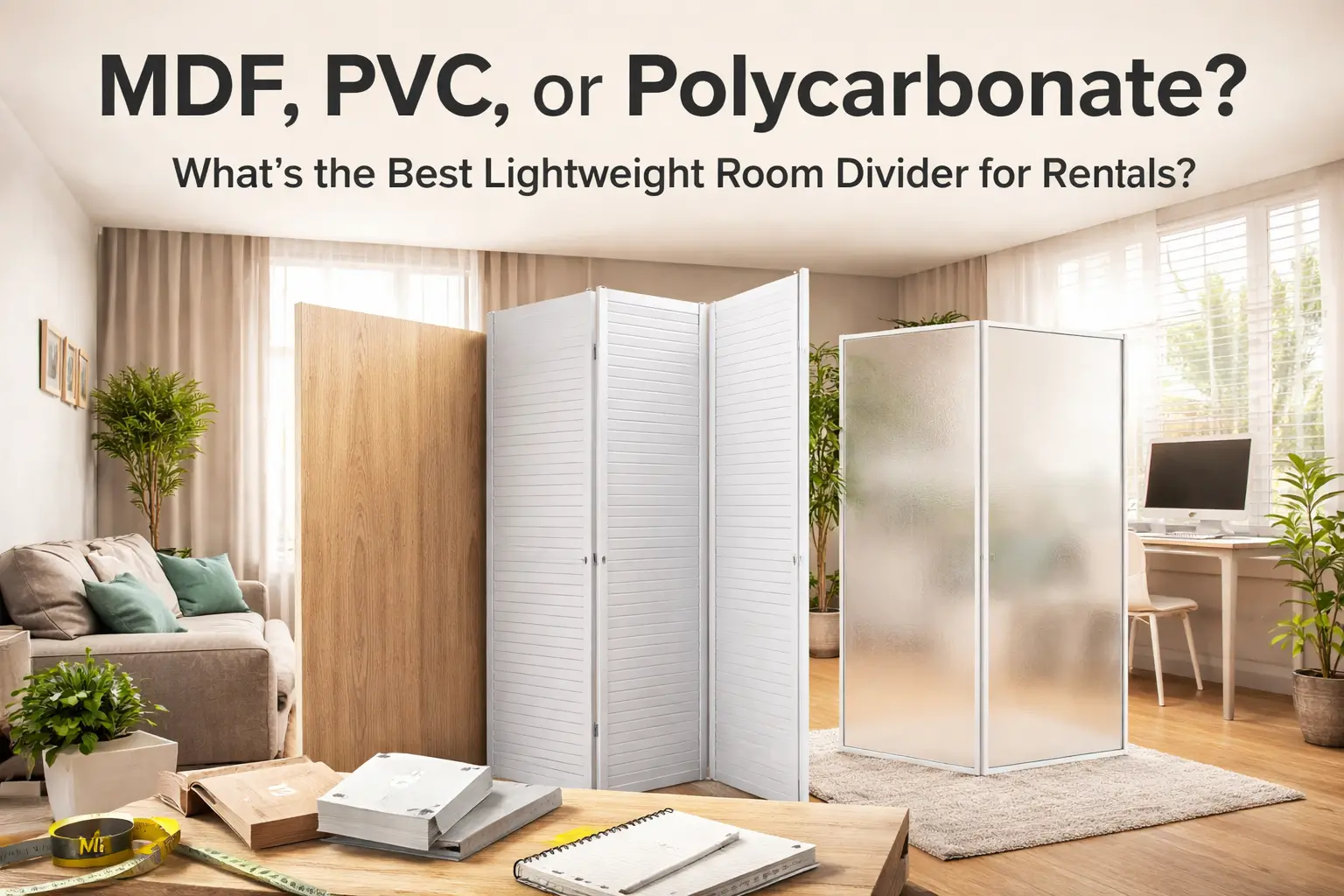
Living in a rental property often means adapting your lifestyle to a fixed layout. Whether you’re in a studio apartment, a shared house, or a compact one-bedroom unit, the need for privacy and functional separation becomes inevitable. You may want to create a home office, define a sleeping area, or simply block visual clutter. However, lease agreements usually prohibit drilling, structural modifications, or permanent installations.
That’s where lightweight room dividers come in. They allow you to transform your space without violating rental rules or risking your security deposit. But choosing the right material is not as simple as picking what looks good online. MDF, PVC, and polycarbonate each offer distinct advantages and limitations that directly impact portability, durability, cost, and maintenance.
This guide will walk you step by step through everything you need to know — from understanding each material to selecting the best option for your specific rental situation.
Understand What Makes a Room Divider Truly Rental-Friendly
Before comparing materials, you must first define what “rental-friendly” actually means. Many products are marketed as lightweight or temporary, but not all are ideal for renters.
A rental-friendly divider should meet the following criteria:
- Non-permanent installation (no drilling required)
- Lightweight construction for easy repositioning
- Simple removal without wall damage
- Moisture resistance if used near kitchens or bathrooms
- Affordable cost, since renters often prefer practical investments
- Easy storage when not in use
If a divider fails in two or more of these areas, it may not be the right choice for rental living.
Evaluate Your Specific Rental Situation
Not all rental spaces are the same. Before choosing a material, ask yourself:
- Do I live in a studio or multi-room apartment?
- Is natural light important in this area?
- Do I need sound privacy or just visual separation?
- Will I move within the next 1–2 years?
- Is humidity a factor in this space?
Your answers will influence whether MDF, PVC, or polycarbonate is the best fit.
Understand MDF – Strength with Weight Trade-Off
Medium-Density Fiberboard (MDF) is an engineered wood product made by compressing wood fibers with resin under high pressure. It is widely used in furniture and decorative panels.
Advantages of MDF
- Smooth surface ideal for painting or decorative cutouts
- Solid and stable structure
- Affordable compared to solid wood
- Offers moderate sound dampening
- Customizable in design and finish
Limitations of MDF
- Heavier than PVC or polycarbonate
- Susceptible to moisture damage
- Can swell if exposed to water
- More difficult to transport frequently
When MDF Makes Sense for Renters
MDF is best suited for renters who:
- Plan to keep the divider in one location
- Want a decorative or carved design
- Need more sound insulation
- Live in dry climates or well-ventilated interiors
However, if you frequently rearrange furniture or anticipate moving soon, MDF’s weight can become a disadvantage.
Understand PVC – The Lightweight Budget-Friendly Option
PVC (Polyvinyl Chloride) is a synthetic plastic material commonly used in construction and interior products. It has become popular for temporary partitions due to its light weight and durability.
Advantages of PVC
- Extremely lightweight
- Moisture-resistant
- Easy to clean with mild soap and water
- Affordable
- Simple to transport and reposition
- Resistant to pests and warping
Limitations of PVC
- Less rigid than MDF
- May flex under pressure
- Appearance may feel less premium
- Limited sound insulation
When PVC Is the Best Choice
PVC is ideal for renters who:
- Want maximum portability
- Live in humid environments
- Need a cost-effective solution
- Move frequently
- Prefer easy maintenance
For most renters, PVC provides the best balance between affordability and practicality.
Understand Polycarbonate – Modern, Durable, and Light
Polycarbonate is a high-performance thermoplastic known for impact resistance and clarity. It is often used in architectural panels, greenhouses, and safety glazing.
Advantages of Polycarbonate
- Very lightweight
- Highly durable and impact-resistant
- Available in transparent, translucent, or frosted finishes
- Modern, sleek aesthetic
- Allows natural light to pass through
Limitations of Polycarbonate
- More expensive than PVC
- Can scratch over time
- Offers limited sound dampening
- Less decorative flexibility compared to MDF
When Polycarbonate Works Best
Polycarbonate is perfect for renters who:
- Live in studio apartments
- Want to maintain natural light flow
- Prefer modern interior design
- Need durability for long-term use
If you want separation without darkening your space, polycarbonate is a strong contender.
Compare the Materials Side by Side
Here’s a practical breakdown:
Weight
- MDF: Heavy
- PVC: Light
- Polycarbonate: Very light
Moisture Resistance
- MDF: Low
- PVC: High
- Polycarbonate: High
Durability
- MDF: Moderate
- PVC: Moderate
- Polycarbonate: High
Cost
- MDF: Low
- PVC: Low to moderate
- Polycarbonate: Moderate to high
Sound Insulation
- MDF: Best of the three
- PVC: Limited
- Polycarbonate: Minimal
Choose Based on Your Primary Goal
Different renters have different priorities.
If Privacy Is Your Priority
Choose MDF for better sound dampening.
If Budget Is Your Priority
Choose PVC for affordability and functionality.
If Natural Light Is Your Priority
Choose frosted or clear polycarbonate.
If Portability Is Your Priority
Choose PVC or polycarbonate.
Select the Right Installation Method
Even the best material can fail if installed incorrectly. For rental-friendly setups, consider:
- Freestanding folding panels
- Tension-mounted systems (floor-to-ceiling pressure rods)
- Rolling divider screens
- Modular clip-together panels
Avoid:
- Permanent anchors
- Adhesives that damage paint
- Ceiling drilling without landlord approval
Plan for Maintenance and Longevity
Proper care extends lifespan, especially if you plan to reuse the divider in your next home.
MDF Maintenance
- Keep away from moisture
- Clean with dry cloth
- Avoid placing near bathrooms
PVC Maintenance
- Wipe with damp cloth
- Avoid excessive bending
- Store flat when possible
Polycarbonate Maintenance
- Use soft microfiber cloth
- Avoid abrasive cleaners
- Store vertically to prevent warping
Consider Environmental and Health Factors
Indoor air quality matters, especially in small apartments.
- MDF may contain formaldehyde-based adhesives.
- PVC is synthetic but often recyclable depending on local facilities.
- Polycarbonate is long-lasting, reducing replacement frequency.
If sustainability is important, look for low-VOC certified MDF or recycled plastic panels.
Final Decision Framework
To simplify your choice, follow this decision path:
- Do you need maximum light flow? → Choose Polycarbonate.
- Do you need better sound blocking? → Choose MDF.
- Are you on a tight budget and want portability? → Choose PVC.
- Will you move within a year? → Avoid heavy MDF.
- Is humidity present? → Avoid MDF.
For the majority of renters in the United States, PVC tends to offer the best overall balance between cost, weight, and durability. However, studio dwellers seeking modern aesthetics often prefer polycarbonate despite the higher price.
Conclusion
Choosing between MDF, PVC, and polycarbonate is not about selecting the “best” material universally — it’s about selecting the best material for your rental reality. Renters must prioritize flexibility, ease of installation, and damage-free removal. Weight, moisture resistance, and portability often matter more than premium finishes.
If you want stability and better sound reduction, MDF may suit your needs — as long as moisture is not a concern. If you want affordability and simplicity, PVC stands out as the most practical solution. If you want durability and natural light without sacrificing a modern look, polycarbonate becomes a compelling option.
By evaluating your layout, lifestyle, and mobility plans, you can confidently choose a lightweight room divider that enhances your space without risking your lease agreement.
Frequently Asked Questions
1. Is MDF too heavy for renters?
It can be, especially for people who move frequently or rearrange furniture often.
2. Which material handles humidity best?
PVC and polycarbonate both resist moisture effectively.
3. Does polycarbonate provide real privacy?
Frosted polycarbonate provides visual privacy but limited sound reduction.
4. Can I install a divider without drilling?
Yes, freestanding and tension-based systems are ideal for renters.
5. Which material lasts the longest?
Polycarbonate typically offers the highest long-term durability.