
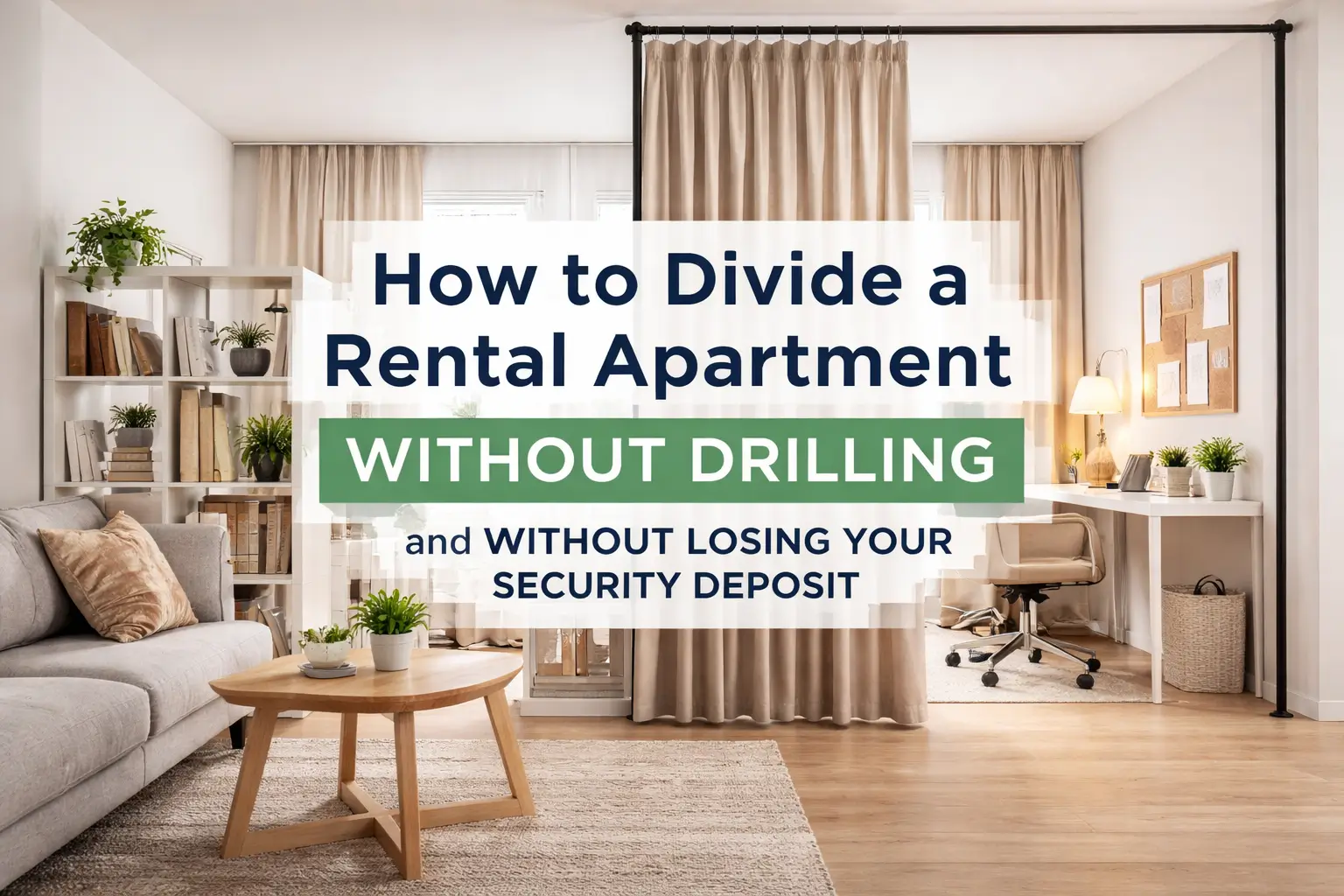
Living in a rental apartment often means balancing comfort with restrictions. You may want to create a private bedroom area in a studio, separate a home office from your living room, or divide a shared space with a roommate. But making structural changes — especially drilling into walls — can put your security deposit at risk.
Many landlords across the United States consider drilled holes, anchors, and mounted hardware as damage beyond normal wear and tear. Even small alterations can lead to patching fees, repainting charges, or partial deposit deductions when you move out.
The good news is that you can divide a rental apartment without drilling and without violating your lease. With the right strategy and renter-friendly tools, you can create functional zones, improve privacy, and maintain flexibility — all while protecting your deposit. Below is a detailed, step-by-step guide to help you do exactly that.
Step 1: Review Your Lease and Understand What Counts as “Damage”
Before purchasing any divider system, read your lease carefully. This step is often skipped, but it is essential.
Pay close attention to clauses related to:
- Wall alterations
- Mounting hardware
- Painting restrictions
- Adhesive materials
- Security deposit deductions
Some leases allow small nail holes but prohibit anchors or large screws. Others forbid any wall penetration. Understanding the difference can save you hundreds of dollars.
If the language is unclear:
- Email your landlord for written clarification
- Keep a copy of the response
- Avoid verbal agreements
Having written documentation protects you if disputes arise at move-out.
Step 2: Measure and Define the Space You Want to Divide
Before choosing a solution, define your objective. Are you dividing for:
- Visual separation only?
- Sound reduction?
- Full privacy?
- Light control?
Next, measure:
- Ceiling height
- Width of the space
- Distance between walls
- Available floor area
This determines which systems are viable. For example, tension-based systems require solid floor-to-ceiling contact and accurate height measurement.
Sketch a simple layout of your apartment and mark:
- Existing furniture
- Windows and natural light sources
- Power outlets
- HVAC vents
This ensures your divider won’t block airflow or lighting unnecessarily.
Step 3: Use Tension-Based Systems (No Screws Required)
Tension systems are one of the safest renter-friendly solutions because they rely on pressure, not drilling.
Option A: Tension Rod with Curtains
Best for:
- Studio apartments
- Temporary bedroom separation
- Closet enclosures
How to install:
- Measure ceiling height precisely.
- Purchase a heavy-duty tension rod rated for your ceiling size.
- Choose thick curtains for better privacy.
- Install by twisting to create pressure between surfaces.
Advantages:
- Affordable (typically $50–$150 total)
- Removable
- No wall damage
Limitations:
- Not suitable for heavy materials
- May shift if overloaded
Option B: Floor-to-Ceiling Tension Pole Systems
These are more structured and can support panels, shelving, or even lightweight storage.
Ideal for:
- Home office partitions
- Creating entryway separation
- Dividing shared living spaces
Installation involves extending vertical poles between floor and ceiling with pressure fittings. No screws are required, but correct measurement is critical.
Step 4: Use Freestanding Furniture as Functional Dividers
One of the most practical solutions is using furniture you already need.
Best Furniture Types for Division:
- Open-back bookshelves
- Cube storage units
- Wardrobes
- Tall cabinets
- Modular shelving systems
Why this works:
- Creates visual separation
- Maintains airflow
- Adds storage
- Requires zero installation
For effective division:
- Choose furniture at least 5 feet tall
- Anchor only if your lease allows (otherwise rely on weight distribution)
- Position perpendicular to the wall to create clear zones
Tip: Open shelving preserves natural light while creating boundaries.
Step 5: Install Portable Folding Screens
Folding screens are one of the most flexible and renter-safe options.
They are:
- Freestanding
- Lightweight
- Easy to store
- Completely removable
Use them when you need:
- Instant privacy
- Guest separation
- Temporary workspace division
To maximize stability:
- Place on level flooring
- Avoid high-traffic pathways
- Choose wider panels for better coverage
This is an excellent solution for renters who relocate frequently.
Step 6: Use Curtains Strategically for Maximum Privacy
Curtains are more versatile than many renters realize.
To improve effectiveness:
- Use blackout or heavy fabric
- Extend curtain width beyond the divided area
- Install tension-based ceiling tracks
- Use floor-length panels
If your ceiling cannot support a tension rod, consider freestanding curtain frames. These create the appearance of a wall without permanent installation.
Curtains also allow flexibility:
- Open during the day
- Closed at night
- Easily adjustable
Step 7: Create Visual Separation Without Physical Barriers
Sometimes you don’t need a wall. You just need psychological zoning.
Techniques Include:
- Large area rugs to define spaces
- Different lighting temperatures
- Floor lamps to anchor corners
- Accent walls using removable wallpaper
- Strategic furniture placement
For example:
- Use warm lighting (2700K–3000K) in the living area
- Use cooler lighting (4000K) in a workspace
Your brain perceives these changes as separate environments.
This approach works especially well in smaller apartments where physical dividers would make the space feel cramped.
Step 8: Improve Sound Privacy Without Drilling
If your goal is acoustic separation, traditional walls are not your only option.
Consider:
- Thick curtains
- Freestanding acoustic panels
- Fabric-covered partitions
- Upholstered furniture
Sound reduction improves significantly when you add soft materials that absorb echo.
Layering works best:
- Rug on the floor
- Curtains behind divider
- Upholstered furniture nearby
This combination reduces noise transfer in shared apartments.
Step 9: Budget Planning — What You Should Expect to Spend
Here’s a realistic breakdown:
- Curtain + tension rod: $50–$150
- Folding screen: $70–$250
- Bookshelf divider: $100–$400
- Tension pole system: $100–$300
- Acoustic freestanding panel: $80–$250
Most renters can fully divide a studio for under $300–$500 depending on materials and quality.
To reduce costs:
- Repurpose existing furniture
- Buy secondhand
- Prioritize multi-functional pieces
Step 10: Avoid These Common Mistakes
Many renters lose part of their deposit due to preventable errors.
Do not:
- Drill drywall anchors
- Use industrial adhesives
- Install floating shelves
- Paint without written permission
- Remove baseboards or trim
Even if you plan to repair damage later, landlords may still deduct professional repair fees.
Step 11: Document Everything Before and After
Protection doesn’t stop at installation.
Before installing:
- Take clear photos of walls and ceilings
- Save receipts
- Keep packaging instructions
Before moving out:
- Remove all dividers
- Clean adhesive residue
- Patch minor scuffs (if allowed)
- Take new photos
Documentation provides leverage if deposit disputes arise.
Final Checklist Before You Move Out
Use this checklist to avoid surprises:
- All temporary installations removed
- No visible wall marks
- Floors cleaned beneath furniture
- Adhesive residue eliminated
- Photos saved for records
Being proactive reduces stress and protects your deposit.
Conclusion
Dividing a rental apartment without drilling is not only possible — it is practical, affordable, and often smarter than permanent solutions. By combining tension-based systems, freestanding furniture, curtains, visual zoning techniques, and acoustic materials, you can create privacy without violating your lease.
The key is planning. Measure carefully, understand your lease, choose renter-friendly products, and document everything. With the right approach, you can transform your apartment into a functional, comfortable space while ensuring your security deposit stays exactly where it belongs — in your pocket.
Frequently Asked Questions
1. Can small nail holes cause deposit deductions?
Yes, depending on your lease. Some landlords consider multiple holes excessive wear and tear.
2. Are tension rods safe for high ceilings?
They are safe within manufacturer height limits. Always check weight capacity.
3. What is the safest divider for strict landlords?
Freestanding furniture and folding screens are typically the lowest-risk options.
4. Do removable adhesives always come off clean?
Not always. Test in a hidden area first and remove slowly.
5. Can I build a temporary wall without drilling?
Yes. Tension-based wall systems and freestanding partitions are designed specifically for renters and do not require screws or anchors.