
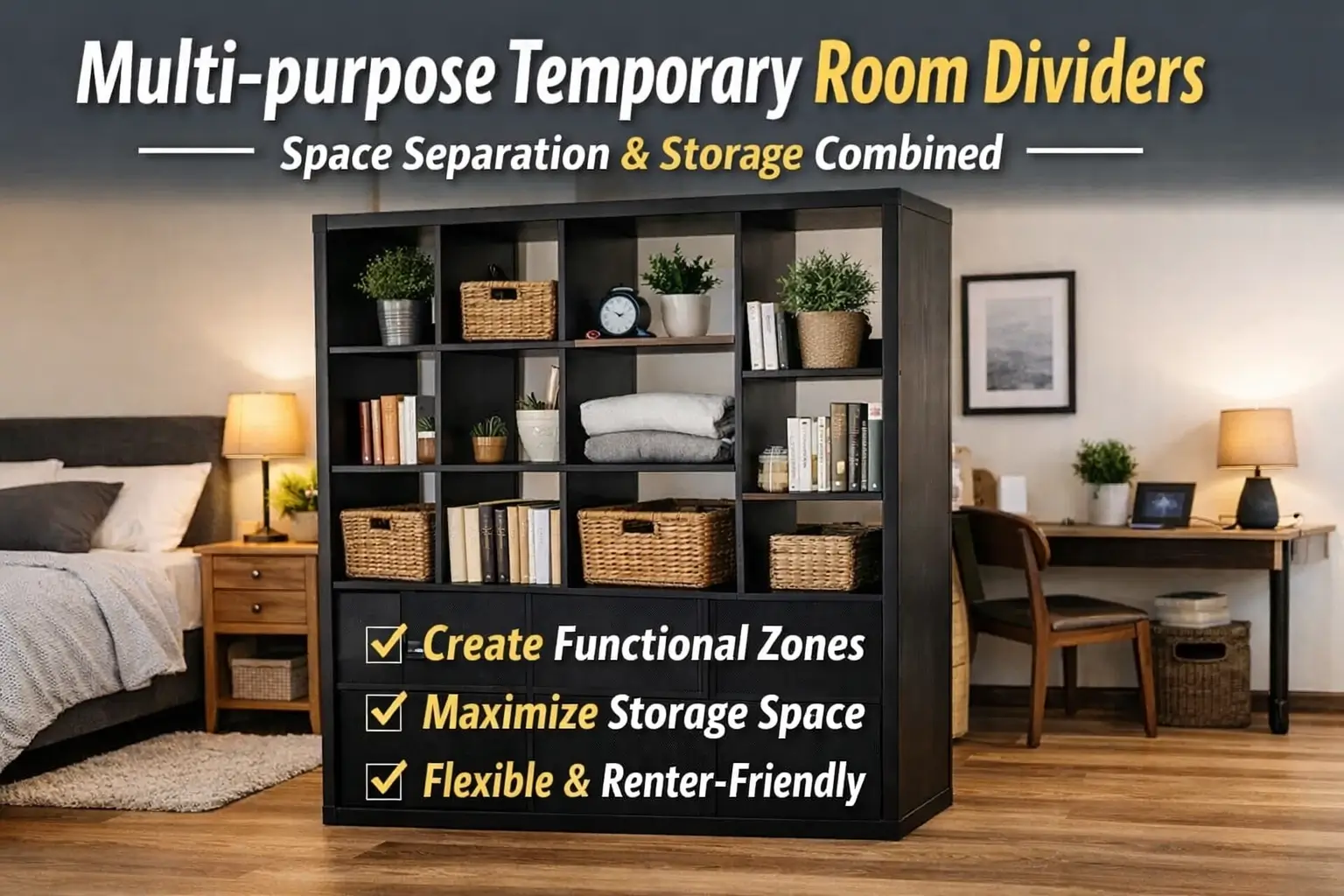
Living in a small apartment or studio often means every square foot must serve more than one purpose. Without defined zones, your sleeping area may overlap with your workspace, and your storage may spill into your living area. This lack of structure can lead to clutter, stress, and inefficient use of space. The solution is not necessarily building walls, especially if you are renting, but using smart, temporary solutions that provide both separation and storage.
Multi-purpose temporary room dividers allow you to create functional zones while also increasing your storage capacity. Instead of placing furniture randomly, these dividers help you organize your apartment intentionally. They improve privacy, enhance organization, and make your space feel more structured without making permanent changes.
If you want to transform your apartment into a functional, organized, and comfortable environment without renovations, learning how to plan and use multi-purpose temporary room dividers correctly is essential. With the right approach, you can maximize both space and storage while maintaining flexibility.
Why Multi-purpose Temporary Room Dividers Are Essential in Small Apartments
In small apartments, space is limited, but your needs are not. You still need separate areas for sleeping, working, relaxing, and storing your belongings. Without separation, everything blends into one area, which creates visual clutter and reduces functionality.
Multi-purpose temporary room dividers solve two major problems at once:
- They create physical and visual separation between zones
- They add valuable storage space
This dual functionality makes them far more efficient than traditional dividers that only separate space.
For example, instead of using a simple screen, a shelving unit can separate your bed from your living area while also storing books, clothing, and personal items. This eliminates the need for additional storage furniture and reduces clutter.
These dividers are especially useful for renters because they do not require drilling, construction, or permanent modifications.
Step 1: Analyze Your Apartment Layout and Identify Functional Zones
Before choosing a divider, you must understand how your apartment functions and where separation is needed.
Start by identifying the main zones in your apartment. Most small apartments include the following areas:
- Sleeping area
- Work or study area
- Living or relaxation area
- Storage area
- Dining area
Not every apartment includes all of these zones, but most include at least three.
How to identify your priority zones
Walk through your apartment and observe how you use your space throughout the day. Pay attention to areas that feel cluttered or disorganized.
Ask yourself these questions:
- Is my bed visible from every part of the apartment?
- Does my workspace feel separate from my relaxation area?
- Do I have enough storage for my belongings?
- Does my apartment feel visually cluttered?
Your answers will help you determine where to place your divider.
Example of a common studio layout problem
In many studio apartments, the bed sits next to the sofa, and clothing storage may be placed randomly around the room. This creates visual chaos.
By placing a storage divider between the bed and sofa, you create clear separation while also organizing your belongings.
Step 2: Choose the Best Type of Multi-purpose Temporary Room Divider
Not all room dividers provide storage. To maximize efficiency, choose dividers that combine separation with storage functionality.
Storage shelving units
Storage shelving units are one of the most effective options.
Benefits include:
- Provide vertical storage
- Create clear separation between areas
- Maintain open visual flow
- Easy to reposition
- No installation required
Open shelving works especially well because it allows light to pass through while still defining space.
Best uses include:
- Separating sleeping and living areas
- Dividing workspace and relaxation zones
Cube storage organizers
Cube organizers are highly versatile and customizable.
Advantages include:
- Modular design allows flexible arrangement
- Can store books, clothing, and accessories
- Easy to move and reconfigure
- Affordable and widely available
You can position cube storage vertically or horizontally depending on your layout.
Clothing racks with storage shelves
Clothing racks are ideal for apartments with limited closet space.
Benefits include:
- Provide clothing storage
- Create visual separation
- Easy to move
- No installation required
This option works especially well for separating sleeping areas from other zones.
Storage cabinets and bookcases
Storage cabinets provide stronger visual separation while also hiding clutter.
Benefits include:
- Conceal stored items
- Create strong separation
- Improve overall organization
However, avoid using overly large cabinets that make your apartment feel smaller.
Folding storage dividers
Folding dividers with storage compartments provide flexibility.
Advantages include:
- Portable
- Temporary
- Easy to reposition
- Useful for changing layouts
These are ideal if you want flexibility.
Step 3: Measure Your Space Carefully Before Choosing a Divider
Accurate measurements are essential to ensure your divider fits properly.
Measure the following:
- Total apartment width
- Ceiling height
- Available floor space
- Divider dimensions
- Walking clearance
Always maintain at least 24 to 30 inches of walking space. This ensures comfortable movement.
Step-by-step measurement process
- Measure the width of the area where the divider will be placed
- Measure the height of your ceiling
- Measure available walking space
- Compare these measurements with divider dimensions
This prevents overcrowding.
Step 4: Maximize Vertical Storage to Save Floor Space
In small apartments, vertical storage is critical.
Instead of using wide furniture, choose tall dividers that extend upward.
Benefits include:
- Increased storage capacity
- Reduced floor clutter
- Improved organization
Examples of items to store in vertical dividers:
- Books
- Clothing
- Storage boxes
- Decorative items
This improves efficiency.
Step 5: Place Your Divider Strategically for Maximum Efficiency
Placement determines how effective your divider will be.
Best placement locations include:
- Between bed and living area
- Between workspace and relaxation area
- Near entry points
- Between dining and living areas
Avoid placing dividers randomly in the center of your apartment.
Instead, align them with existing furniture.
Step 6: Maintain Natural Light and Visual Openness
Natural light makes your apartment feel larger.
Blocking light makes your apartment feel smaller.
Choose dividers that allow light to pass through, such as:
- Open shelving
- Wire shelving
- Partial storage units
Avoid solid walls unless necessary.
Step 7: Ensure Your Divider Is Temporary and Flexible
Temporary dividers allow flexibility.
Benefits include:
- Easy to move
- No permanent installation
- Adaptable to layout changes
This is essential for renters.
Step 8: Combine Storage and Separation for Maximum Efficiency
The most effective dividers provide both separation and storage.
Examples of effective combinations include:
- Bookshelf divider between bed and living area
- Clothing rack separating sleeping and workspace areas
- Cube storage separating entry and living space
This reduces clutter.
Common Mistakes to Avoid
Avoid these mistakes:
- Using oversized dividers
- Blocking natural light
- Ignoring walking clearance
- Using dividers without storage
These reduce efficiency.
Budget-Friendly Multi-purpose Divider Solutions
You do not need expensive furniture.
Affordable options include:
- Cube storage organizers
- Clothing racks
- Basic shelving units
These provide excellent results.
Final Checklist Before Choosing Your Divider
Before selecting your divider, confirm the following:
- Divider provides storage
- Divider fits your measurements
- Divider is temporary
- Divider maintains walking space
- Divider does not block light
This ensures optimal results.
Conclusion
Multi-purpose temporary room dividers are one of the most effective ways to improve organization, storage, and functionality in small apartments. By combining space separation with storage, these dividers maximize efficiency without requiring permanent installation. The key is choosing the right divider, measuring your space carefully, and placing the divider strategically. With proper planning, you can transform your apartment into a structured, organized, and comfortable living environment while maintaining flexibility and maximizing every square foot.
Frequently Asked Questions
1. What is the best multi-purpose temporary room divider?
Storage shelving units are the best option because they provide both separation and storage.
2. Are temporary room dividers suitable for renters?
Yes. They do not require permanent installation and can be removed easily.
3. Do storage dividers make small apartments feel smaller?
No. They improve organization, which makes apartments feel more structured and spacious.
4. How much walking space should I leave around a divider?
Leave at least 24 to 30 inches of walking space.
5. Can I move temporary room dividers easily?
Yes. Most temporary dividers are designed to be portable and flexible.