
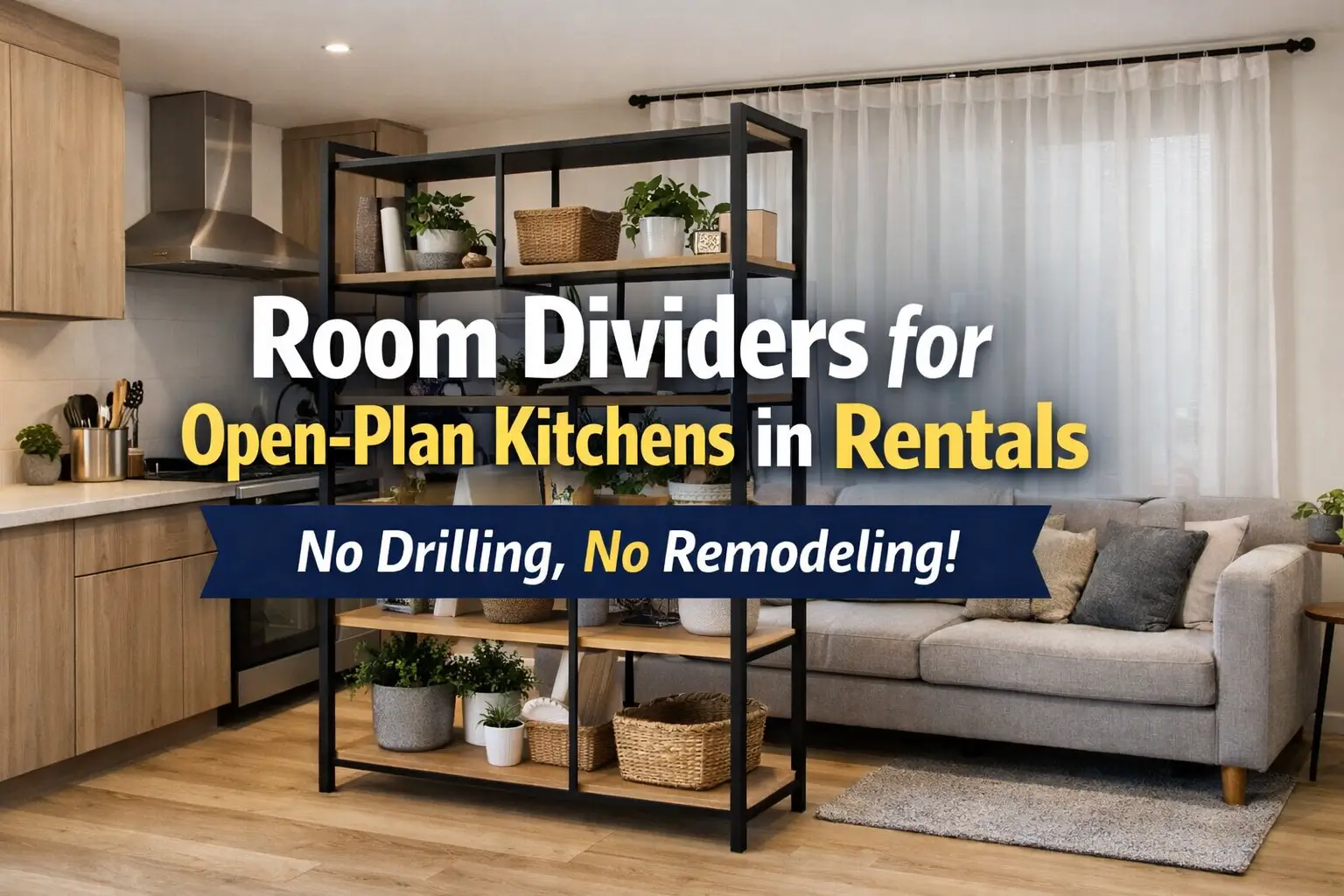
Open-plan kitchens are extremely common in modern rental apartments across the United States. Property developers favor open layouts because they make spaces feel larger, brighter, and more flexible. However, while open-plan kitchens offer visual openness, they often create functional and organizational challenges for renters.
Without a physical separation between the kitchen and living room, several issues can arise. Cooking odors can spread throughout the apartment, visual clutter becomes harder to hide, and it may be difficult to mentally separate relaxation areas from functional workspaces. Over time, this lack of separation can affect comfort, productivity, and overall satisfaction with your living environment.
For renters, the challenge becomes even more complex because lease agreements typically prohibit permanent changes. You cannot build walls, drill extensively, or install fixed partitions without risking your security deposit or violating your lease. This makes renter-friendly room dividers not just helpful—but essential.
The good news is that there are highly effective, damage-free room divider solutions that can transform your open-plan layout without remodeling. With the right strategy, you can create separation, improve organization, and enhance comfort while fully complying with your rental agreement.
Benefits of Using Non-Permanent Room Dividers in Rental Apartments
Before choosing a divider, it’s important to understand why these solutions are so effective, especially in rental environments.
Improved visual organization
One of the biggest advantages of room dividers is their ability to visually separate functional zones. Even a simple divider creates a psychological boundary between cooking and relaxing areas. This makes your apartment feel more structured and intentional.
Better privacy and comfort
Room dividers help create a sense of privacy, even in small apartments. This is especially useful if you:
- Work from home
- Have guests frequently
- Share your apartment with a partner or roommate
A divider helps create distinct areas without needing structural walls.
Odor and visual control
Cooking smells and kitchen clutter can quickly dominate an open-plan apartment. A well-placed divider helps reduce direct exposure between spaces, improving comfort.
Full lease compliance
Non-permanent room dividers:
- Require no drilling
- Cause no wall damage
- Are fully removable
- Protect your security deposit
This makes them ideal for renters who want flexibility.
Step 1: Evaluate Your Apartment Layout Carefully
Before buying any room divider, you must evaluate your current space. This step prevents costly mistakes and ensures maximum effectiveness.
Measure the separation area
Use a measuring tape and record:
- Width between kitchen and living room
- Ceiling height
- Available walking space
This helps you choose a divider that fits properly without overcrowding the apartment.
Identify your main objective
Ask yourself what problem you’re trying to solve. Your answer will guide your choice.
Common goals include:
- Creating visual separation
- Improving privacy
- Hiding kitchen clutter
- Adding storage
- Enhancing interior design
Your objective determines the best divider type.
Observe natural movement patterns
Walk through your apartment and observe how you naturally move between spaces.
Avoid placing dividers in areas that block:
- Main walking paths
- Access to appliances
- Entryways
- Windows
Maintaining good flow is essential for comfort.
Step 2: Choose the Best Type of Renter-Friendly Room Divider
There are several excellent room divider options that require no permanent installation. Each has unique advantages.
Freestanding folding screens
Freestanding folding screens are one of the most popular and effective solutions for renters.
They offer several advantages:
- No installation required
- Fully portable
- Easy to reposition
- Available in many styles and materials
These screens typically come in panels connected by hinges, allowing you to adjust the width and shape.
They work best when placed between:
- Kitchen island and sofa
- Dining area and living space
- Entry point and kitchen zone
They are ideal for renters who want flexibility.
Open shelving units as functional dividers
Open shelving units are one of the most strategic solutions because they provide both separation and storage.
Benefits include:
- Dual functionality
- Improved organization
- Visual separation without blocking light
- Increased storage capacity
You can use shelves to store:
- Cookbooks
- Decorative objects
- Plants
- Storage baskets
Open-back shelving units are especially effective because they allow light to pass through while still defining space.
Bookcases for stronger separation
Bookcases provide a more solid visual barrier compared to open shelving.
They are especially useful if your goal is to create strong separation between kitchen and living room areas.
Advantages include:
- Excellent stability
- Strong visual division
- Functional storage
- Professional and organized appearance
For rental apartments, choose freestanding bookcases that do not require wall mounting.
Tension rod curtain dividers
Tension rods are one of the most affordable and renter-friendly solutions available.
They use pressure between two surfaces instead of drilling.
Benefits include:
- Extremely easy installation
- No tools required
- Very affordable
- Highly customizable
Curtains allow you to control privacy levels easily. You can open or close them as needed.
Recommended curtain materials include:
- Linen
- Cotton
- Sheer fabric
- Lightweight polyester
Sheer curtains are ideal if you want separation without blocking light.
Plant-based room dividers
Plants offer a natural and visually appealing way to separate spaces.
Using plants as dividers provides several benefits:
- Improves air quality
- Creates visual softness
- Enhances interior design
- Maintains openness
Best plants for room dividers include:
- Snake plants
- Bamboo palms
- Monstera
- Rubber plants
You can place plants on shelving units or use tall plant stands.
Step 3: Position Your Divider Strategically for Maximum Effectiveness
Placement is just as important as choosing the right divider.
Place the divider at natural transition points
The best location is typically between the kitchen and main seating area.
This creates clear separation while maintaining accessibility.
Maintain proper walking clearance
Always leave at least:
- 24 to 36 inches of walking space
This ensures comfort and prevents overcrowding.
Avoid blocking windows and natural light
Natural light makes your apartment feel larger and more comfortable.
Choose placements that preserve light flow.
Step 4: Ensure Stability Without Damaging Walls
Stability is essential, especially in rental apartments.
Unstable dividers can fall and cause damage or injury.
Use these renter-safe stabilization techniques:
- Choose dividers with wide bases
- Use non-slip floor pads
- Place heavier objects on shelving units for stability
- Position dividers on flat, even surfaces
Avoid attaching dividers to walls unless your lease allows it.
Step 5: Enhance Functionality by Combining Storage and Division
The most effective room dividers serve multiple purposes.
Instead of using purely decorative dividers, consider functional options.
Examples include:
- Shelving units for storage
- Bookcases for organization
- Storage racks with decorative elements
This maximizes space efficiency, especially in smaller apartments.
Step 6: Match Your Divider with Your Apartment’s Interior Design
Your divider should complement your existing furniture and decor.
Consider matching:
- Color scheme
- Material type
- Design style
For example:
- Modern apartments benefit from metal or minimalist dividers
- Warm interiors benefit from wood dividers
- Bright spaces benefit from white or neutral dividers
This improves visual harmony.
Step 7: Choose Budget-Friendly Options Without Sacrificing Quality
You don’t need to spend a lot of money to achieve excellent results.
Affordable options include:
- Folding screens
- Open shelving units
- Curtains with tension rods
- Plant arrangements
Focus on durability and stability rather than price alone.
Investing in quality ensures long-term usability.
Common Mistakes to Avoid When Using Room Dividers in Rental Apartments
Avoid these common errors:
Choosing oversized dividers
Large dividers can make your apartment feel cramped.
Always measure before buying.
Blocking natural light completely
This makes your apartment feel smaller and darker.
Use open or semi-transparent dividers when possible.
Ignoring stability
Unstable dividers can fall and cause damage.
Choose sturdy, well-built options.
Overcrowding the space
Too many dividers create visual clutter.
Keep the layout simple and strategic.
Long-Term Advantages of Using Non-Permanent Room Dividers
Room dividers provide flexibility that permanent walls cannot offer.
Long-term benefits include:
- Easy repositioning
- Full portability when moving
- Adaptability to different layouts
- No lease violations
This makes them ideal for renters who value flexibility.
Conclusion
Using room dividers for open-plan kitchens in rental apartments without remodeling is one of the most effective ways to improve comfort, organization, and privacy. With renter-friendly solutions such as freestanding screens, shelving units, curtains, and plant dividers, you can create clear separation between functional areas without damaging walls or violating your lease agreement.
By carefully evaluating your space, choosing the right divider type, and positioning it strategically, you can transform your apartment into a more structured and comfortable environment. These solutions are affordable, flexible, and fully removable, making them perfect for renters who want to enhance their living space while maintaining complete lease compliance.
FAQs
1. What is the best room divider for renters?
Freestanding folding screens and open shelving units are among the best options because they require no installation and are fully portable.
2. Can I install a room divider without damaging walls?
Yes. Tension rods, freestanding screens, and shelving units require no drilling or permanent installation.
3. What is the cheapest room divider option?
Curtains with tension rods are typically the most affordable and effective solution.
4. Are room dividers safe in small apartments?
Yes, as long as they are stable and properly placed without blocking walkways.
5. Do room dividers reduce apartment value or violate leases?
No. Non-permanent room dividers are renter-safe and fully compliant with lease agreements.