
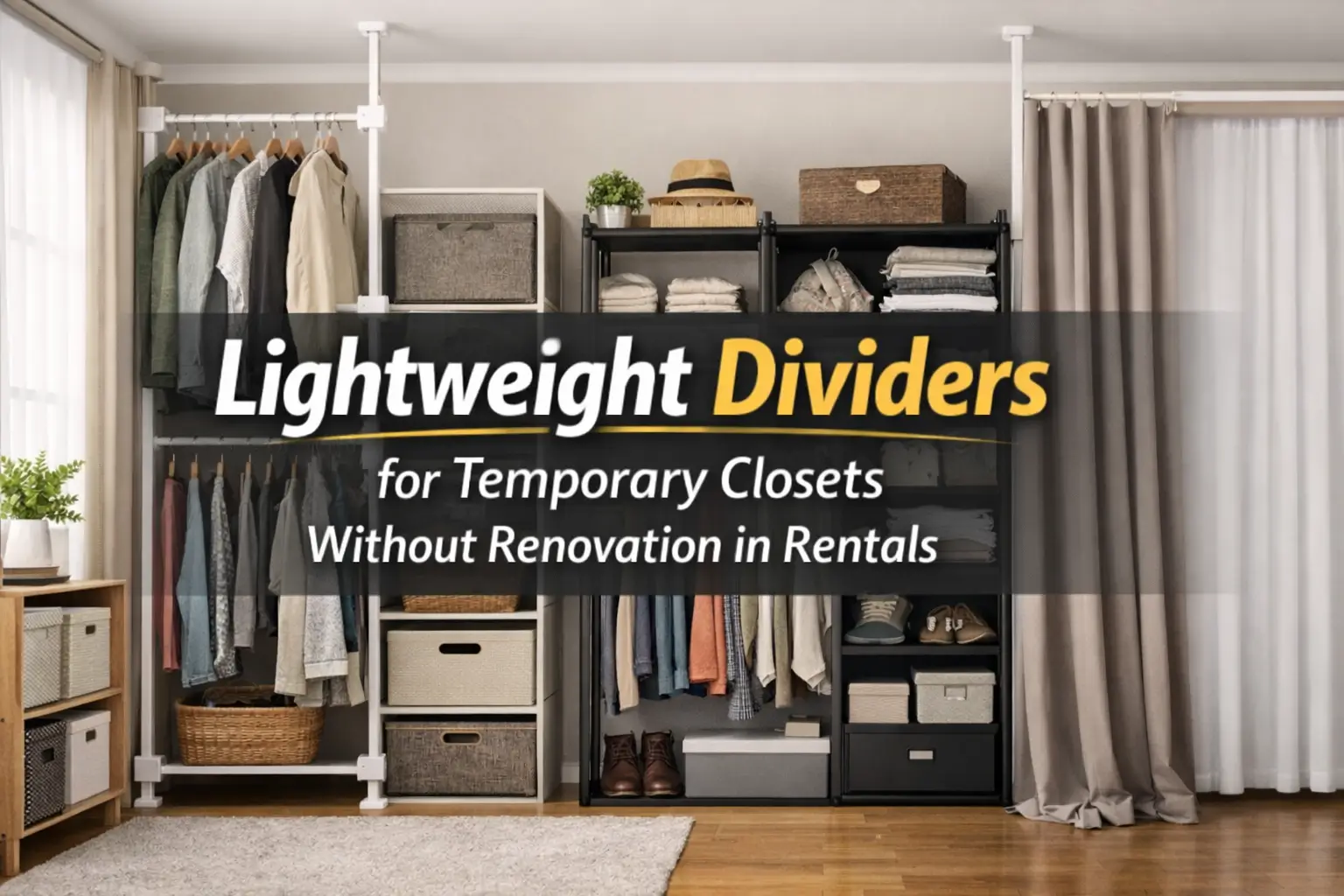
Living in a small rental apartment often means compromising on storage space. Many renters struggle with limited closet availability, awkward layouts, or no closet at all. Since permanent renovations are usually prohibited by lease agreements, renters must rely on creative, non-invasive solutions to organize their belongings efficiently.
Lightweight closet dividers offer a practical and landlord-friendly alternative. These solutions allow renters to create functional storage areas without drilling, damaging walls, or making permanent structural changes. They are designed to be portable, easy to install, and adaptable to changing living situations.
If you’re looking to maximize your apartment’s storage without risking your security deposit or violating your lease, understanding how lightweight dividers work and how to choose the right one can completely transform your space in a safe and efficient way.
Why Renters Need Temporary Closet Divider Solutions
Storage limitations are one of the most common frustrations renters face, especially in urban environments where apartments are designed with minimal square footage. Many rental units lack built-in closets or offer insufficient storage for modern lifestyles.
Lease agreements typically restrict modifications such as:
- Drilling into walls
- Installing permanent shelving
- Mounting closet systems
- Making structural alterations
These restrictions leave renters searching for alternatives that are both effective and compliant with rental agreements.
Lightweight closet dividers solve this problem by providing temporary storage solutions that do not require permanent installation. They allow renters to create dedicated wardrobe areas, separate seasonal clothing, and maintain organization without altering the apartment’s structure.
Additionally, renters who move frequently benefit from portable systems that can be easily disassembled and reused in new apartments.
Benefits of Lightweight Closet Dividers
Lightweight closet dividers offer several advantages that make them ideal for rental environments.
1. No Permanent Installation Required
Most lightweight dividers use tension, compression, or freestanding designs. This eliminates the need for drilling holes or using permanent anchors.
Benefits include:
- No wall damage
- No loss of security deposit
- Full lease compliance
- Easy removal when moving out
2. Portability and Mobility
Portability is essential for renters. Lightweight systems can be:
- Disassembled quickly
- Transported easily
- Reinstalled in new apartments
- Adjusted to fit different layouts
This flexibility makes them a long-term investment rather than a temporary fix.
3. Adaptability to Small Spaces
Small apartments require efficient use of available space. Lightweight dividers can transform:
- Corners into closet areas
- Unused wall space into storage zones
- Studio apartments into organized living environments
This adaptability improves both functionality and comfort.
4. Cost-Effective Storage Solution
Compared to permanent closet installations, lightweight dividers are significantly more affordable. Renters can create functional closet systems without spending thousands of dollars on renovations.
Key Features to Look for in Lightweight Closet Dividers
Choosing the right divider requires understanding key performance and design characteristics.
Weight vs Stability Balance
The divider should be lightweight enough for easy handling but stable enough to support clothing.
Look for materials such as:
- Aluminum frames
- Reinforced plastic
- Steel-core tension rods
- Durable composite materials
Avoid overly fragile materials that may collapse under weight.
Non-Damaging Installation Methods
The best dividers use renter-safe installation methods:
- Tension-mounted systems
- Freestanding frames
- Rubber-protected contact points
- Compression-based supports
These methods prevent scratches, holes, and structural damage.
Portability and Reusability
A good divider should be reusable across multiple apartments.
Important features include:
- Tool-free assembly
- Modular components
- Foldable structure
- Lightweight construction
This ensures long-term value.
Best Types of Lightweight Dividers for Temporary Closets
Understanding available options helps renters choose the best solution for their needs.
Tension Rod Systems
Tension rod systems are among the most popular options.
They work by applying pressure between the floor and ceiling or between walls.
Advantages:
- No drilling required
- Adjustable height
- Strong support capacity
- Minimal footprint
They are ideal for creating hanging closet space in unused areas.
Fabric Wardrobe Dividers
Fabric wardrobe systems use lightweight frames covered in durable fabric.
Benefits include:
- Extremely lightweight
- Affordable
- Easy assembly
- Dust protection
These systems are ideal for renters on a budget.
Folding Screens
Folding screens offer both functional and aesthetic benefits.
Advantages include:
- Fully freestanding
- No installation required
- Flexible positioning
- Decorative appeal
They are especially useful in studio apartments.
Modular Panel Systems
Modular systems use interlocking panels to create customizable closet areas.
Benefits include:
- Customizable layout
- Expandable structure
- Lightweight materials
- Modern appearance
These systems provide excellent versatility.
Curtain-Based Closet Dividers
Curtains offer one of the simplest divider solutions.
They can be installed using:
- Tension rods
- Ceiling-mounted tension poles
- Freestanding frames
Curtains provide visual separation and privacy.
How to Choose the Best Divider for Small Apartments
Selecting the right divider depends on several factors.
Consider:
- Available space dimensions
- Clothing volume
- Ceiling height
- Frequency of relocation
- Budget
Smaller apartments benefit from vertical storage solutions that maximize height rather than floor space.
Installation Guide Without Damaging Rental Property
Follow these steps for safe installation:
- Measure the available space carefully
- Choose an appropriate divider type
- Assemble components according to instructions
- Ensure stability before adding clothing
- Distribute weight evenly
Avoid overloading the structure.
Common Mistakes Renters Should Avoid
Avoid these common errors:
- Choosing unstable dividers
- Ignoring weight limits
- Improper installation
- Buying oversized systems
- Using damaging installation methods
These mistakes reduce effectiveness and safety.
Space Optimization Tips Using Lightweight Dividers
Maximize efficiency by combining dividers with:
- Storage bins
- Hanging organizers
- Vertical shelving
- Multi-level rods
This improves storage density without increasing space usage.
Maintenance and Longevity Tips
Proper maintenance extends lifespan.
Recommendations:
- Check stability regularly
- Clean components periodically
- Avoid exceeding weight limits
- Store properly during moves
This ensures long-term usability.
Cost Expectations and Budget Planning
Typical price ranges:
- Basic curtain systems: $15–$40
- Fabric wardrobe systems: $30–$80
- Tension rod systems: $20–$60
- Modular panel systems: $50–$150
These solutions are affordable compared to permanent installations.
Conclusion
Lightweight dividers for temporary closets without renovation in rentals provide an effective, affordable, and landlord-friendly solution for renters facing storage limitations. They offer flexibility, portability, and adaptability while protecting rental property from damage. By selecting the right type, installing it correctly, and maintaining it properly, renters can significantly improve their living space without violating lease agreements or making permanent modifications.
FAQs
1. Are lightweight closet dividers strong enough for heavy clothing?
Yes, high-quality tension rods and modular systems can support significant weight when properly installed.
2. Do lightweight dividers damage walls or ceilings?
No, renter-friendly systems use tension or freestanding designs that prevent damage.
3. Can I move lightweight closet dividers to a new apartment?
Yes, most lightweight dividers are designed for portability and reuse.
4. What is the most affordable lightweight closet divider option?
Curtain systems with tension rods are usually the most affordable.
5. Are these dividers suitable for studio apartments?
Yes, they are ideal for creating organized storage areas in small living spaces.