
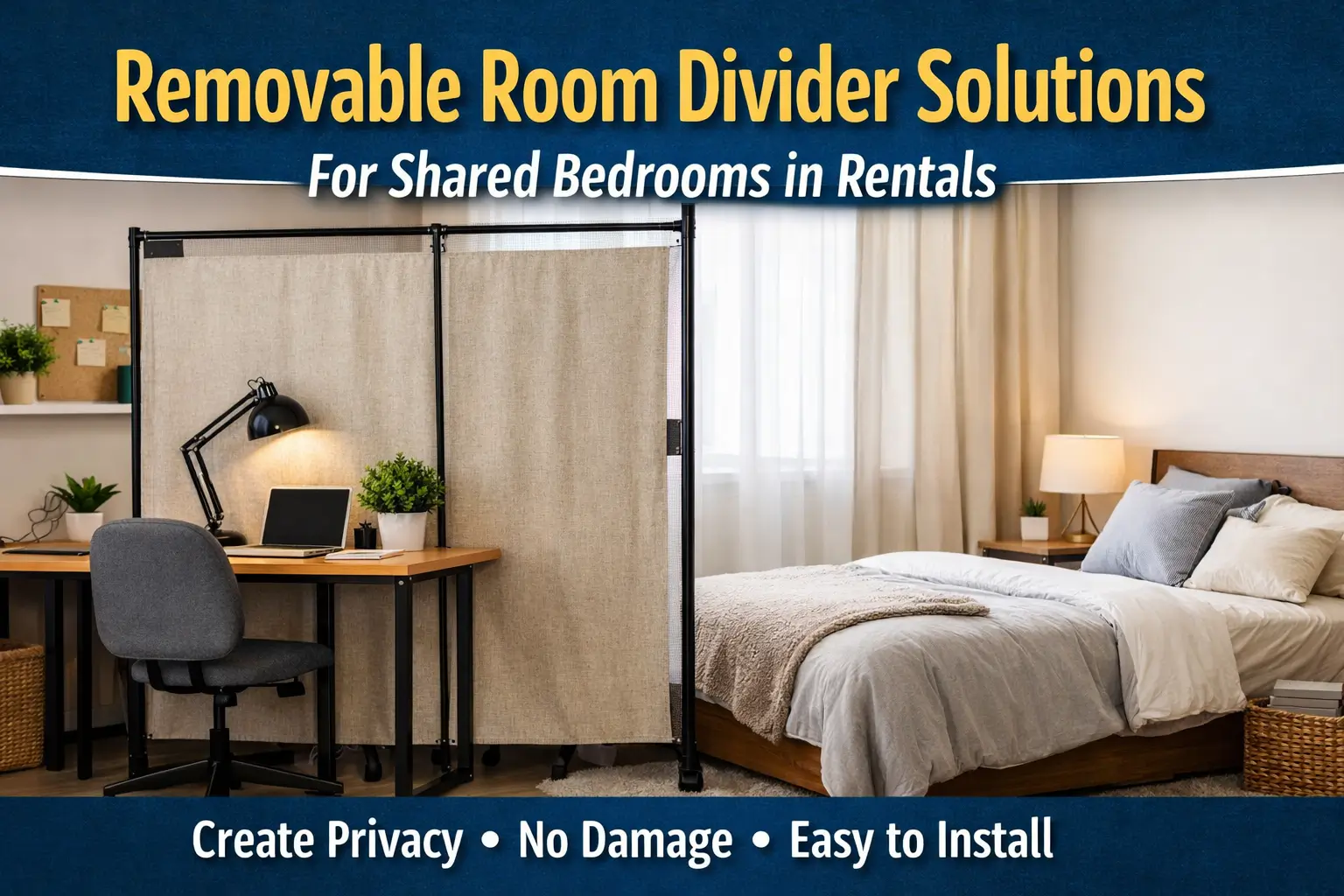
Sharing a bedroom in a rental apartment often means sacrificing privacy, comfort, and personal space. Whether you live with roommates, siblings, or family members, the lack of separation can impact your productivity, sleep quality, and overall well-being. Unfortunately, most rental agreements prohibit permanent changes such as installing walls, drilling into ceilings, or making structural modifications.
This restriction leaves many renters feeling stuck. You may want a private workspace, a sleeping area separated from distractions, or simply a sense of ownership over your portion of the room. However, damaging the property could result in losing your security deposit or violating your lease agreement.
Fortunately, removable room divider solutions offer a practical and rental-safe alternative. These options allow you to create privacy, organization, and comfort without making permanent changes. Understanding how these solutions work can help you transform your shared bedroom into a more functional and personal space.
Understanding the Challenges of Shared Bedrooms in Rental Apartments
Shared bedrooms present unique challenges, especially in rental apartments where tenants have limited control over structural changes. Unlike homeowners, renters must follow strict lease agreements that prevent permanent installations.
Common challenges include:
- Lack of visual privacy
- Difficulty creating personal zones
- Increased distractions
- Reduced sleep quality
- Limited storage and organization
These issues can affect daily routines, work efficiency, and mental comfort.
Without physical separation, even simple activities like studying, working remotely, or resting can become difficult.
Why Permanent Modifications Are Not an Option for Renters
Most landlords prohibit permanent modifications to protect the property’s structure and value. These restrictions often include:
- No drilling into walls or ceilings
- No installing permanent walls
- No structural alterations
- No fixtures requiring anchors or screws
Violating these terms may lead to:
- Loss of your security deposit
- Financial penalties
- Lease termination
- Repair costs
Because of these risks, renters must rely on non-permanent, removable solutions.
What Makes a Room Divider Truly Removable and Rental-Safe
Not all room dividers are suitable for rental apartments. A rental-safe divider should have specific characteristics.
Key features include:
No drilling required
Installation should not require screws, nails, or anchors.
Freestanding or tension-based support
The divider should rely on pressure, weight, or balance instead of permanent fixtures.
Easy removal without damage
It must leave no holes, marks, or structural damage.
Portable design
You should be able to move or reposition it easily.
Lightweight yet stable construction
It should balance portability with safety.
These features ensure compliance with rental agreements.
Types of Removable Room Divider Solutions
There are several effective removable divider options suitable for shared rental bedrooms.
Each type offers different advantages depending on your needs.
Freestanding Room Dividers
Freestanding dividers are one of the most popular rental-friendly options.
They stand independently without wall attachment.
Benefits include:
- No installation required
- Immediate use
- Easy repositioning
- Wide variety of designs
They are ideal for renters who want a simple and fast solution.
These dividers can create clear visual separation between sleeping and living areas.
Tension Rod Curtain Dividers
Tension rods use adjustable pressure between the floor and ceiling or between two walls.
They require no drilling.
Advantages include:
- Completely damage-free installation
- Affordable cost
- Flexible curtain customization
- Easy removal
Curtains also allow adjustable privacy levels.
You can open or close them as needed.
Folding Screens
Folding screens are highly flexible and portable.
They consist of connected panels that fold and unfold easily.
Key benefits:
- No installation required
- Compact storage
- Easy relocation
- Decorative value
They are especially useful in smaller rooms.
When not needed, they can be folded and stored.
Bookshelf Dividers
Bookshelves can serve dual purposes.
They provide both storage and room separation.
Benefits include:
- Functional storage space
- Strong visual barrier
- Stable structure
- Improved organization
Open-back bookshelves allow light to pass through while maintaining separation.
This prevents the room from feeling closed off.
Ceiling-Mounted Tension Systems
These systems use pressure-based poles that extend from floor to ceiling.
They do not require drilling.
Advantages include:
- Strong stability
- Professional appearance
- Customizable coverage
They can support panels, curtains, or fabric dividers.
How to Choose the Best Divider Based on Your Needs
Selecting the right divider depends on your specific living situation.
Several factors should guide your decision.
Privacy Level
Consider how much privacy you need.
Visual privacy solutions include:
- Curtains
- Screens
- Panels
For higher privacy, choose solid dividers.
Ease of Installation
Renters should prioritize simple installation.
Look for:
- Tool-free setup
- Lightweight materials
- Clear instructions
Avoid complicated systems.
Portability
If you plan to move frequently, portability matters.
Choose dividers that are:
- Lightweight
- Foldable
- Easy to transport
This reduces moving stress.
Space Efficiency
Small bedrooms require efficient solutions.
Compact dividers maximize usable space.
Avoid bulky or oversized structures.
Common Mistakes Renters Should Avoid
Avoid these frequent errors:
Choosing heavy permanent furniture
This reduces flexibility.
Using drilling-required systems
This violates lease agreements.
Ignoring stability
Unstable dividers can fall.
Blocking natural light completely
This makes the room feel smaller.
Planning carefully prevents these issues.
Creative Ways to Use Room Dividers in Shared Bedrooms
Room dividers can create multiple functional zones.
Examples include:
- Separate sleeping areas
- Private workspace zones
- Dressing areas
- Study corners
- Storage sections
These zones improve organization and comfort.
They also help create a sense of personal ownership.
Benefits Beyond Privacy
Room dividers offer additional benefits.
These include:
Improved focus
Separate spaces reduce distractions.
Better organization
Defined areas encourage tidiness.
Enhanced comfort
Personal zones increase well-being.
Flexible layouts
Easy adjustments when needed.
These improvements enhance daily living.
Final Thoughts and Recommendations
Living in a shared bedroom within a rental apartment presents real limitations, especially when permanent modifications are not allowed. However, removable room divider solutions provide a safe, effective, and practical alternative.
Freestanding dividers, curtains, folding screens, and bookshelf separators allow renters to create personal space without damaging the property. These solutions respect lease agreements while improving comfort, privacy, and functionality.
Choosing the right divider depends on your privacy needs, available space, and lifestyle. By selecting rental-safe options, you can transform your shared bedroom into a more organized, comfortable, and livable environment.
Frequently Asked Questions (FAQs)
1. Do removable room dividers damage rental apartment walls?
No. Rental-safe room dividers are designed to avoid drilling, screws, or permanent fixtures.
2. What is the easiest room divider to install?
Folding screens and freestanding dividers are the easiest because they require no installation.
3. Are curtain dividers good for shared bedrooms?
Yes. Curtain dividers provide flexible privacy and are easy to install using tension rods.
4. Can room dividers be moved easily?
Most removable dividers are portable and designed for easy relocation.
5. Are room dividers suitable for small shared bedrooms?
Yes. Many compact and space-efficient options are specifically designed for small rooms.