
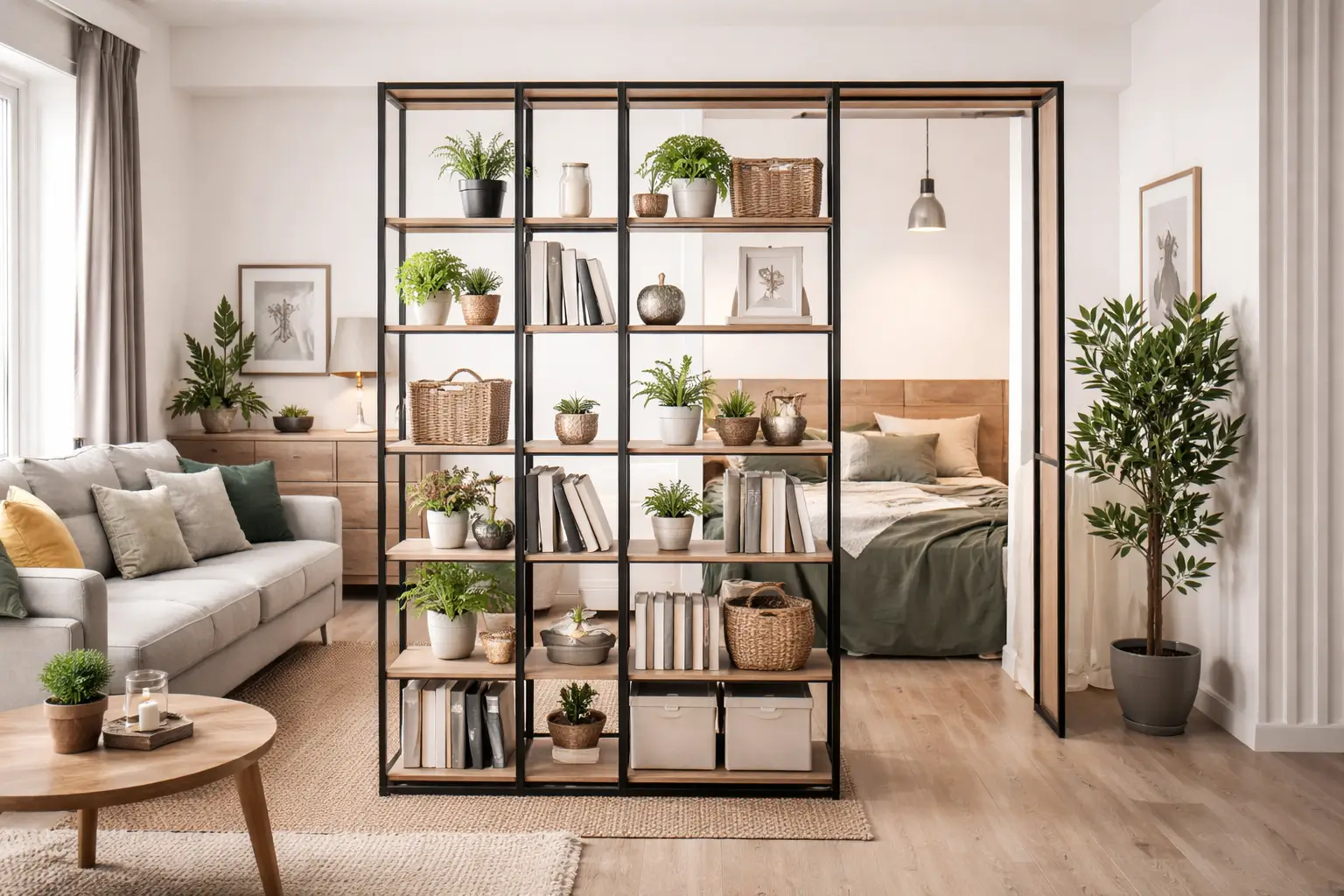
Living in a rental apartment often comes with limitations that make it difficult to fully customize your space. Permanent walls, drilling restrictions, and small layouts can prevent renters from creating the functional and comfortable environment they need. This is especially true for studio apartments and compact units where every square foot matters.
One of the most effective solutions is using lightweight room dividers with integrated shelving. These multifunctional pieces allow renters to create separate zones without permanent modifications. They provide privacy, improve organization, and maximize vertical storage while maintaining flexibility.
Understanding how these dividers work, their benefits, and how to choose the right one can completely transform your living space. The following guide explores everything you need to know to make smarter decisions and improve both functionality and comfort in your rental apartment.
Why Renters Need Lightweight Room Dividers with Shelving
Renters face unique challenges when it comes to organizing and customizing their living space. Lease agreements often prohibit permanent modifications such as installing walls, drilling holes, or attaching heavy fixtures. As a result, renters must rely on temporary, flexible solutions that do not damage the property.
Lightweight room dividers with integrated shelving solve several of these challenges simultaneously. They allow renters to create distinct areas within a single room, such as separating a sleeping area from a living room or defining a workspace in a studio apartment. This improves functionality without violating lease terms.
Additionally, these dividers provide valuable storage. Many rental apartments lack sufficient built-in storage, which can lead to clutter and disorganization. Integrated shelving helps renters store books, decor, office supplies, and everyday essentials in a structured and accessible way.
Another important factor is mobility. Renters often move more frequently than homeowners. Lightweight dividers are easy to disassemble, transport, and reconfigure in new spaces, making them a long-term investment that adapts to changing needs.
Key Benefits of Integrated Shelving Room Dividers
1. Space Optimization
Small apartments require efficient use of space. Integrated shelving dividers combine two functions into one piece of furniture: spatial separation and storage. This reduces the need for additional shelving units, freeing up valuable floor space.
Vertical storage is particularly useful because it takes advantage of unused vertical areas without making the apartment feel crowded.
2. Improved Organization
Clutter is one of the biggest challenges in rental spaces. Integrated shelves allow renters to organize items logically and efficiently. This improves accessibility and reduces visual clutter.
For example, you can use shelves to store:
- Books
- Office supplies
- Decorative items
- Storage baskets
- Plants
Organized shelves contribute to a cleaner, more structured living environment.
3. Enhanced Privacy
Studio apartments often lack privacy because everything exists in one open area. Room dividers create visual separation between different functional zones. This is especially helpful for separating sleeping areas from living or working spaces.
Even partial visual separation can significantly improve comfort and psychological well-being.
4. Flexibility and Portability
Unlike permanent walls, lightweight dividers can be moved and repositioned easily. This flexibility allows renters to experiment with different layouts and adapt their space to evolving needs.
When moving to a new apartment, the divider can be transported and reused.
5. Improved Aesthetic Appeal
Integrated shelving dividers can enhance the overall appearance of your apartment. Modern designs complement various interior styles, including:
- Minimalist
- Modern
- Industrial
- Scandinavian
They act as both functional tools and decorative elements.
Important Features to Look for Before Buying
Choosing the right divider requires careful evaluation of several factors.
Lightweight Materials Explained
The material affects durability, weight, and portability.
Common lightweight materials include:
Engineered wood:
Affordable, lightweight, and visually appealing.
Metal frames with shelves:
Durable while maintaining relatively low weight.
Plastic or composite materials:
Extremely lightweight and easy to clean.
Mixed materials:
Combine strength and portability.
Each material offers a different balance between durability and mobility.
Freestanding vs Tension-Mounted Options
Freestanding dividers are the most rental-friendly option. They require no installation and can be moved easily.
Tension-mounted systems use pressure between the floor and ceiling. They provide more stability but may require careful installation.
Freestanding options are generally safer and more convenient for renters.
Best Types of Lightweight Dividers with Shelving
Open Bookcase-Style Dividers
These are among the most popular options. They function as open shelving units placed strategically to divide spaces.
Benefits include:
- Allowing light to pass through
- Providing storage on both sides
- Maintaining an open, airy feel
They are ideal for studio apartments.
Folding Shelf Dividers
Folding dividers offer flexibility. They can be expanded, repositioned, or folded away when not needed.
This makes them ideal for renters who want adaptable solutions.
Modular Shelf Systems
Modular systems allow customization. Renters can add or remove components depending on their needs.
This adaptability makes modular systems highly versatile.
How to Use Room Dividers Effectively in Small Apartments
Creating Functional Zones
Dividers can create specific zones such as:
- Sleeping area
- Workspace
- Living room
- Dining area
This improves organization and functionality.
For example, placing a divider between your bed and desk creates a dedicated work environment, improving productivity.
Maximizing Natural Light
Open shelving dividers allow light to pass through, preventing the apartment from feeling dark or confined.
This maintains a sense of openness while still creating separation.
Installation Tips for Rental-Friendly Solutions
Avoid drilling whenever possible. Freestanding dividers are ideal.
Ensure stability by placing heavier items on lower shelves.
Use anti-slip pads to protect floors.
Position dividers on flat surfaces for maximum stability.
Styling and Decorating Your Divider Shelves
Styling improves both function and appearance.
Use a combination of:
- Books
- Plants
- Storage baskets
- Decorative objects
Avoid overcrowding shelves.
Balanced styling improves visual appeal.
Common Mistakes Renters Should Avoid
Choosing dividers that are too heavy.
Overloading shelves.
Blocking natural light completely.
Selecting unstable designs.
Ignoring portability.
Avoiding these mistakes ensures better results.
Maintenance and Longevity Tips
Clean regularly using appropriate materials.
Avoid excessive weight.
Disassemble carefully when moving.
Protect floors with pads.
Proper maintenance ensures long lifespan.
Conclusion
Lightweight room dividers with integrated shelving provide an effective, flexible, and rental-friendly solution for maximizing small apartment spaces. They allow renters to create functional zones, improve organization, and enhance privacy without making permanent changes.
These multifunctional pieces combine practicality, portability, and aesthetic value. By choosing the right materials, design, and placement strategy, renters can significantly improve comfort and usability in their living environment while maintaining full compliance with rental agreements.
FAQs
1. Are lightweight room dividers stable enough for daily use?
Yes, most high-quality freestanding dividers are designed for stability. Proper placement and balanced shelf loading improve safety.
2. Can room dividers damage rental apartment floors?
No, especially when using protective pads or rubber feet.
3. Are integrated shelving dividers difficult to assemble?
Most models are designed for easy assembly without specialized tools.
4. Do these dividers block natural light?
Open shelving designs allow light to pass through while still creating separation.
5. Are lightweight dividers easy to move during relocation?
Yes, lightweight materials and modular designs make transportation easy and convenient.