
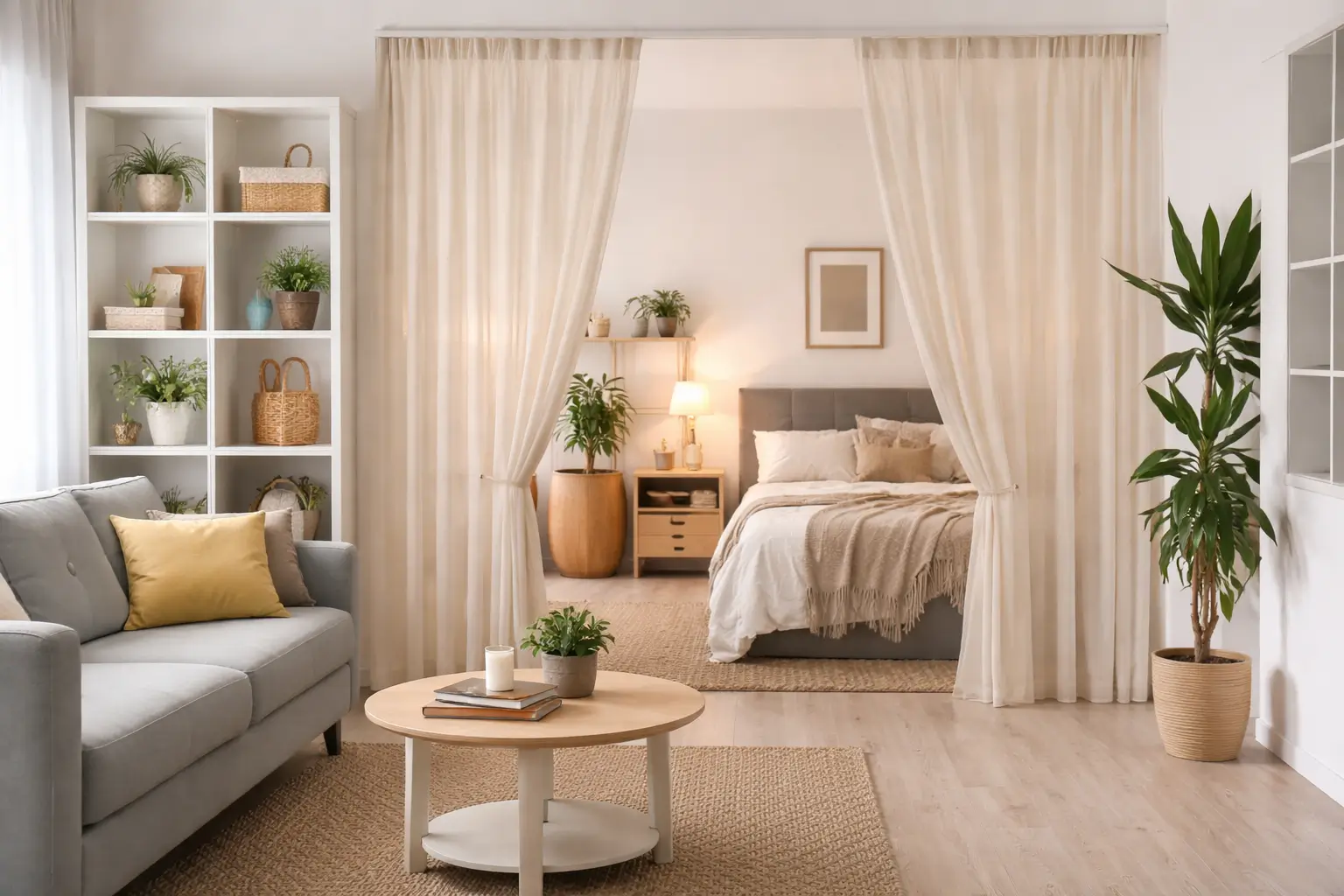
Living in a studio apartment offers affordability and efficiency, but it also presents a unique challenge: everything exists in one open space. Your bed, sofa, workspace, and entertainment area all share the same environment. Without separation, the apartment can feel disorganized, crowded, and less comfortable.
Creating a clear division between your bedroom and living room is essential for improving privacy, comfort, and mental clarity. When your sleeping area is visually separated, your brain naturally associates it with rest. Likewise, having a defined living area improves relaxation and productivity.
Lightweight room dividers provide the ideal solution for renters because they require no permanent installation, are easy to move, and protect your lease agreement. With the right divider and proper placement, you can transform your studio apartment into a functional, organized, and comfortable living space.
Why Lightweight Room Dividers Are Essential for Studio Apartment Renters
Studio apartments are designed to maximize efficiency, but they often lack structural separation. This can negatively impact both functionality and comfort.
Lightweight room dividers solve this problem by creating visual and functional boundaries without requiring permanent construction. Unlike heavy furniture or built-in walls, lightweight dividers are flexible and renter-friendly.
The main benefits include:
- Creating privacy between sleeping and living areas
- Improving organization and visual clarity
- Enhancing comfort and relaxation
- Making your apartment feel more structured
- Protecting your lease by avoiding permanent changes
- Allowing flexibility to rearrange your layout anytime
In addition, separating your sleeping area can improve your daily routine. When your bed is hidden or partially separated, your space feels more intentional and less like a temporary environment.
Key Factors to Consider Before Choosing a Lightweight Room Divider
Before buying or installing a room divider, you need to evaluate several important factors. Choosing the wrong divider can create inconvenience, instability, or poor space utilization.
1. Weight and Portability
Lightweight dividers are ideal because they are easy to move and reposition. This flexibility is especially important for renters who may move frequently or like to rearrange their space.
Look for dividers made from materials such as:
- Fabric
- Bamboo
- Lightweight wood
- Aluminum
- PVC or composite panels
Avoid heavy solid wood or glass dividers unless they are specifically designed for portability.
A portable divider allows you to adjust your layout whenever needed without requiring assistance or tools.
2. Rental-Friendly Installation
One of the most important considerations is avoiding permanent modifications to your apartment. Many leases prohibit drilling holes or installing fixed structures.
Choose options that are:
- Freestanding
- Supported by tension rods
- Foldable
- Self-supporting
These solutions protect your walls and preserve your security deposit.
3. Privacy Level
Different dividers provide different levels of privacy. Your choice depends on your personal needs.
For maximum privacy, choose:
- Thick curtains
- Solid panel screens
- Opaque folding dividers
For partial separation, choose:
- Open shelving units
- Slatted dividers
- Sheer curtains
Partial dividers maintain openness while still defining separate zones.
4. Light and Airflow
Maintaining natural light is important, especially in small studio apartments. Blocking light completely can make your space feel smaller and darker.
To preserve light flow, consider:
- Light-colored materials
- Semi-open designs
- Fabric panels
- Slatted or mesh dividers
These options balance separation and openness.
5. Size and Proportion
Your divider should match the scale of your apartment. Oversized dividers can overwhelm small studios, while very small dividers may not provide effective separation.
Measure:
- Ceiling height
- Floor space
- Distance between furniture
Choosing the correct size ensures both functionality and visual balance.
Best Types of Lightweight Room Dividers for Studio Apartments
There are several highly effective divider options designed specifically for renters and small spaces.
Folding Screen Dividers
Folding screens are one of the easiest and most versatile solutions available.
Key advantages include:
- No installation required
- Fully portable
- Lightweight construction
- Easy to fold and store
- Available in many styles and colors
You can reposition folding screens easily depending on your needs.
They work especially well for separating beds from living areas.
Curtain Dividers
Curtains are one of the most affordable and flexible divider solutions.
Benefits include:
- Extremely lightweight
- Easy installation using tension rods
- Affordable and widely available
- Easy to clean and maintain
- Replaceable and customizable
Blackout curtains provide excellent privacy, while lighter curtains maintain brightness.
Curtains are ideal for renters because they cause no permanent damage.
Open Shelving Units
Shelving units serve two functions: storage and separation.
Advantages include:
- Creating visual separation
- Adding valuable storage space
- Maintaining openness
- Improving organization
Open shelving prevents your studio from feeling enclosed while still creating structure.
Tension Rod Systems
Tension rods allow you to install curtains without drilling.
Key benefits:
- No permanent installation
- Affordable
- Easy to install and remove
- Safe for rental apartments
They are ideal for creating clean and simple separations.
Portable Panel Dividers
Portable panel systems provide a modern and structured appearance.
Benefits include:
- Clean and professional look
- Lightweight materials
- Easy repositioning
- Strong visual separation
These are excellent for modern studio layouts.
Step-by-Step Guide to Separating Your Bedroom and Living Room Using Lightweight Dividers
Following the correct process ensures the best results.
Step 1: Identify the Sleeping Area
Start by deciding where your bed should be located.
Ideally, choose a position:
- Away from the entrance
- Near a wall
- Away from heavy foot traffic
This creates a natural private zone.
Step 2: Identify the Living Area
Next, define your living area.
This typically includes:
- Sofa
- Coffee table
- TV
- Workspace
Make sure there is enough walking space between zones.
Step 3: Measure the Separation Area
Measure the distance between the bedroom and living zones.
Measure:
- Width
- Height
- Available walking space
Accurate measurements ensure the divider fits correctly.
Step 4: Choose the Best Divider Type
Select the divider based on your priorities.
Choose folding screens if you want flexibility.
Choose curtains if you want affordability.
Choose shelving if you want additional storage.
Choose portable panels if you want a modern appearance.
Step 5: Install or Position the Divider
Position the divider between the bedroom and living areas.
Ensure:
- Stability
- Proper alignment
- Easy movement around the divider
Avoid blocking windows or walkways.
Step 6: Adjust for Comfort and Functionality
After installation, adjust the divider if necessary.
Check:
- Privacy level
- Light flow
- Accessibility
Small adjustments can significantly improve functionality.
Budget-Friendly Lightweight Divider Solutions
You do not need a large budget to improve your studio layout.
Affordable options include:
- Curtain and tension rod systems
- Folding screens
- Lightweight shelving units
- Fabric panels
These options offer excellent results at low cost.
Common Mistakes to Avoid
Avoid these mistakes to ensure the best outcome:
- Choosing heavy dividers
- Blocking natural light completely
- Using permanent installations
- Ignoring portability
- Choosing oversized dividers
Lightweight and flexible solutions are always best for renters.
Tips to Make Your Studio Feel Larger While Using Dividers
Proper divider selection can improve both functionality and visual space.
Use these strategies:
- Choose light colors
- Use minimal designs
- Maintain clear walking paths
- Avoid visual clutter
- Use open or semi-open dividers
These techniques preserve openness while creating separation.
Conclusion
Lightweight room dividers are one of the most practical and effective solutions for separating bedroom and living room areas in studio rental apartments. They provide privacy, improve organization, and enhance comfort without requiring permanent installation.
By choosing renter-friendly divider options, measuring your space correctly, and following a step-by-step approach, you can transform your studio apartment into a more functional and comfortable environment. The right divider helps create structure, improves your daily routine, and makes your apartment feel more like a true home.
Frequently Asked Questions
1. What is the easiest room divider to install in a studio apartment?
Curtains with tension rods are the easiest because they require no tools or permanent installation.
2. Are lightweight room dividers stable?
Yes. Most lightweight dividers are designed for stability while remaining portable.
3. Can I use a room divider without damaging walls?
Yes. Freestanding screens and tension rod systems do not damage walls.
4. What is the most affordable divider option?
Curtains are typically the most affordable and effective solution.
5. Do room dividers reduce apartment space?
No. Properly chosen lightweight dividers improve organization without making the apartment feel smaller.