
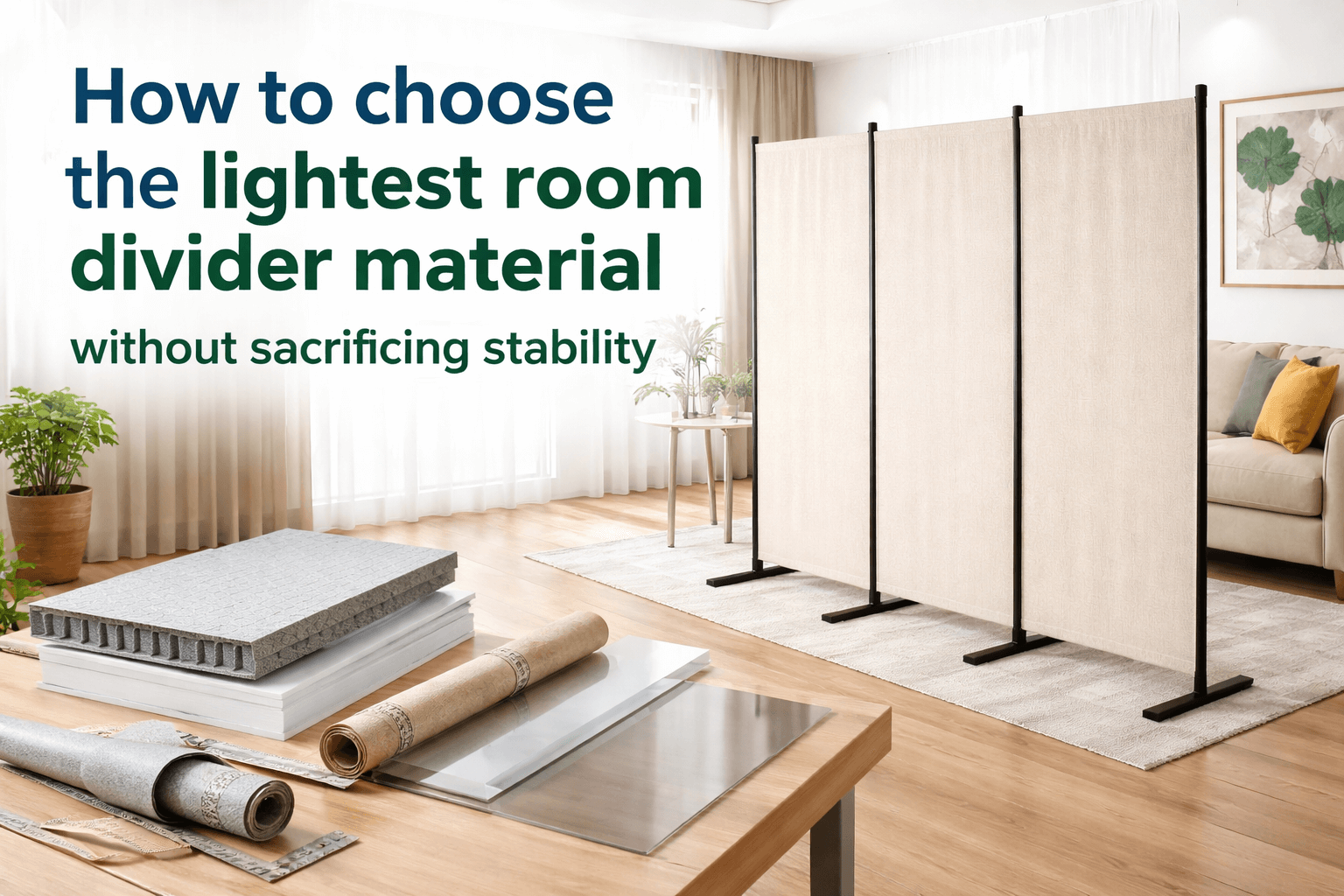
Lightweight room dividers have become an essential solution for modern homes, especially for renters and homeowners who need flexibility without making permanent changes. Whether you want to create a private workspace, separate a sleeping area, or improve room organization, choosing the right divider material can significantly affect usability and stability. The challenge is finding a material that is light enough to move easily while still being stable and durable enough for daily use.
Many people mistakenly believe that lightweight room dividers are inherently unstable. However, stability depends more on structural design, material strength, and support features than on weight alone. With modern materials such as aluminum, polycarbonate, and reinforced polymers, it is possible to achieve both portability and structural reliability.
This guide will explain exactly how to choose the lightest room divider material without sacrificing stability. You will learn which materials perform best, what structural features to prioritize, and how to evaluate your specific needs step by step. By the end, you will be able to confidently select a divider that is portable, stable, and suitable for your living space.
Why Lightweight Room Dividers Are Important for Flexible Living
Lightweight room dividers provide versatility that permanent walls cannot offer. This is especially important for renters, who often cannot make structural modifications to their homes. A lightweight divider allows you to create new functional zones without damaging walls, floors, or ceilings.
One of the main advantages is portability. A lightweight divider can be moved easily to adapt to changing needs. For example, you may need a workspace during the day and an open layout in the evening. Instead of committing to a fixed structure, a lightweight divider gives you complete control over your space.
Additional benefits include:
- Easy relocation without requiring tools
- No permanent installation or drilling
- Reduced risk of structural damage
- Improved space organization
- Faster setup and removal
Lightweight dividers are also ideal for people who move frequently. Instead of leaving the divider behind, you can transport it easily and reuse it in a new home.
Key Factors That Affect Stability in Lightweight Room Dividers
Before choosing a material, it is essential to understand what actually makes a divider stable. Stability is determined by multiple structural and physical factors.
Base Width and Support Design
The width of the base plays a major role in preventing tipping. Even a very lightweight divider can be stable if it has a properly designed base.
Key stability-enhancing base features include:
- Wide support feet
- Dual-leg or multi-point support systems
- Non-slip bottom materials
- Balanced weight distribution
A narrow base increases the risk of tipping, regardless of material strength.
Frame Rigidity and Structural Strength
The rigidity of the frame determines how well the divider maintains its shape and balance. Flexible or weak frames can bend or sway, reducing stability.
Materials that offer excellent rigidity include:
- Aluminum
- Reinforced PVC
- Polycarbonate
- Bamboo with reinforced joints
These materials maintain structural integrity while remaining lightweight.
Center of Gravity and Weight Distribution
A lower center of gravity improves stability. Dividers designed with slightly heavier bases and lighter upper sections perform better than those with uneven weight distribution.
Design features that improve balance include:
- Reinforced bottom frames
- Stabilizing crossbars
- Multi-panel folding structures
These features reduce movement and improve overall stability.
Step-by-Step Guide to Choosing the Lightest Stable Room Divider Material
Following a structured evaluation process will help you choose the best material for your needs.
Step 1: Identify Your Primary Purpose
Start by determining how you will use the divider. The intended use affects both material and design requirements.
Ask yourself:
- Will the divider be moved frequently?
- Is privacy or visual separation the main goal?
- Will it be used daily or occasionally?
- Does it need to support accessories like shelves?
For frequent movement, prioritize ultra-lightweight materials like aluminum or fabric with reinforced frames.
For daily use, prioritize stronger materials like aluminum or polycarbonate.
Step 2: Compare the Lightest Divider Materials
Understanding the strengths and weaknesses of each material will help you make an informed decision.
Aluminum: Best Overall Option
Aluminum is widely considered the best lightweight material for room dividers. It provides exceptional strength without adding significant weight.
Advantages:
- Excellent strength-to-weight ratio
- High durability
- Rust resistance
- Long lifespan
- Minimal maintenance
Aluminum dividers are ideal for renters who need reliable and portable solutions.
Polycarbonate and Acrylic: Best Modern Lightweight Materials
Polycarbonate and acrylic offer excellent performance while remaining lightweight.
Advantages include:
- High impact resistance
- Lightweight structure
- Modern aesthetic
- Long-term durability
These materials are ideal for modern interiors and frequent use.
Fabric: Lightest Possible Option
Fabric dividers are among the lightest available.
Advantages:
- Extremely lightweight
- Easy to transport
- Affordable
Limitations:
- Lower structural rigidity
- Less stability without reinforcement
Fabric is best for temporary or decorative separation.
PVC and Vinyl: Lightweight and Affordable
PVC is a popular choice due to its low cost and light weight.
Advantages:
- Moisture resistance
- Easy maintenance
- Lightweight structure
Limitations:
- Lower rigidity compared to aluminum
- May flex under pressure
Suitable for light-duty applications.
Bamboo: Best Lightweight Natural Material
Bamboo offers a balance between lightweight construction and structural strength.
Advantages:
- Strong and lightweight
- Natural aesthetic appeal
- Eco-friendly
Bamboo dividers are ideal for users who prioritize design and sustainability.
Step 3: Evaluate the Structural Design
Material alone does not guarantee stability. Structural design plays an equally important role.
Look for the following features:
- Wide support bases
- Reinforced joints
- Crossbar supports
- Multi-panel folding structures
These features significantly improve stability without increasing weight.
Step 4: Choose the Right Divider Type
Different divider types offer different levels of stability and portability.
Freestanding Dividers
Freestanding dividers offer excellent flexibility.
Benefits:
- No installation required
- Easy repositioning
- Good stability when properly designed
Folding Panel Dividers
Folding dividers improve stability through multiple connected panels.
Benefits:
- Improved balance
- Compact storage
- Easy transport
Tension-Mounted Dividers
These dividers use pressure between floor and ceiling.
Benefits:
- Excellent stability
- No permanent installation
- Ideal for renters
Step 5: Test Stability Features Before Choosing
Before selecting a divider, evaluate its stability features carefully.
Check for:
- Strong frame construction
- Balanced weight distribution
- Secure joints and connections
- Stable base support
Avoid dividers with thin, flexible frames or weak connections.
Common Mistakes to Avoid When Choosing Lightweight Dividers
Avoiding common mistakes will help ensure long-term satisfaction.
Mistake 1: Choosing Based Only on Weight
The lightest option is not always the most stable. Always consider structural strength and base support.
Mistake 2: Ignoring Frame Quality
Weak frames reduce stability even if the material itself is strong.
Choose dividers with reinforced frames.
Mistake 3: Choosing Low-Quality Materials
Low-quality materials may warp or weaken over time, reducing stability.
Investing in quality materials improves durability and safety.
How to Balance Portability and Stability Effectively
Achieving the right balance requires careful material and design selection.
Follow these best practices:
- Choose aluminum for the best balance of weight and stability
- Select designs with wide bases
- Avoid extremely thin or flexible materials
- Prioritize reinforced structural components
This approach ensures both portability and reliable performance.
Maintenance Tips to Preserve Stability and Longevity
Proper maintenance helps preserve stability over time.
Follow these maintenance practices:
- Inspect joints regularly
- Tighten loose connections
- Clean materials properly
- Store carefully when not in use
Proper care ensures long-term performance and safety.
Conclusion
Choosing the lightest room divider material without sacrificing stability requires careful evaluation of both material properties and structural design. Stability is not determined by weight alone but by factors such as frame strength, base width, and overall construction quality.
Aluminum stands out as the best overall choice due to its exceptional strength, lightweight properties, and durability. Polycarbonate and bamboo also offer excellent performance for users who prioritize aesthetics and durability. Fabric and PVC provide lightweight solutions but may require additional structural support for maximum stability.
By following the step-by-step process outlined in this guide, you can confidently select a room divider that meets your needs. The right divider will provide flexibility, portability, and reliable stability, improving both functionality and comfort in your living space.
Frequently Asked Questions
What is the most stable lightweight material for room dividers?
Aluminum is the most stable lightweight material due to its excellent strength-to-weight ratio.
Are lightweight room dividers safe for daily use?
Yes, properly designed lightweight dividers with stable bases and strong frames are safe for everyday use.
Is bamboo lighter than traditional wood?
Yes, bamboo is lighter than most hardwoods while maintaining excellent strength.
What type of divider is best for renters?
Freestanding and tension-mounted dividers are ideal because they require no permanent installation.
How can I improve the stability of a lightweight divider?
Choose dividers with wide bases, reinforced frames, and balanced weight distribution.