
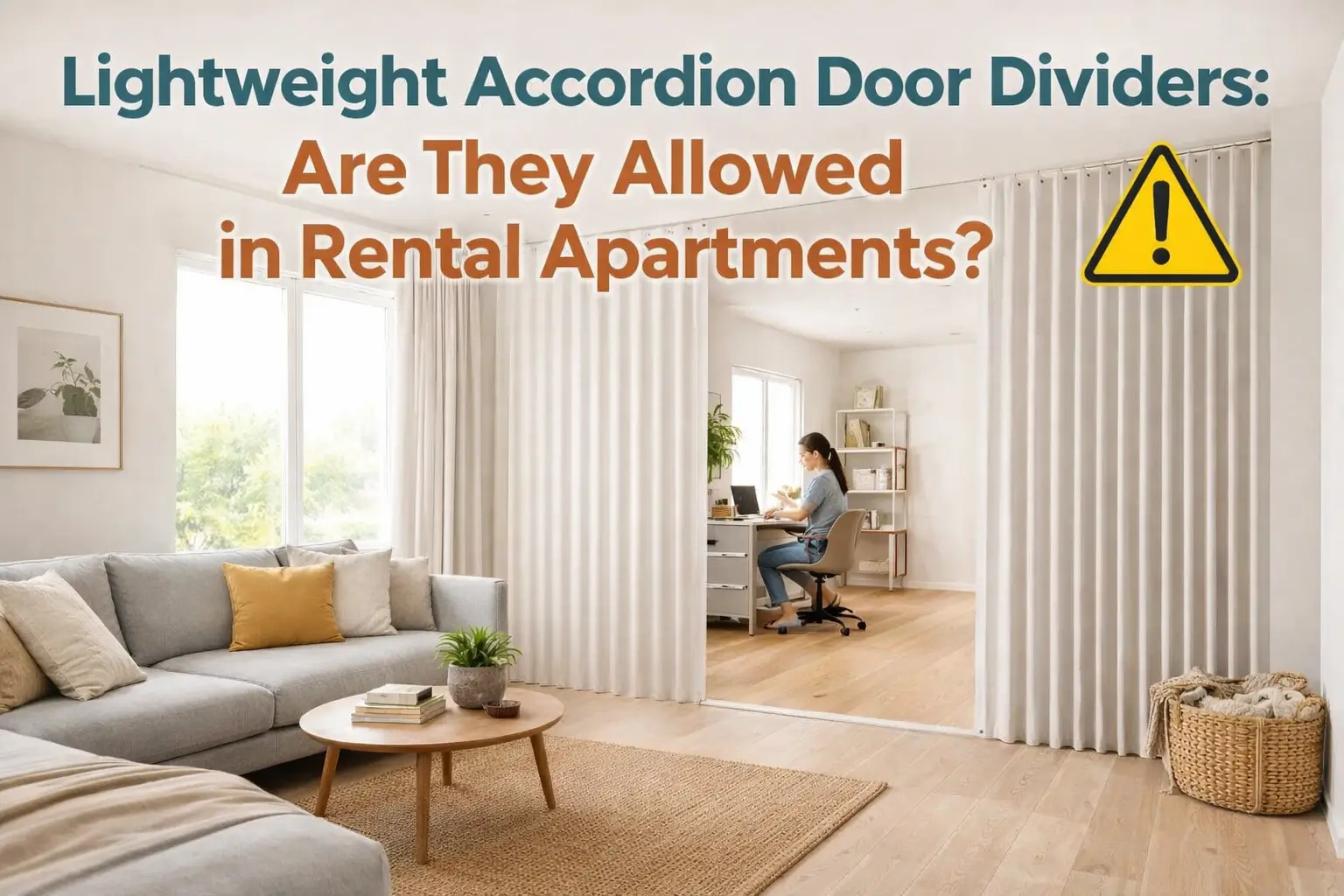
Living in a rental apartment often means working within limitations. Most leases prohibit permanent modifications, which makes it challenging to create separate rooms or private areas. Yet modern lifestyles demand flexibility. Whether you work from home, share your apartment, or simply want more privacy, dividing your space can significantly improve comfort and functionality.
Lightweight accordion door dividers have become one of the most popular renter-friendly solutions. These dividers allow you to separate areas without constructing permanent walls or making structural changes. Their foldable design, portability, and ease of installation make them ideal for temporary living situations.
However, many renters wonder whether accordion door dividers are actually allowed under rental agreements. Understanding the legal considerations, installation methods, and best practices ensures you can use them safely and responsibly. This guide will explain everything in detail, including step-by-step installation, lease considerations, and how to choose the best divider for your needs.
What Are Lightweight Accordion Door Dividers?
Lightweight accordion door dividers are flexible partition systems that open and close using a folding mechanism. They resemble traditional accordion instruments, expanding when pulled and compressing when closed.
These dividers are typically made from lightweight materials such as:
- PVC (polyvinyl chloride)
- Vinyl panels
- Composite plastic
- Lightweight wood laminate
- Fabric-reinforced panels
These materials offer the perfect balance between durability and portability.
Unlike traditional doors, accordion dividers do not require heavy frames or structural reinforcement. Instead, they operate using simple mechanisms such as:
- Sliding tracks
- Tension-mounted systems
- Clip-on rails
- Freestanding support frames
Their lightweight nature makes them easy to install, remove, and relocate.
Why Renters Use Accordion Door Dividers
Accordion dividers offer several practical benefits for renters, especially those living in small or shared spaces.
Improved privacy
One of the main reasons renters install accordion dividers is to create private zones within an open area.
For example, you can use them to separate:
- A sleeping area from the living room
- A home office from the main space
- A shared bedroom into individual sections
This is especially helpful for studio apartments or shared living arrangements.
Better space organization
Dividing a room improves organization and functionality.
You can create dedicated areas for:
- Work
- Sleep
- Relaxation
- Storage
This helps maintain a structured environment, which improves productivity and comfort.
Flexibility and adaptability
Accordion dividers allow you to change your layout anytime.
You can:
- Open them to create an open space
- Close them to create privacy
- Move them when rearranging furniture
This flexibility makes them ideal for changing needs.
Cost-effective solution
Compared to building walls, accordion dividers are much more affordable.
Typical cost ranges:
- Budget models: $50 to $120
- Mid-range models: $120 to $300
- Premium models: $300 to $600
This makes them accessible to most renters.
Are Lightweight Accordion Door Dividers Allowed in Rental Apartments?
In most cases, lightweight accordion door dividers are allowed in rental apartments. However, their legality depends on how they are installed and whether they cause permanent damage.
Most lease agreements restrict:
- Drilling into walls or ceilings
- Installing permanent fixtures
- Making structural changes
However, removable and non-damaging dividers are generally acceptable.
Accordion dividers are usually allowed if they:
- Do not require drilling
- Do not damage walls, ceilings, or floors
- Are removable without leaving marks
Always review your lease agreement carefully before installation.
If unsure, consider taking these steps:
- Read your lease agreement
- Contact your landlord
- Explain that the divider is temporary
- Confirm that no permanent damage will occur
Most landlords approve removable solutions.
Types of Accordion Door Dividers Suitable for Rental Apartments
Choosing the correct type is essential to ensure compliance with rental rules.
Tension-mounted accordion dividers
These dividers use adjustable rods that create pressure between surfaces.
Advantages include:
- No drilling required
- Easy installation
- Easy removal
Best for:
- Studio apartments
- Temporary room divisions
Adhesive track accordion dividers
These systems use strong removable adhesive tracks.
Advantages include:
- Secure support
- Smooth sliding
- Easy removal
Ensure adhesive is renter-safe and removable.
Freestanding accordion dividers
These do not attach to any surface.
Advantages include:
- No installation required
- Fully portable
- Zero damage risk
This is the safest option for renters.
Step-by-Step Guide to Installing Lightweight Accordion Door Dividers
Follow this detailed process to install safely.
Step 1: Measure your space carefully
Accurate measurement ensures proper installation.
Measure:
- Floor-to-ceiling height
- Width of the opening
Take measurements in multiple locations.
Write down your measurements.
Step 2: Choose a renter-friendly divider
Select a divider designed for rental use.
Look for features such as:
- Tension-mounted installation
- Removable adhesive tracks
- Lightweight design
Avoid permanent mounting systems.
Step 3: Prepare the installation area
Preparation ensures stability.
Clean surfaces to remove:
- Dust
- Dirt
- Moisture
Ensure surfaces are smooth and stable.
Step 4: Install the mounting system
Depending on your divider type:
For tension-mounted systems:
- Extend rod slowly
- Place between ceiling and floor
- Apply pressure until secure
For adhesive track systems:
- Align track carefully
- Apply adhesive firmly
- Allow adhesive to set
Step 5: Attach the accordion divider
Attach divider to the mounting system.
Ensure:
- Smooth sliding
- Proper alignment
- No sagging
Adjust if necessary.
Step 6: Test the divider
Open and close divider multiple times.
Ensure:
- Smooth movement
- Stable mounting
- No shifting
Make adjustments if needed.
Benefits of Lightweight Accordion Dividers for Renters
Accordion dividers provide multiple advantages.
Major benefits include:
- No permanent damage
- Easy installation
- Affordable cost
- Portable design
- Flexible layout control
They allow renters to improve functionality without violating lease agreements.
How to Choose the Best Accordion Door Divider
Selecting the right divider ensures safety and effectiveness.
Consider the following factors.
Weight
Choose lightweight models.
Benefits include:
- Easier installation
- Less stress on mounting system
Material quality
Durable materials last longer.
Recommended materials:
- PVC
- Vinyl
- Composite plastic
Ease of installation
Choose renter-friendly installation methods.
Avoid systems requiring:
- Screws
- Permanent fixtures
Durability
Ensure the divider can withstand regular use.
Check:
- Track strength
- Panel durability
Common Mistakes to Avoid
Avoid these mistakes to prevent problems.
Using permanent installation methods
Permanent installation may violate lease agreements.
Always choose removable systems.
Incorrect measurements
Incorrect measurements cause instability.
Measure carefully.
Choosing heavy dividers
Heavy dividers increase risk of damage.
Choose lightweight options.
Ignoring lease agreement terms
Always review your lease before installation.
Maintenance and Care Tips
Proper maintenance ensures long lifespan.
Follow these tips.
Regular cleaning
Clean panels using:
- Soft cloth
- Mild detergent
Avoid harsh chemicals.
Inspect mounting system
Check regularly for:
- Stability
- Proper alignment
Handle with care
Avoid forcing divider.
Use gentle movement.
Alternative Room Divider Options for Renters
If accordion dividers are not suitable, consider alternatives.
Options include:
- Curtain dividers
- Fabric panels
- Freestanding partitions
- Folding screens
These options are also renter-friendly.
Cost Breakdown and Budget Planning
Typical price ranges:
Budget models:
- $50 to $120
Mid-range models:
- $120 to $300
Premium models:
- $300 to $600
Freestanding dividers may cost more but offer maximum flexibility.
Conclusion
Lightweight accordion door dividers are generally allowed in rental apartments when installed using non-permanent methods. They provide an effective solution for creating privacy, organizing space, and improving functionality without violating lease agreements. By choosing renter-friendly systems and following proper installation steps, renters can safely enhance their living environment.
These dividers offer flexibility, affordability, and convenience, making them one of the best solutions for temporary space division. With careful selection and proper installation, accordion door dividers can transform your rental apartment into a more functional and comfortable space while remaining fully compliant with rental rules.
Frequently Asked Questions
1. Can accordion door dividers be installed without damaging walls?
Yes. Tension-mounted and freestanding dividers do not damage walls.
2. Do landlords usually allow accordion dividers?
Most landlords allow removable dividers.
3. Are accordion dividers easy to remove?
Yes. Most models are designed for easy removal.
4. Can accordion dividers provide full privacy?
Yes. Opaque panels provide strong visual privacy.
5. How long do accordion door dividers last?
With proper care, they can last many years.